- All
- Product Name
- Product Keyword
- Product Model
- Product Summary
- Product Description
- Multi Field Search

Views: 2 Author: Site Editor Publish Time: 2026-02-22 Origin: Site
Your safety is most important at a trampoline park. Each year, many people get hurt. About 34% of trampoline injuries happen at parks. More than half of these injuries cause broken bones or dislocations. If you want to have fun at an outdoor trampoline park, look for six key safety features. These are impact-absorbing padding, strong enclosure netting, a good jumping surface, a tough frame, clear weight limits, and active supervision. Pick parks with professional equipment to lower risks for everyone.
Pick trampoline parks with padding that absorbs impact. This padding helps lower the chance of getting hurt. Make sure the foam is thick and covers all springs and edges.
Choose parks with strong safety nets around trampolines. The netting should be tall and tight. It must meet safety rules to stop people from falling.
Look for a jumping surface made from polypropylene mesh. This material lasts a long time and absorbs shocks. It helps make landings safer.
Make sure the trampoline frame uses heavy-duty steel. The frame should be checked often. A strong frame keeps jumping safe and stops accidents.
Find parks with clear weight limits and good supervision. Staff should enforce these limits. There must be enough workers to watch jumpers and keep them safe.

You should see if the trampoline park has thick padding on all springs and frames. If metal parts are not covered, you could get badly hurt. Good padding covers every spring and edge. This padding works like a shield between you and hard things. Make sure the padding fits tight and does not slide when you jump. Most parks use foam padding because it soaks up energy from falls and jumps.
Studies show that the kind and thickness of foam can really change how safe you are if you land head-first. The results show that having enough foam and the right pit design helps stop injuries.
Not all padding is the same. Thicker foam keeps you safer. Some parks use more layers or special materials for extra safety. Always check if the padding looks new and has no rips.
Impact-absorbing padding helps stop broken bones, bruises, and cuts. When you land on padding, it spreads out the force. This makes it less likely you will get hurt. Padding works best when it covers all hard spots and stays in good shape.
Here is a table that shows how different padding types help lower injury rates:
Safety Feature | Impact on Injury Rates |
|---|---|
Shock Absorbent Mat | Lessens injuries from impacts |
Airbag Technology | High impact absorption efficiency, lower injury risk |
Foam Pits | Moderate impact absorption, higher risk from uneven surfaces |
You should always pick a trampoline park with good, shock-absorbing padding. This keeps you safer and helps you have fun without worry.
When you go to a trampoline park, look for strong safety enclosure netting. This netting works like a wall that stops you from falling off the trampoline. Studies say that safety enclosure netting can cut fall injuries by about 75%. This is very important for kids because they might not land safely every time. The net keeps you inside the safe jumping area and helps stop bad accidents.
Tip: Pick nets that are taller than you and fit tightly on the frame. Nets that hang loose or droop will not keep you safe.
A net cannot stop every accident, but a good one helps a lot. Never use a trampoline without this safety netting.
It is smart to know what makes a net safe. There are rules for safety enclosure netting that parks must follow. Here are some key things to check:
The net should hold more than 250 pounds.
The best nets use reinforced polyethylene for strength.
Nets need to attach to galvanized steel posts.
Double-stitched seams help stop fingers and toes from getting stuck.
Nets must pass tests with less than 5% stretch after 5,000 jumps.
Park workers use these rules to keep you safe. The table below shows two main rules for netting at trampoline parks:
Standard | Description |
|---|---|
ASTM F2375-17 | How to design, build, put in, and test climbing nets and netting in play areas |
ASTM F2970-17 | How to design, run, fix, and check trampoline courts |
If you see these rules at a trampoline park, you know the nets are safe. Always ask the staff if you want to know more about the netting.
You should always check the jumping surface before you start bouncing. The best trampoline parks use high-performance polypropylene mesh for their jumping mats. This material stands out because it is very strong and can handle many hard landings without tearing or wearing out. You get a surface that stays smooth and safe, even after hundreds of jumps each day.
Polypropylene mesh also resists sunlight. If you jump outside, the sun will not damage the mat or make it weak. This means the surface stays flexible and does not crack over time. You can trust that your jumps will feel the same every visit. When you see a trampoline park with this kind of mesh, you know they care about both safety and quality.
A good jumping surface does more than just bounce. It helps protect your legs and feet from getting hurt. If the mat absorbs shock well, it spreads out the force when you land. This lowers the chance of sprains or broken bones. Many injuries in trampoline parks happen because the surface is too hard or too soft.
Studies show that better jumping surfaces lead to fewer injuries. When parks upgrade their mats, the number of broken bones and sprains goes down. You should always look for a surface that feels firm but not stiff. If you land and the mat gives a little, that is a sign of good shock absorption.
Here are signs of a high-quality jumping surface:
The mat feels even and smooth.
There are no tears, holes, or worn spots.
The surface bounces back quickly after you land.
You can have more fun and stay safe when you jump on a well-made surface. Always check the mat before you start your session.
You need to check the strength of the frame before you jump. A strong frame supports every bounce and keeps the trampoline steady. If the frame bends or cracks, it can break without warning. You should look for frames made from heavy-duty steel. These frames resist rust and last longer. Welds and fasteners must stay tight and show no signs of damage.
Tip: Always ask staff when the last frame inspection happened. A well-built frame gives you confidence to jump safely.
You can spot a safe frame by looking for these signs:
The frame sits flat on the ground.
There are no sharp edges or loose bolts.
All welds look smooth and solid.
If you see rust or cracks, tell a staff member right away. Never use a trampoline with a weak or damaged frame.
You want to enjoy the trampoline park for a long time. Regular maintenance keeps the frame safe and strong. Staff should inspect the frame often. They look for rust, bends, and cracks. These checks help prevent accidents and keep the structure solid.
Here are some best practices for frame maintenance:
Inspect the frame, welds, and fasteners for any damage.
Place the trampoline on soft surfaces like grass or sand. Hard surfaces like concrete can damage the frame.
Contact customer support if you find any problems. Many frames come with a long warranty.
A well-maintained frame lowers the risk of injury. It also helps the equipment last for years. You should always choose parks that follow these safety steps. When you see staff checking the frame, you know they care about your safety.
Note: A strong and well-kept frame is the backbone of a safe trampoline experience.
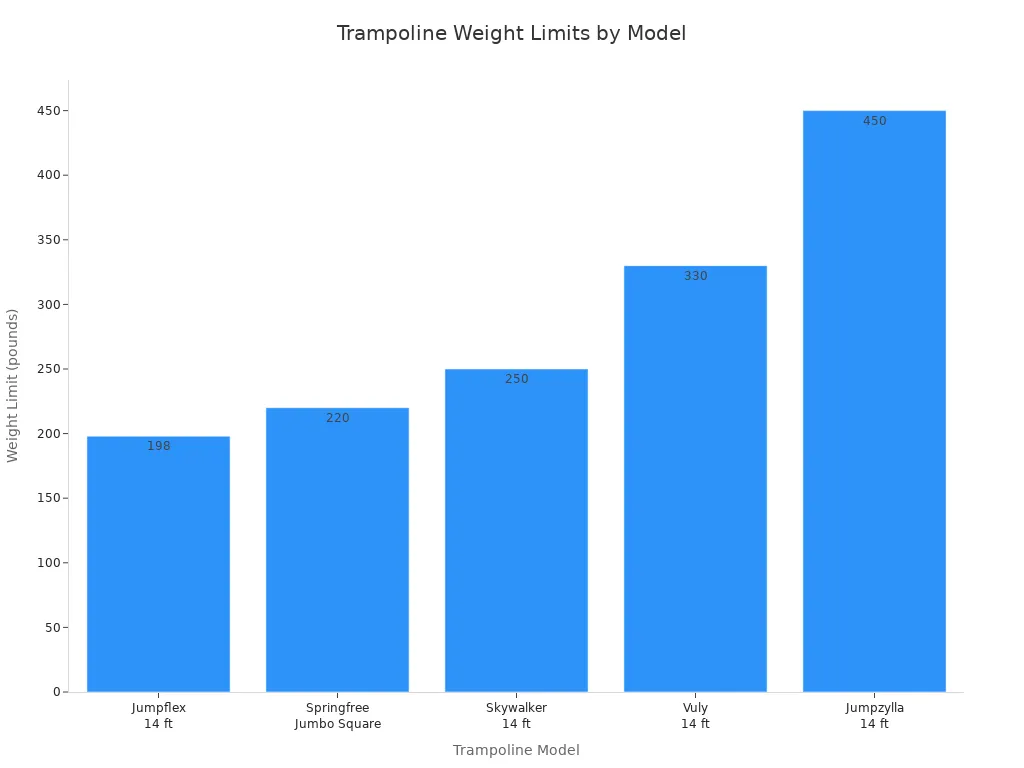
Always check the weight limit before you jump. Every trampoline can only hold a certain weight. If you go over the limit, the trampoline might break. This can hurt you or other people. Staff should show the weight limits clearly. They should also remind everyone to follow these rules.
Here is a table that lists weight limits for some trampolines:
Trampoline Model | Weight Limit (pounds) |
|---|---|
Jumpflex 14 ft Trampoline | 198 |
Springfree Jumbo Square | 220 |
Skywalker 14 ft Trampoline | 250 |
Vuly 14 ft Trampoline | 330 |
Jumpzylla 14 ft Trampoline | 450 |
If you do not know the weight limit, ask a staff member. Following the rules keeps everyone safe.
You need safe ways to get on and off the trampoline. Good parks use access control so not too many people enter at once. This helps stop crashes and crowding. Studies show more accidents happen when too many people jump together. Staff should watch the doors and exits to keep the number of jumpers safe.
Staff should count how many people are in each area.
Wait your turn if the area is full.
Supervision helps stop injuries from crowding.
Dr. Eslick says that having enough staff and limits makes parks safer. More injuries happen when there are not enough staff watching. You should see staff near the entrances and exits. They help you get on and off safely.
Note: If you see too many people or no staff nearby, tell someone right away.
If you follow these rules, you help keep yourself and others safe while having fun.
You need trained staff to keep everyone safe at a trampoline park. Staff members do more than just watch. They move around, check each area, and step in if someone breaks the rules. You can spot them by their uniforms, which makes it easy to ask for help. Staff should know how to handle emergencies and give first aid if needed. They also need to separate kids who play rough from others to prevent injuries.
Here are some best practices for staff supervision:
Best Practice | Description |
|---|---|
Active Monitoring | Staff walk around and watch all jump zones closely. |
Rule Enforcement | Staff stop unsafe behavior right away. |
Staff Training | All staff learn CPR, first aid, and how to help kids of different ages. |
Staff-to-Jumper Ratio | One staff member for every 20-30 jumpers keeps things safe. |
Staff Identification | Uniforms help you find staff quickly if you need help. |
You should always see enough staff in every area. If you do not, tell a manager or choose another park.
Technology helps staff keep you safe. Many parks use cameras to watch all areas in real time. This lets staff spot problems fast and respond before someone gets hurt. Some parks use loudspeakers to remind you of the rules or warn you if you break them. Good parks also have clear signs that show the rules and safety tips.
Staff must train for emergencies. They learn how to report accidents and keep records. Regular safety checks and equipment inspections happen often. Staff also get training on waivers and how to explain rules to you and your family.
Here are important training requirements for staff:
Training Requirement | Description |
|---|---|
Waiver Procedures | Staff learn how to explain waivers and spot fake ones. |
Emergency Preparedness | All staff hold first aid and CPR certificates. |
Safety Audits | Staff check equipment and park areas on a set schedule. |
Rule Reinforcement | Staff give safety talks and use signs to remind you of the rules. |
Supervisor Qualifications | Supervisors complete special safety courses and have strong communication skills. |
You should always pick a trampoline park that uses both trained staff and real-time monitoring. This keeps you and your friends safe while you have fun.
You must inspect your park every day to keep guests safe. Start by checking all springs for rust, stretching, or any sign of damage. Look at the padding to make sure it covers every spring and frame edge. Tight padding helps prevent injuries. Examine safety nets for tears or loose connections. Check the frame for loose bolts, rust, or corrosion. Foam pits need to stay clean and soft. Write down any problems you find and fix them right away.
Tip: Schedule a third-party inspection every year. The inspector will check your park and give you a report. This report should follow ASTM 2970-20 and other safety standards.
You should display your safety certifications where everyone can see them. When guests see these certificates, they trust your park more and feel safer.
Daily Inspection Checklist for Owners:
Check springs for rust or damage.
Inspect padding for secure fit and coverage.
Examine safety nets for holes or loose spots.
Look at the frame for rust or loose bolts.
Test foam pits for softness and cleanliness.
Record and fix any issues immediately.
You can check safety features before you jump. Use this table to help you spot problems:
Item | Description |
|---|---|
Under-Trampoline Cleanliness | Look for trash or items under trampolines. |
Spring Integrity | Check for broken or stretched springs. |
Safety Signage | Make sure rules and warnings are easy to see. |
Staff-to-Guest Ratios | Count staff in each area. Enough staff means more safety. |
Session Requirements | Listen for clear instructions before your session. |
Lighting | Notice if all lights work well. |
Fire Exits | Find exits and make sure nothing blocks them. |
First Aid Supplies | Ask staff where first aid kits are kept. |
Safety Nets | Look for holes or sagging in nets. |
Trampoline Fabrics | Check for tears or worn spots on mats. |
Frames | Make sure frames look strong and stable. |
Padding | See if padding covers all hard edges. |
Staff Competency | Notice if staff answer questions and know the rules. |
Emergency Procedures | Ask about emergency plans, like missing child protocols. |
Note: If you see missing padding, broken springs, or unsecured netting, tell a staff member right away.
You help keep yourself and others safe when you check these features. Regular maintenance and clear safety certifications show that a trampoline park cares about your safety.
You help keep yourself and others safe by picking parks with good safety features. These features are padding, netting, a strong jumping surface, a tough frame, weight limits, and staff who watch over everyone. Parks that use safety rules make you feel safe and happy. The table below explains why safety is important:
Key Point | Description |
|---|---|
Safety Concerns | People care most about safety at trampoline parks. |
User Satisfaction | Following safety rules makes people enjoy their visit more. |
Repeat Visits | People come back to parks where they feel safe. |
You can help keep the park safe by doing these things: Check the equipment and read the rules before you jump. Listen to the staff and do what the signs say. Tell staff right away if you see a problem.
Always pay attention and pick parks that care about keeping you safe.
You should look for secure padding, strong netting, clear rules, and visible staff. Ask about recent inspections. Make sure the park posts safety certifications.
Most parks inspect equipment daily. Staff check for loose bolts, damaged nets, and worn mats. You can ask to see their inspection checklist.
You should not mix age groups. Kids and adults have different weights and jumping styles. Parks often separate jumpers by age or size for safety.