- All
- Product Name
- Product Keyword
- Product Model
- Product Summary
- Product Description
- Multi Field Search


Views: 0 Author: Site Editor Publish Time: 2026-07-27 Origin: Site
Family entertainment center investors and shopping mall developers face a constant tension when sourcing play structures. Overseas procurement offers undeniable advantages, but buyers often dread the operational nightmare of receiving a shipping container full of undocumented, unassembled parts. The ambiguity of the term "turnkey" creates significant risk when evaluating an indoor playground china. Many suppliers claim to offer end-to-end services, yet the reality often shifts the burden of logistics, compliance, local safety certifications, and installation squarely back onto the buyer's shoulders. This guide provides a rigorous, evidence-based framework for evaluating prospective suppliers. You need to know whether a specific China Indoor Playground Manufacturer can actually deliver a fully operational, compliant, and easy-to-maintain commercial play space. We will dissect what a true turnkey contract entails, how to verify safety compliance, and the importance of professional installation.
Many buyers assume a turnkey contract means handing over a floor plan and receiving the keys to a finished facility months later. In overseas manufacturing, this term is heavily diluted. You must distinguish between three distinct service tiers. "FOB Manufacturing" means the factory produces the goods and loads them onto a ship at their local port. You handle everything post-production, including ocean freight, customs, inland transport, and assembly. "DIY Kits" provide pre-fabricated structures shipped with basic manuals. These require complex local engineering, interpretation of translated documents, and sourcing your own installation crew. "True Turnkey" represents end-to-end project management from initial site design to final handover. Assuming a standard export contract automatically includes installation or compliance consulting introduces severe operational risks. You must explicitly define the scope of work in the initial contract.
| Service Tier | Supplier Responsibility | Buyer Responsibility | Risk Level |
|---|---|---|---|
| FOB Manufacturing | Production, packing, loading at origin port | Freight, customs, transport, installation, compliance | High |
| DIY Kits | Production, basic manuals, shipping | Local engineering, assembly, safety certification | Medium-High |
| True Turnkey | Design, production, freight, customs, installation, handover | Site preparation, local permits, utility connections | Low |
A verified turnkey contract begins with a comprehensive site assessment and custom 3D design. Engineers must adapt structural blueprints to your specific floor plans. They need exact measurements for ceiling heights, load-bearing column locations, HVAC ducting layouts, and fire sprinkler clearances. Generic designs fail in real-world commercial spaces because they do not account for these physical constraints. If a slide blocks an emergency exit route or a climbing tower interferes with overhead lighting, local inspectors will halt your operation. Furthermore, prioritize working with an in-house production facility rather than a trading company. Direct manufacturers maintain control over quality assurance, material selection, and the final bill of materials. Trading companies often outsource components to multiple sub-factories, leading to mismatched parts, inconsistent color matching, and structural incompatibilities.
Logistics and customs clearance form the next critical component. Evaluate a supplier's capability to manage freight forwarding, import duties, and port-of-entry documentation. They should provide a detailed container loading plan to maximize space inside 40HQ containers and prevent transit damage. Proper packing prevents heavy steel pipes from crushing delicate plastic components during rough ocean transit. Finally, the contract must detail on-site assembly, sanitization, and the final handover process. The transition from delivered cargo to a certified, sanitized, and operational facility requires dedicated project management. The supplier should provide a clear timeline for the build phase, including daily progress reports, safety checks, and a final walkthrough checklist.
Assess the manufacturer's ability to move beyond generic, off-the-shelf structures. High-performing facilities require the integration of original IP, thematic consistency, and strict zoning for different age groups. A well-designed space separates toddler soft play areas from high-capacity slide systems, ninja obstacle courses, and interactive trampoline parks. Designing specifically for high-traffic commercial environments like shopping malls and retail-integrated parent-child projects demands specialized engineering expertise. The layout must facilitate natural traffic flow, prevent bottlenecks during peak weekend hours, and ensure clear lines of sight for parents and floor staff. If the design creates blind spots, it increases liability and requires higher staffing levels to monitor the floor.
Commercial durability relies on strict technical specifications. You cannot compromise on the raw materials used in the structural frame and interactive elements. Substandard materials will degrade rapidly under the stress of hundreds of daily users.
The choice of materials directly impacts long-term hygiene. Evaluate whether the manufacturer designs with easy-to-clean surfaces and provides clear, standardized sanitization protocols for soft play components. Porous materials or poorly stitched PVC will harbor bacteria and absorb spills. Always request and verify material specification sheets and raw material sourcing origins before approving production. Demand physical samples of the PVC, netting, and foam to test their durability firsthand.
Verify adherence to international standards such as ASTM F1918 for the US, EN 1176/1177 for Europe, and AS 3533 for Australia. Understand the difference between a basic "CE Mark" on a single plastic component and a comprehensive third-party safety audit from organizations like TÜV SÜD or SGS for the entire structural design. Local inspectors will demand comprehensive documentation for the complete assembly, not just individual parts. The supplier must provide structural load calculations, flammability test reports for all soft materials, and certificates of compliance for non-toxic paints and plastics. If the manufacturer cannot produce these documents during the vetting phase, they will not be able to produce them when your local fire marshal or building inspector demands them.
Understanding the geography of production helps set expectations. The location of your manufacturing partner dictates their supply chain network and baseline quality standards.
| Manufacturing Hub | Primary Focus | Strengths | Best For |
|---|---|---|---|
| Wenzhou | Mass production, standard components | High volume, rapid output, established supply chains | Standard FECs, budget-conscious projects |
| Foshan / Guangzhou | Custom fabrication, advanced engineering | Complex steel structures, premium finishes, custom IP | High-end shopping malls, flagship locations |
The manufacturer’s geographic location impacts shipping logistics, raw material sourcing networks, and baseline quality control standards. Wenzhou serves as the historical hub for mass production, offering vast scale and rapid output. Factories here benefit from a dense network of raw material suppliers, allowing for fast turnaround times. Foshan and Guangzhou are often favored for high-end customization, advanced steel structures, and premium mall installations. Manufacturers in this southern region typically invest heavier in R&D, custom mold creation, and advanced thematic design.
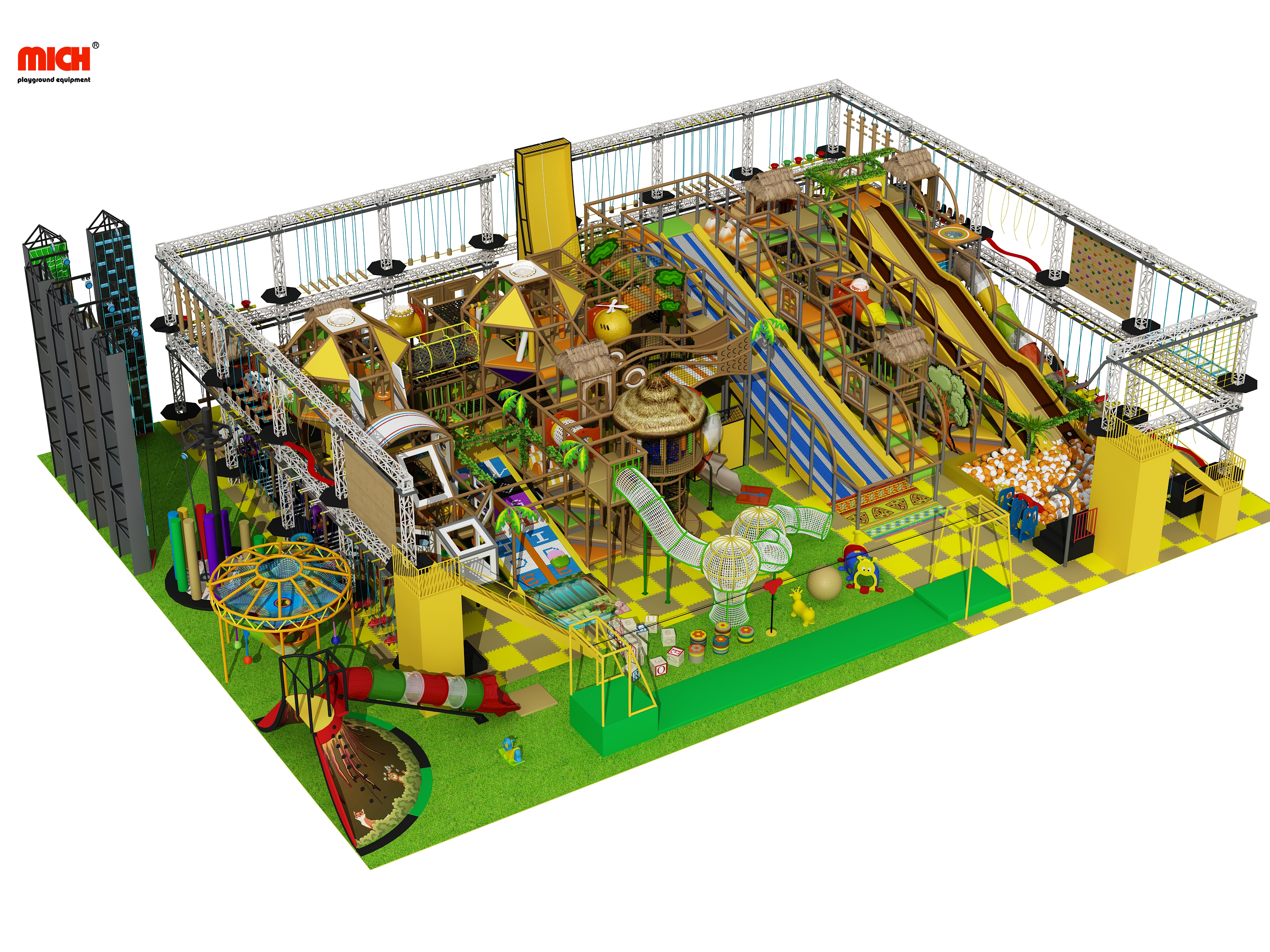
Assembly is the most vulnerable phase of your project. A perfectly manufactured structure can become a massive liability if installed incorrectly. Flying in the manufacturer's engineering team ensures high accuracy and a faster build. These technicians assemble these specific structures daily. They know exactly how to tension the safety netting, secure the clamp fittings, and align the modular plastic slides to eliminate gaps. However, utilizing a factory-dispatched team requires managing visa applications, international flights, local accommodation, and daily stipends. You must factor these logistical requirements into your project timeline early.
Hiring local contractors eliminates international travel logistics but introduces potential knowledge gaps. Local teams unfamiliar with specific Commercial Playground Equipment may build slower and risk voiding factory warranties through improper assembly techniques. If they overtighten clamps, they can crush the steel pipes. If they fail to properly anchor the main frame to the concrete slab, the entire structure becomes unstable. If they cut the safety netting incorrectly, it will fray and fail under pressure.
If you utilize local installers, scrutinize the provided installation manuals before the cargo ships. Look for detailed CAD drawings, clear English-language instructions, 3D animated guides, and logical, numbered component mapping. Every pipe, clamp, and foam pad should have a corresponding label that matches the bill of materials. Establish contingency plans for missing parts, freight damages, or structural misalignments during the build phase. A reliable supplier will offer real-time video support to resolve on-site engineering challenges immediately. They should also ship a surplus of consumable items like zip ties, galvanized screws, netting cord, and extra foam padding to account for inevitable on-site adjustments and minor cutting errors.
Floor preparation is another critical installation factor. The concrete slab must be perfectly level before the steel frame is erected. Any undulation in the floor will compound as the structure rises, leading to misaligned slide platforms and uneven bridge connections. Your local team must verify the floor level and install the EVA foam safety mats with tight seams to prevent tripping hazards. The transition between the safety surfacing and the surrounding facility floor must comply with local ADA or equivalent accessibility standards.
Never rely solely on a polished website or a well-designed product catalog. Take actionable steps to conduct thorough due diligence on your prospective manufacturing partner. The overseas market is saturated with middlemen posing as direct factories.
Protect your capital by structuring payment milestones strategically. A standard approach involves a 30% deposit to initiate production. Do not release the remaining 70% balance until you have concrete proof that the order is complete and meets your specifications. Demand video verification of the fully staged equipment assembled in the factory. The supplier should erect the main structural frame and attach key components to prove everything aligns correctly before it is dismantled and packed into shipping containers. Avoid complete upfront payments under any circumstances. Utilize Letters of Credit or secure trade assurance services where applicable to mitigate financial risk. Ensure the contract clearly outlines penalties for delayed production or failure to meet agreed-upon material specifications.
You must also account for shipping documentation. Ensure the supplier provides a commercial invoice, packing list, bill of lading, and any required fumigation certificates for wooden components. Missing documentation will cause your containers to sit at the destination port, racking up daily demurrage fees. Work with a licensed customs broker in your country to pre-clear the shipment while it is still on the water.
Execute the following steps to secure a compliant and operational facility:
A: A true turnkey solution includes custom 3D design, site assessment, in-house manufacturing, international logistics, customs clearance, on-site installation, and comprehensive handover including maintenance and sanitization protocols. It shifts the burden of project management from the buyer to the supplier.
A: You must demand comprehensive third-party safety audits from recognized bodies like TÜV SÜD or SGS. The documentation must prove compliance with specific regional standards like ASTM F1918 or EN 1176/1177 for the entire structural design, not just individual components.
A: Premium manufacturers offer factory-dispatched installation teams. The buyer typically covers visa, travel, and accommodation logistics. This ensures accurate assembly, speeds up the build timeline, and protects the structural warranty of the equipment.
A: Wenzhou is the traditional hub for large-scale mass production and standard components. Foshan and Guangzhou generally specialize in high-end customization, complex steel structures, and premium installations designed for modern shopping malls and flagship locations.
A: Production typically takes 3 to 5 weeks. Ocean freight and customs clearance add 4 to 6 weeks depending on the destination port. On-site installation usually requires 1 to 3 weeks, depending on the complexity and overall footprint of the structure.
A: Request standardized sanitization protocols from the manufacturer. Use manufacturer-approved, non-corrosive sanitizing agents to clean PVC and plastics. Establish daily and weekly cleaning checklists to maintain hygiene, prevent surface degradation, and protect material integrity over time.