- All
- Product Name
- Product Keyword
- Product Model
- Product Summary
- Product Description
- Multi Field Search

Views: 3 Author: Site Editor Publish Time: 2025-11-20 Origin: Site
Kids are naturally drawn to challenges. The Ninja Course gives them that in a structured, safe, and fun environment. It’s not just swinging, climbing, or jumping—it’s an arena where children develop skills that matter in life. Every obstacle, from the monkey bars to the warped wall, is an opportunity to practice coordination, problem-solving, and resilience.
The beauty of a Ninja Course is how it blends physical activity with mental and social development. While kids think they’re playing, they’re actually learning perseverance, focus, and teamwork. This combination makes the Ninja Course more than an activity—it becomes a training ground for confidence and independence that benefits school, sports, and everyday life.
A Ninja Course is a specially designed obstacle course that challenges kids in multiple ways. Unlike a playground, it’s a dynamic, skill-based environment that integrates gymnastics, climbing, parkour, and bodyweight strength exercises. Kids swing on ropes, navigate narrow balance beams, climb walls, and leap between platforms.
Courses come in indoor and outdoor formats. Some are beginner-friendly, suitable for toddlers, while others challenge older kids with complex obstacles that require strategy, timing, and strength.
A Ninja Course is not just about movement; it’s about problem-solving under pressure. Each obstacle encourages kids to think, plan, and adapt, teaching skills that extend far beyond physical exercise.
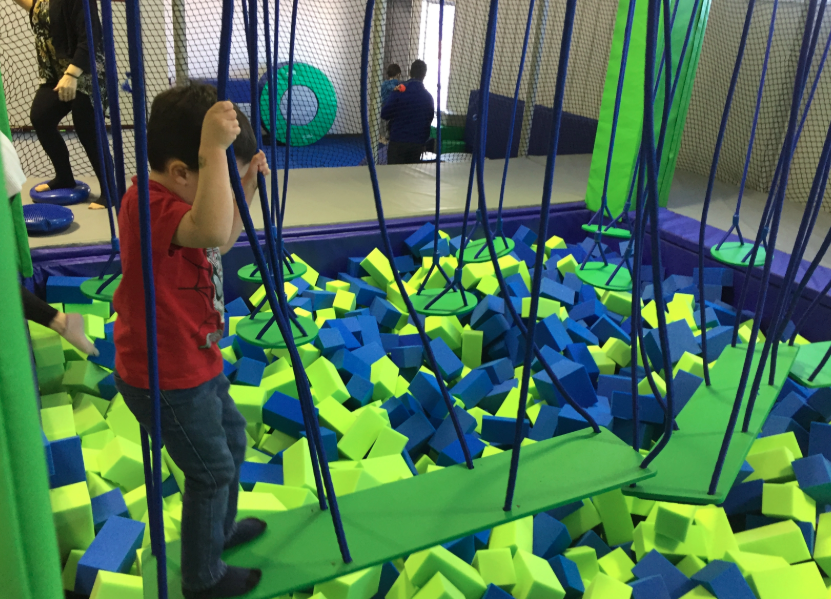
Gross motor skills involve large muscle groups, crucial for running, jumping, climbing, and maintaining balance. The Ninja Course targets these muscles in engaging ways:
Running & Jumping: Courses require bursts of speed, sudden stops, and directional changes. This strengthens legs, improves coordination, and enhances cardiovascular health.
Climbing: Walls, ropes, and ladders engage the arms, shoulders, back, and core. Climbing improves muscle endurance and total-body coordination.
Balancing: Walking across beams, uneven platforms, or ropes sharpens proprioception—your body’s ability to know where it is in space.
Swinging: Traversing monkey bars or ropes strengthens grip, forearms, and upper body while improving timing and spatial awareness.
| Activity | Muscle Focus | Benefits |
|---|---|---|
| Rope climb | Arms, shoulders, core | Strength, endurance, coordination |
| Jump across platforms | Legs, core | Agility, balance, cardiovascular health |
| Balance beam | Core, legs | Stability, spatial awareness, confidence |
| Monkey bars | Arms, grip | Upper body strength, coordination |
The consistent challenge of a Ninja Course develops overall body control, coordination, and stamina, helping kids become confident movers both on and off the course.
Fine motor skills involve the small muscles in hands, fingers, and wrists. Surprisingly, the Ninja Course works these skills naturally, often embedded within gross motor movements:
Varying Holds: Climbing walls and ropes requires switching grips from pinches to full-hand wraps. This enhances dexterity and tactile awareness.
Sustained Grip: Holding bars or rings builds endurance in hand and forearm muscles. Kids can hold a pencil longer, manipulate small objects, or handle tools more confidently.
Dynamic Adjustments: Releasing one hand while swinging to grab another improves coordination and precision.
Precision Placement: Accurate hand and foot placement teaches planning, spatial awareness, and control.
These activities directly support skills like tying shoelaces, buttoning clothes, cutting shapes, or using a pencil for writing. The Ninja Course combines strength and precision, allowing children to develop fine motor skills in a fun, engaging way.
Balance is a foundational skill for physical and cognitive development. On a Ninja Course, children must stabilize themselves while moving across narrow beams, jumping between platforms, or reaching for ropes.
Proprioception Training: Navigating obstacles enhances body awareness. Kids learn how their limbs relate to each other and to the environment.
Confidence Boost: Successfully balancing on a beam or jumping precisely builds self-assurance.
Transferable Skills: Strong balance and spatial awareness improve performance in sports, playground activities, and daily tasks.
A Ninja Course trains the brain and body together, creating a strong foundation for motor control and coordination.
Failure is part of life—and part of every Ninja Course. Falling off a bar or missing a foothold is common. The course teaches kids to:
Try again after failure.
View mistakes as opportunities, not setbacks.
Develop persistence that applies in schoolwork, sports, and social situations.
Experiencing success after repeated attempts fosters resilience, teaching children that persistence leads to mastery.
Every obstacle is a puzzle. Kids must assess the challenge, plan, and execute a solution:
Observe the obstacle carefully.
Choose the best approach.
Adjust movements in real time.
This active problem-solving strengthens cognitive flexibility, encourages creativity, and prepares children to adapt to unexpected challenges in life.
A Ninja Course requires intense concentration. Children must control their speed, time their jumps, and plan each movement.
Improves attention spans.
Builds patience for complex tasks.
Reinforces the importance of practice, repetition, and goal-setting.
Kids learn that focus and discipline are keys to success, both on the course and in life.
Progress on a Ninja Course is visible. Many programs use levels, badges, or colored shirts to show achievement:
| Level | Skills | Reward |
|---|---|---|
| Beginner | 10 skills | Colored wristband |
| Intermediate | 20 skills | T-shirt |
| Advanced | 27 skills | Medal or special shirt |
Every achievement increases self-confidence. Children gain pride from mastering new obstacles and experience real accomplishment, motivating them to try more challenges.
Even though many obstacles on a Ninja Course are designed for individual challenge, the gym environment naturally promotes collaboration. Children quickly learn that cheering for one another, offering encouragement, or celebrating a peer’s success creates a positive and motivating atmosphere. For example, when one child hesitates to cross a tricky balance beam, peers often step in with tips or verbal support, boosting confidence and reinforcing social bonds.
Over time, these interactions teach children empathy, patience, and how to communicate effectively, all in the context of a fun and challenging activity. The shared experiences of overcoming obstacles together help kids build friendships, develop trust, and understand the value of working as part of a team. A Ninja Course, therefore, is more than a place to develop strength—it’s a community that nurtures social skills naturally through play.
A Ninja Course also provides subtle but powerful leadership opportunities for children. When older or more experienced ninjas guide younger participants through a difficult obstacle, they practice explaining strategies clearly, giving constructive feedback, and encouraging others in a supportive way. These moments cultivate essential leadership traits, such as patience, empathy, and the ability to motivate peers. Children learn that leadership is not about authority, but about supporting and inspiring others.
Additionally, repeated exposure to these mentoring roles strengthens confidence and helps kids understand the impact of positive influence in a group setting. By navigating challenges themselves while simultaneously helping others, children develop social awareness, accountability, and decision-making skills that translate directly into school projects, team sports, and other collaborative environments. The Ninja Course, therefore, acts as a real-world training ground for both leadership and teamwork.
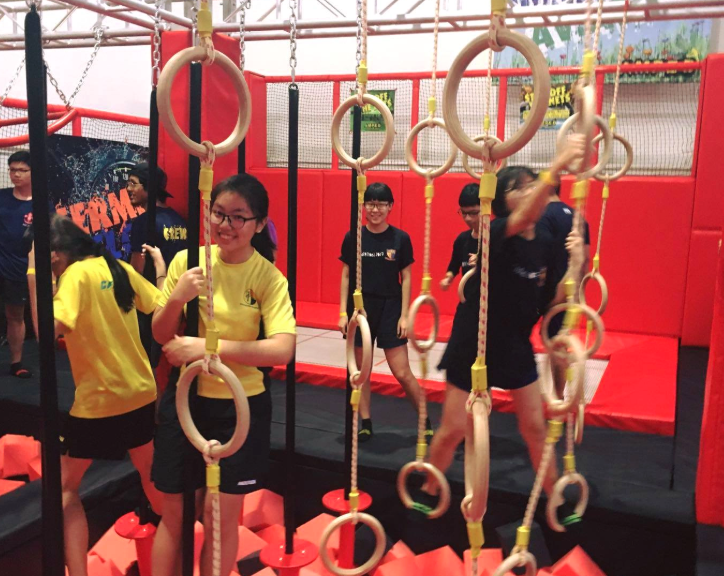
The benefits of an indoor Ninja Course don’t stop when children leave the gym. Parents and caregivers can reinforce the skills kids learn on the course at home, in the backyard, or at local playgrounds, turning everyday environments into opportunities for growth. For example, setting up pillow or chair obstacle courses allows children to practice climbing, crawling, and maneuvering through confined spaces, just like they would on the Ninja Course. Beanbag tosses or target games can improve hand-eye coordination, precision, and timing, all skills directly transferable to climbing walls or swinging across monkey bars.
Creating balance lines with tape on the floor mimics the concentration and stability challenges of walking across narrow beams on the Ninja Course, training core strength and spatial awareness. Even simple “laser” yarn or streamer challenges, where children must navigate without touching obstacles, reinforce careful movement, planning, and problem-solving. Integrating these activities into daily life not only extends the physical benefits of an indoor Ninja Course but also helps children internalize focus, resilience, and motor coordination in fun and interactive ways.
Selecting the right indoor Ninja Course is crucial for maximizing benefits while ensuring safety and engagement. Parents should look for facilities that prioritize safety, including padded surfaces, cushioned landings, and well-maintained equipment. Age-appropriate obstacles are equally important; younger children need smaller, manageable challenges, while older or more experienced ninjas benefit from advanced elements that test strength, agility, and problem-solving.
A well-designed indoor Ninja Course also features skilled instructors who provide guidance, encouragement, and constructive feedback. A supportive environment ensures children feel confident to try new skills and push their limits safely. Structured programs with skill tracking and progression systems help kids remain motivated, giving clear milestones to celebrate achievements along the way. Courses that adjust obstacle difficulty based on individual ability allow each child to be challenged without feeling overwhelmed. Ultimately, the right indoor Ninja Course blends physical challenge, cognitive growth, and social interaction, offering a comprehensive training experience that builds strength, focus, resilience, and confidence.
Children develop gross motor skills, including running, jumping, climbing, and balancing, as well as fine motor skills like precise hand grips and coordination, through dynamic obstacles and movement.
Yes, Ninja Courses teach focus, perseverance, problem-solving, and critical thinking as children plan, adjust, and execute movements on complex obstacles.
By allowing children to fail safely, try again, and overcome obstacles, the Ninja Course encourages persistence, helping kids learn that mistakes are opportunities for growth.
Indoor Ninja Courses designed for age-appropriate levels provide padded surfaces, soft landings, and skilled supervision to ensure children can play and learn safely.
Even though obstacles are often tackled individually, kids cheer, give tips, and collaborate, which strengthens communication, empathy, and social skills.
Stepping onto a Ninja Course is more than just fun—it’s a hands-on way for kids to explore their potential. Every swing, climb, and jump challenges them to think, adapt, and grow, turning playtime into skill-building moments. Children learn to push past limits, coordinate their bodies, and handle setbacks in a safe and exciting environment.
At Zhejiang Mich Playground Co., Ltd., we design Ninja Courses that spark curiosity and confidence. By combining adventure with structured challenges, our playgrounds inspire children to develop strength, focus, teamwork, and resilience, making learning through play truly unforgettable.