- All
- Product Name
- Product Keyword
- Product Model
- Product Summary
- Product Description
- Multi Field Search
Views: 1 Author: Site Editor Publish Time: 2026-06-09 Origin: Site
Differentiated, highly themed recreational spaces drive foot traffic and maximize return on investment in commercial environments. Property developers and facility operators constantly seek unique visual identities to anchor their sites. However, procuring customized play structures overseas introduces specific operational risks. Buyers face challenges regarding color accuracy, material durability under UV exposure, intellectual property (IP) protection, and strict safety compliance. You need a systematic framework for evaluating how a China Playground Equipment Manufacturer executes custom colors and thematic designs. Managing these variables ensures the final product aligns with brand specifications, safety standards, and operational budgets. This guide outlines the exact technical requirements, material limitations, and quality control checkpoints necessary to successfully source custom-themed recreational structures from overseas facilities.
When sourcing play equipment china, you will encounter three distinct tiers of customization. Level 1 involves basic private labeling. You select standard catalog models and apply custom logo placement or minor branding decals. This method requires minimal engineering review and ships quickly.
Level 2 is stock-based customization. Manufacturers utilize their existing modular molds but apply your specific custom colorways, themed graphics, and material finishes. This approach offers high visual impact without the burden of new tooling. Level 3 represents fully bespoke OEM customization. This requires engineering entirely new structural shapes, developing custom themes from scratch, and fabricating proprietary aluminum molds. It demands extensive structural testing and extended lead times.
| Customization Level | Description | Tooling Requirement | Lead Time Impact |
|---|---|---|---|
| Level 1: Private Label | Standard models with logo placement | None | Minimal (Standard production) |
| Level 2: Stock-Based | Custom colors/graphics on existing molds | None | Moderate (Material sourcing) |
| Level 3: Fully Bespoke | New structural shapes and themes | Custom CNC Aluminum Molds | High (Engineering and tooling) |
You must identify factories aligned with your specific customization level. Massive production facilities optimize for high-volume, standardized runs. They often reject intricate, low-volume custom requests. Flexible small-batch specialists handle detailed thematic designs and custom colorways much better.
Chinese manufacturers are increasingly lowering minimum order quantities for Level 2 stock-based color customization. This shift targets overseas boutique buyers who need unique branding without funding custom molds. Review a supplier's past project portfolio to verify their actual capability in handling mixed-color batches and custom graphic applications.
Never rely on digital screens or photographs for color approval. Monitors calibrate differently, leading to massive discrepancies upon delivery. You must use standardized color matching systems like RAL or Pantone. Providing exact RAL codes bridges the communication gap with the factory floor, giving the production manager a definitive, measurable target.
Factories manufacture most plastic playground components using Linear Low-Density Polyethylene (LLDPE) via rotational molding. Achieving custom colors requires color masterbatches. These concentrated pigments mix into the raw plastic resin before the molding process begins.
Evaluate the trade-offs between pre-colored resins and dry blending. Pre-colored resins provide superior color consistency and vibrancy throughout the component wall. Dry blending mixes pigment powder with natural resin right before molding. It lowers material minimums but frequently causes swirling, streaking, and uneven color distribution across large panels.
Metal components demand robust protection against moisture and impact. The process starts with proper galvanized steel preparation to prevent sub-surface rust. After welding and grinding, the steel must undergo sandblasting to create an anchor profile for the coating.
When evaluating powder coating processes for Commercial Play Equipment, demand specific technical parameters. Check the coating thickness (typically 80-120 microns), verify curing oven temperatures, and require cross-hatch adhesion testing. Proper application ensures the coating resists chipping and corrosion in harsh outdoor environments.
Thematic elements rely heavily on detailed surface graphics. You must assess the durability of these applications. UV-printed panels offer high-resolution imagery but require thick, clear protective topcoats to prevent rapid fading. Molded-in graphics integrate directly into the plastic during rotomolding, providing permanent durability. High-density polyethylene (HDPE) CNC routing offers a tactile, highly durable option for custom logos, utilizing layered, contrasting colored plastic sheets.
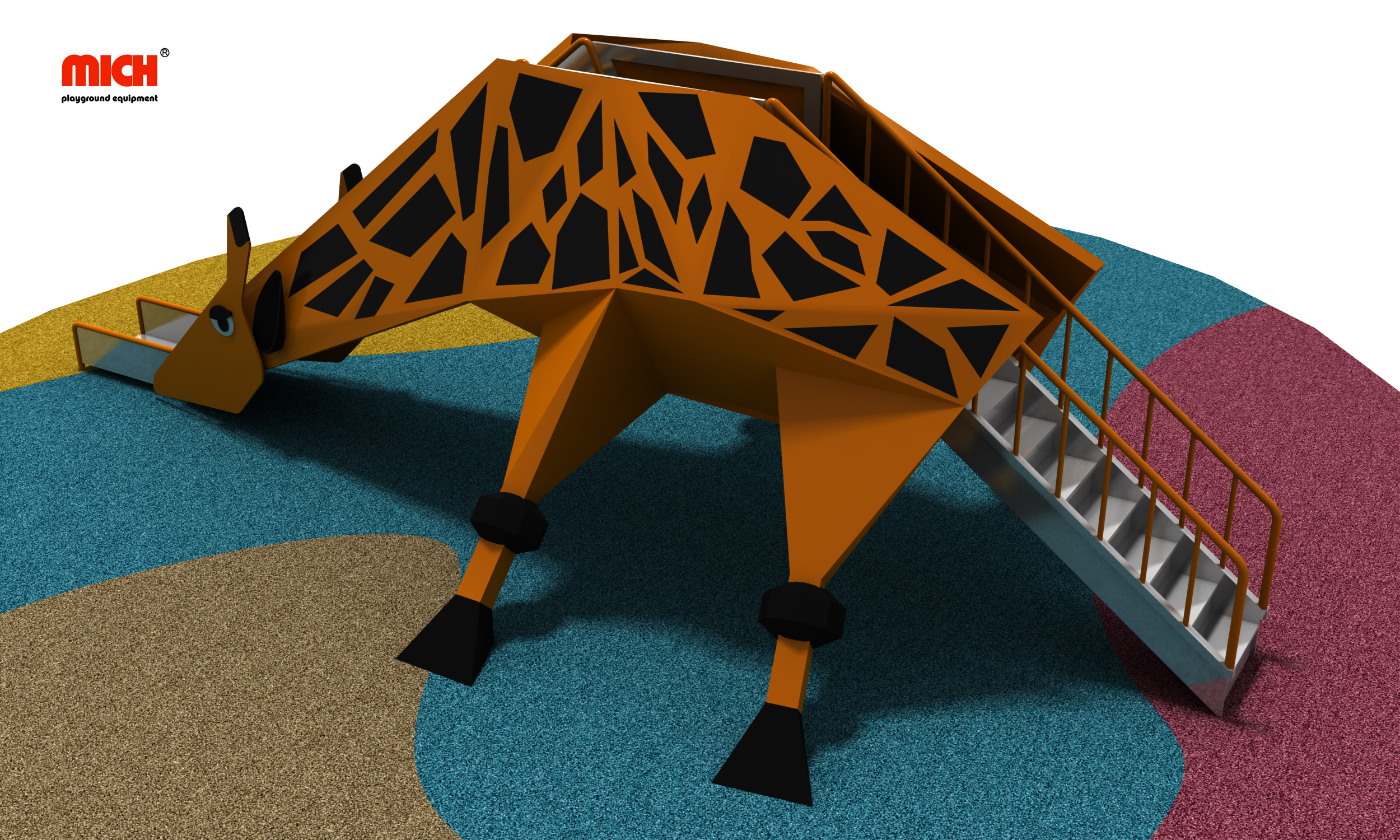
Translating conceptual artwork into structurally sound CAD or 3D Max models is a rigorous engineering phase. Factories must balance your aesthetic desires with physical engineering realities. Watch for a lack of engineering validation on aesthetic-first concepts. If a themed roof looks great but lacks proper load-bearing support or creates water pooling, it will fail in the field.
Fully bespoke designs require custom CNC aluminum molds for the rotational molding machines. Understand the temporal and operational costs associated with these molds. They represent a heavy upfront capital expenditure and add several weeks to the production schedule for machining and polishing.
Develop strategies for amortizing these tooling expenses. Spread the cost across large-scale commercial projects or plan multi-site rollouts that utilize the exact same custom components repeatedly. Retain ownership of the molds in your manufacturing contract.
The global play equipment market carries a high risk of design replication. Protecting proprietary themes requires proactive legal measures. Secure clear design ownership transfers in your manufacturing contracts before sending any files.
Utilize NNN (Non-Disclosure, Non-Use, Non-Circumvention) agreements governed by Chinese courts before sharing proprietary 3D CAD files. Implement strategic manufacturing by splitting custom component production across different factories. This prevents any single supplier from possessing the complete blueprint of your proprietary structure.
Establish exact dimensions, weight limits, and target safety standards (ASTM or EN) immediately. The manufacturer's engineering team conducts a feasibility study to ensure the custom design can be safely produced using available materials and standard pipe diameters.
Source physical plastic pellets and powder-coated metal chips directly from the factory. Verify these physical swatches under natural outdoor lighting conditions. This ensures the final product matches the intended brand colors before you authorize mass production.
The manufacturer must produce a "Golden Sample." Evaluate this first off-tool component for structural defects, parting line thickness, and color accuracy. Check for flash around the mold seams and ensure wall thickness is uniform. Approval of the FAI is mandatory.
Execute comprehensive pre-shipment quality testing. Verify UV stabilization compliance, test load-bearing capacities on custom decks, and ensure uniform wall thickness across all rotationally molded parts using ultrasonic thickness gauges. Do not authorize container loading until these tests pass.
Harsh outdoor environments cause rapid photodegradation and fading. Mandate anti-UV additives, such as the UV8 standard, in all plastic components. Request third-party accelerated weathering test reports from organizations like SGS or TUV. This provides verifiable proof of the material's long-term color fastness.
Custom colorants, plastics, and powder coatings must be entirely free from heavy metals like lead and cadmium. Ensure all materials comply with stringent international standards, including CPSIA, EN71-3, and REACH. Request material safety data sheets (MSDS) and third-party toxicity testing reports for every custom color batch.
Altering themes and shapes directly impacts structural safety. Custom designs can inadvertently create entrapment hazards for heads, necks, or fingers. They can also alter required fall zones. You must re-certify all custom designs to ASTM F1487 or EN1176 standards using certified third-party testing agencies before installation.
Custom masterbatches and specialized powder coat runs trigger higher minimums because factories must purge their machines and clean hoppers between color changes. Negotiate blended material runs or consolidate orders across multiple sites to bypass high minimum limits while achieving custom aesthetics.
Customization inherently extends lead times. Factor in the additional 3 to 6 weeks required for custom mold fabrication, prototype revisions, and FAI approvals. Accurate project scheduling must account for these inevitable engineering and testing delays.
Sourcing exact color-matched replacement components years after the initial production run presents a massive logistical challenge. Structure a spare parts package at the time of initial purchase. Secure extra high-wear components in the exact custom colors and store them locally to minimize future downtime.
Customizing colors and themes provides a distinct visual advantage for commercial spaces, creating memorable environments that drive engagement. Success requires rigorous management of material specifications, IP protection, and safety compliance throughout the manufacturing process.
A: Yes, you can specify exact Pantone or RAL colors. You must request physical color swatches of the colored plastic and powder-coated metal from the manufacturer to verify the match before mass production, as different materials absorb pigments differently.
A: Private label adds your logo to standard items. Stock-based customization changes colors and graphics on existing molds. Fully bespoke OEM requires engineering new structural shapes and fabricating custom aluminum molds from scratch.
A: Minimums vary by factory and application method. Stock-based color changes might require only a few units, while custom masterbatches for plastics or specific powder coats require larger runs to justify machine setup and purging.
A: Manufacturers blend anti-UV additives, such as UV8 stabilizers, into the plastic resin during the rotational molding process. Always request third-party accelerated weathering test reports to verify the material's UV resistance.
A: Yes. Any alteration to the physical shape or structure can introduce new entrapment hazards or change fall zones. Custom designs must be re-certified to standards like ASTM F1487 or EN1176 by a certified third party.
A: Use NNN (Non-Disclosure, Non-Use, Non-Circumvention) agreements enforceable in Chinese courts. Split the manufacturing of custom components across different factories so no single supplier holds the complete design blueprint.