- All
- Product Name
- Product Keyword
- Product Model
- Product Summary
- Product Description
- Multi Field Search

Views: 0 Author: Site Editor Publish Time: 2026-07-25 Origin: Site
The global demand for family entertainment centers relies heavily on overseas production, but sourcing commercial play structures internationally carries significant operational and financial stakes. Buyers face a saturated market of suppliers, making it difficult to distinguish between genuine manufacturers and trading companies, verify international safety compliance, and avoid substandard engineering. The difference between a cheap 4-foot grid system and a robust 8-foot structural grid dictates the lifespan, maintenance overhead, and safety of your entire facility.
Establishing a rigid, evidence-based evaluation framework is required to assess an indoor playground china supplier. This guide breaks down the technical, financial, and logistical criteria necessary to shortlist suppliers and secure high-ROI Commercial Playground Equipment without falling victim to common sourcing pitfalls.
Defining what constitutes a reliable manufacturing partner versus a high-risk vendor in the commercial amusement sector requires looking past glossy catalogs. The market is flooded with entities claiming to be factories, but many operate simply as middlemen assembling components from various undocumented workshops.
Indicators of a direct China Indoor Playground Manufacturer include ISO certifications, registered capital, a substantial factory floor footprint, and dedicated in-house engineering teams. Trading companies often mask themselves as manufacturers but carry distinct risks, including markup costs, communication delays, lack of direct quality control, and warranty evasion when components fail.
| Evaluation Metric | Direct Manufacturer | Trading Company |
|---|---|---|
| Facility Footprint | Large industrial space with raw material storage, welding stations, and trial assembly zones. | Small office space, often located in commercial high-rises away from industrial zones. |
| Customization Speed | Rapid CAD/3D revisions handled by in-house engineers. | Slow turnaround times due to relaying information to third-party factories. |
| Quality Control | Direct oversight of steel cutting, welding, and PVC wrapping. | Relies on external factory standards; high variance in component quality. |
| Pricing Structure | Transparent Ex-Works (EXW) pricing based on raw material weight and labor. | Inflated margins to cover middleman fees. |
Primary production regions dominate the market, specifically Wenzhou and Guangzhou. Wenzhou operates as the playground capital of China, offering a dense network of raw material suppliers. This proximity lowers costs but requires strict quality oversight, as the barrier to entry for small workshops is low. Guangzhou typically focuses on electronic arcade machines and trampoline parks, though crossover exists. Understanding these regional supply chains helps buyers anticipate component quality, pricing structures, and shipping logistics.
Identifying industry leaders establishes a baseline for premium manufacturing. High-end manufacturers prioritize structural integrity and compliance over merely offering the lowest price. You can use the engineering and safety benchmarks of Tier-1 brands to audit and filter out lower-tier operations.
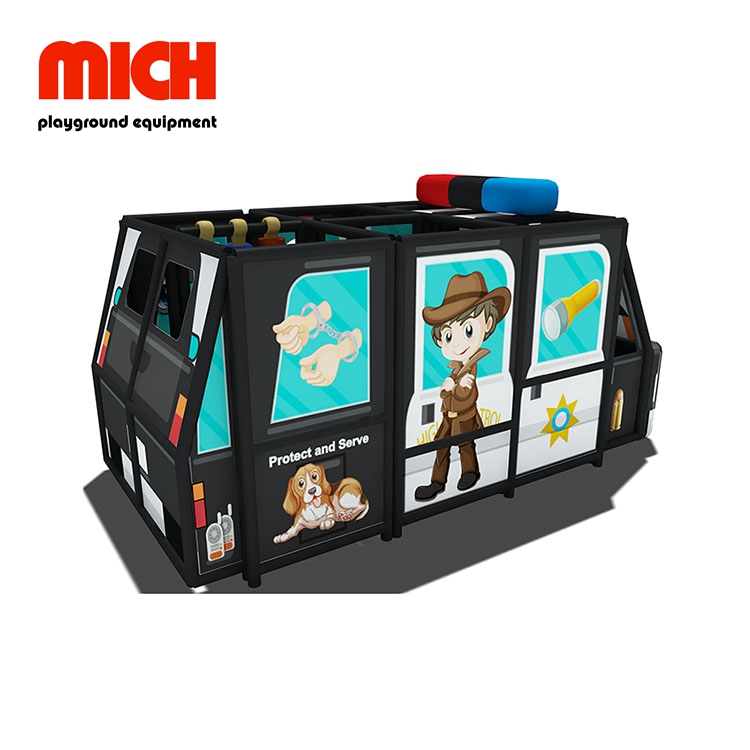
Evaluating a supplier requires a deep dive into their technical specifications and safety protocols. Surface-level aesthetics mean nothing if the underlying structure is compromised by thin steel or toxic plastics.
Verify claims of ASTM F1918 (US), EN 1176 (Europe), and CSA (Canada) compliance. Request third-party lab testing reports from reputable agencies like TÜV SÜD, SGS, or Intertek rather than accepting self-issued certificates or generic CE stamps. Evaluate fire-retardant certifications (NFPA 701, BS 5852) for foams, plastics, structural netting, and PVC coverings. A legitimate supplier will have these reports readily available and tied directly to their company name, not a redacted third party.
Comparing structural frameworks is critical for long-term facility safety. Understand the difference between standard 4-foot level builds, which are often cheaper, less stable, and more crowded, and heavy-duty 8-foot ground-level structural grids. Evaluate steel gauge thickness, demanding a minimum of 2.0mm to 2.5mm Q235 hot-dipped galvanized steel pipes versus thin 1.5mm alternatives that bend under dynamic loads.
| Component | Substandard Specification (High Risk) | Commercial Grade Specification (Required) |
|---|---|---|
| Steel Framework | 1.2mm - 1.5mm thickness, cold-rolled steel. | 2.0mm - 2.5mm thickness, Q235 hot-dipped galvanized. |
| Foam Padding | Low-density EPE foam, loses shape quickly. | High-density EVA foam (55-60 shore hardness). |
| PVC Covering | 0.30mm thickness, easily punctured, toxic dyes. | 0.45mm - 0.55mm thickness, 1000D nylon weave, non-toxic. |
| Safety Netting | Machine-knitted nylon, degrades under UV/tension. | Hand-knitted marine-grade polyethylene rope. |
Assess the manufacturer's in-house engineering and 3D design team, looking for proficiency in CAD, SolidWorks, and 3ds Max. Evaluate their ability to design for specific floor plans, ceiling heights, fire exits, and structural pillars. Verify the supplier's capability to integrate ADA-compliant and barrier-free play structures to ensure accessibility for children of all physical abilities. A competent design team will ask for your DWG format floor plan before ever quoting a price.
Focusing solely on the initial quote often leads to budget overruns. A comprehensive financial assessment is necessary to understand the true investment required to get the equipment manufactured, shipped, and installed.
Normalize quotes across different suppliers by ensuring they include identical material specs, play volume, and itemized component counts. Identify common hidden costs in cheap quotes, such as inferior rotational-molded plastics, reduced play density, omitted safety padding, and missing spare parts. Formulate the cost per cubic meter based on play value and equipment density, rather than a flat footprint size. A massive structure with empty interior space offers poor play value despite a large footprint.
Calculate freight volume (CBM) and its impact on shipping container costs, typically utilizing 20GP or 40HQ containers. Navigate HS codes, import duties, customs clearance, and potential anti-dumping regulations for commercial playground equipment in your target destination. Work with a freight forwarder early in the process to estimate port fees, chassis rental, and final mile delivery costs to your facility.
Compare the cost, risk, and timeline of factory-dispatched installation teams versus hiring local contractors guided by detailed 3D installation manuals and video schematics. Factory teams offer expertise but incur travel and visa expenses, while local teams require clear, accurate documentation from the manufacturer. If choosing local installation, demand a sample installation manual from the supplier during the vetting phase to ensure their documentation is legible and comprehensive.
Managing the production and delivery phases requires proactive oversight to prevent costly errors, missing components, and project delays.
Hiring independent third-party inspectors before container loading is necessary. Key pre-shipment inspection checkpoints include trial assembly of structural frames, weld testing, color matching, non-toxic lead testing, and component counting. Do not release the final balance payment until the inspection report confirms all specifications match the contract.
Analyze the reality of enforcing warranties across borders and the cost of international shipping for replacement parts. Structure contracts to include a comprehensive spare parts package shipped with the initial order to mitigate future operational downtime. This package should include extra fasteners, safety nets, PVC repair patches, and foam tubes.
Understand the risks of design theft. Protect custom IP when sharing floor plans, theme concepts, and proprietary layout plans with overseas vendors by using non-disclosure agreements and limiting the sharing of complete CAD files until a contract is secured. Watermark your concept art and clearly state ownership of custom molds if you are paying for bespoke fiberglass or plastic components.
A systematic approach filters out unreliable vendors and secures a capable manufacturing partner capable of delivering commercial-grade equipment.
Sourcing an indoor playground from China is a highly viable strategy for commercial projects, provided buyers prioritize structural integrity, material density, and verifiable compliance over the lowest initial bid. The best suppliers are transparent about their material specs, welcome third-party inspections, and possess a documented history of successful international installations and accessible design capability.
A: Costs vary widely based on play density, material quality, and facility size. Freight, destination customs duties, and installation will add significantly to the final landed cost, requiring a detailed logistical calculation based on your specific port of entry and container volume.
A: Reputable manufacturers should hold certifications for ASTM F1918 (US), EN 1176 (Europe), and ISO 9001. Crucially, demand third-party type certificates and test reports from recognized agencies like TÜV Rheinland or SGS, rather than self-issued declarations.
A: Typical timelines include 20-30 days for production, depending on the design complexity. Sea freight generally takes 30-45 days, followed by 7-10 days for customs clearance and port transit to your facility.
A: Yes, many manufacturers can dispatch engineers to supervise installation. However, the buyer usually covers visa, travel, and accommodation logistics. Alternatively, you can hire local contractors guided by the manufacturer's detailed 3D schematics and installation manuals.
A: Hire a third-party inspection agency like SGS or TÜV to conduct a pre-shipment inspection. They will verify material specifications, perform weld tests, and oversee a trial assembly of the structural frames to ensure everything fits correctly before container loading.
A: Standard warranties typically include 1-year comprehensive coverage on soft play parts and 3-5 years on the main structural steel frames. However, claiming warranties internationally can be logistically difficult, making upfront spare parts packages crucial.