- All
- Product Name
- Product Keyword
- Product Model
- Product Summary
- Product Description
- Multi Field Search

Views: 2 Author: Site Editor Publish Time: 2026-06-03 Origin: Site
Sourcing commercial play equipment internationally presents a high-stakes balance between significant capital savings and severe liability risks. The Chinese manufacturing market is highly saturated. Buyers must navigate a complex landscape of premium direct factories, low-tier producers, and intermediary trading companies, all while ensuring strict adherence to local safety regulations. A wrong choice leads to structural failures, failed safety inspections, and delayed facility openings. To secure a high-ROI asset without compromising safety, buyers need a systematic, evidence-based framework to evaluate a play equipment china supplier based on structural integrity, verifiable compliance, design capabilities, and total landed cost. You must look past glossy catalogs and focus on raw material specifications, factory floor realities, and engineering standards. This guide breaks down exactly how to vet suppliers, verify their claims, and protect your investment from the initial design phase through final installation.
Commercial play equipment investments require stringent success criteria. You need zero safety incidents. You must achieve regulatory compliance in the destination country. The equipment should deliver a minimum 7-10 year operational lifespan under heavy daily use. Achieving these goals starts with selecting the right manufacturing partner. You cannot afford to fix structural defects after the equipment arrives at your site. The foundation of a successful project relies entirely on the vetting process you conduct months before the first container ships.
You must understand the operational differences between a direct manufacturer and a trading intermediary. A direct China Playground Equipment Manufacturer owns the production facility. They control the raw materials, fabrication process, and quality assurance. Trading companies act as middlemen. They source products from various factories and rebrand them. Trading companies often offer broader catalogs. However, direct factories provide better customization control, faster communication regarding engineering changes, and actual post-sale accountability.
You can verify entity status using several actionable methods. Check their official business licenses. Look specifically at the registered capital and the approved business scope. If the scope only lists "wholesale" or "export" without mentioning "manufacturing" or "production," you are likely dealing with a trading company. Review independent factory audit reports. Conduct live video walk-throughs of the production floor during working hours. A legitimate factory will gladly show you their welding stations, powder-coating lines, and assembly areas in real-time.
Establish a baseline by comparing potential candidates to top-tier, globally recognized Chinese brands. Industry leaders set high standards for production capacity, safety protocols, and material grades. Use these benchmarks to evaluate smaller or lesser-known suppliers. If a supplier falls significantly short of these industry standards, consider it a major red flag. Look at their facility size, the number of full-time engineers on staff, and their inventory of raw materials.
Compare structural design approaches carefully. Lower-tier manufacturers often default to cheaper 4-foot high levels. This reduces material usage but compromises stability and limits play value for older children. Premium suppliers engineer sturdy, 8-foot ground-level grids. These robust structures ensure commercial durability in high-traffic environments. They provide a stronger foundation that resists swaying and shifting over time.
Raw material specifications dictate the safety and longevity of the equipment. Demand strict benchmarks for all components. Do not accept vague descriptions like "high-quality steel" or "durable plastic." You need exact measurements and chemical compositions.
Hardware and fasteners hold the entire structure together. You must specify anti-rust, tamper-proof stainless steel hardware. High-traffic commercial environments cause immense vibration. Inferior hardware will loosen or snap, leading to catastrophic structural failures. Demand nylon-insert lock nuts and rounded bolt covers to prevent laceration hazards.
Identify the necessary regulatory frameworks based on your specific location. North American buyers require ASTM F1918 and F1487 compliance. European markets demand EN 1176 and EN 1177 standards. Buyers in Australia and New Zealand must adhere to AS 3533 and NZS regulations. Your supplier must understand the specific entrapment hazards, fall zone requirements, and guardrail heights dictated by these standards.
You must actively spot fraudulent or expired certificates. Never accept a certificate at face value. Contact the testing laboratories directly. Reach out to TUV Rheinland, SGS, or Intertek. Provide the certificate numbers to verify authenticity. Legitimate manufacturers welcome this verification process. Fraudulent suppliers will make excuses or provide blurry, unreadable documents.
Material toxicity and fire safety reports are non-negotiable. Require specific test reports proving materials are free from lead, phthalates, and hazardous chemicals. You must also verify fire rating standards. Ensure the foam and PVC meet BS 5852 or UL 94-V0 fire retardant specifications. Local fire marshals will demand these documents before issuing your certificate of occupancy.
Evaluate the risks of a manufacturer outsourcing component production. Outsourcing dilutes quality control. It increases the risk of mismatched parts and substandard materials. Prioritize factories that manufacture the majority of components in-house. They should have dedicated workshops for metal fabrication, plastic rotational molding, and soft play sewing.
Verify if the supplier has a dedicated in-house QC team. They should follow ISO 9001:2015 standards. Request documented inspection procedures. Ask how they handle defective components during the fabrication process. A strong QC protocol includes raw material inspection upon arrival, in-process checks during welding and molding, and a final review before packaging.
Highlight the necessity of pre-shipment assembly. Require the factory to conduct a trial assembly of the structural frame before packing. This ensures all parts fit perfectly. It prevents costly delays and modifications during the final installation at your site. Request detailed photos and videos of this trial assembly, showing your specific layout fully erected on their factory floor.
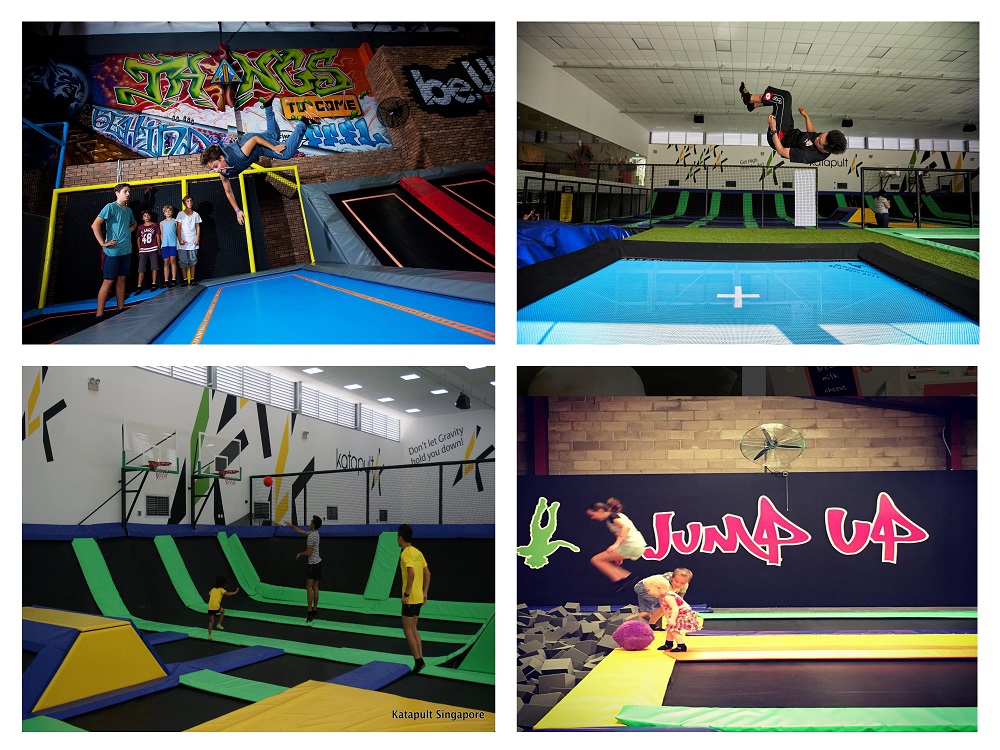
Accepting the lowest bid often results in inferior material thickness. This leads to premature wear and increased maintenance costs. You will face potential operational downtime when broken components force you to close sections of your facility. A slightly higher upfront investment in quality materials yields a significantly better long-term return on investment. High-quality equipment requires less maintenance and retains its visual appeal longer.
Consider the ease of sourcing replacement parts over a 5-10 year period. A reliable manufacturer will maintain records of your specific design. They can quickly fabricate and ship replacement nets, foam tubes, or plastic panels when needed. Fly-by-night suppliers disappear, leaving you unable to source proprietary replacement parts, which eventually forces a complete system replacement.
Evaluate the supplier's ability to provide custom 3D designs and CAD blueprints. They must maximize your specific footprint, ceiling height, and column placements. Avoid manufacturers who rely on generic, non-scalable templates for Commercial Play Equipment. Your facility has unique architectural constraints. The design must navigate around HVAC ducts, emergency exits, and load-bearing pillars.
Ensure designers understand local accessibility guidelines. They must integrate ADA compliance for US projects. They need to calculate proper emergency exit spacing and ensure adequate traffic flow for both children and supervising adults. Code-compliant design prevents costly teardowns after installation. The design phase is where you solve 90% of potential installation problems.
Heavy customization impacts production timelines. Discuss these lead time trade-offs early in the process. Ordering pre-designed, modular components is faster. However, custom designs maximize your available space and create a unique attraction that differentiates your business from local competitors. Plan your procurement schedule to accommodate the extra weeks required for custom engineering and fabrication.
Analyze standard payment terms carefully. A typical structure involves a 30% deposit to begin production. The 70% balance payment is due only upon passing the pre-shipment inspection. Never pay the full amount upfront. Retaining the majority of the payment gives you leverage to demand corrections if the pre-shipment inspection reveals defects or deviations from the approved CAD drawings.
Utilize secure payment mechanisms to protect your capital. Consider Alibaba Trade Assurance for added buyer protection, especially for initial orders. Use Letters of Credit (L/C) for large orders exceeding standard thresholds. Escrow services also mitigate transaction risks when dealing with overseas suppliers. Ensure all banking details match the official company name on the business license.
Detail the standards for export packing. Metal parts require cotton and bubble plastic film wrapping to prevent scratching the powder coat. Fragile plastic components need custom crating or heavy-duty woven bags. All carton boxes must be clearly labeled with part numbers corresponding to the installation manual. Proper packing prevents severe damage during turbulent ocean freight and rough handling at the ports.
Experienced manufacturers optimize container loading. They utilize specialized software to maximize space. This reduces exorbitant shipping costs without crushing delicate components. Ask the supplier for a container loading plan before final packing. They should load heavy steel frames at the bottom and lighter soft play items at the top. Poor loading results in crushed foam, bent pipes, and wasted container space.
Compare your installation options. You can hire the manufacturer's overseas installation team. This is often the most efficient route, as they know the product intimately. Alternatively, utilize local contractors with factory-provided 3D manuals and detailed CAD drawings. A hybrid approach uses a factory supervisor guiding local labor. This balances cost and expertise, ensuring the structural frame is erected correctly while utilizing cheaper local labor for the time-consuming netting and foam wrapping.
Assess the reality of enforcing warranties across borders. Define what constitutes a strong warranty. A reliable supplier offers free replacement parts shipped via air freight for critical failures within the first year. Ensure these terms are clearly written in the final contract. Understand that international warranties rarely cover the labor cost of replacing the part, only the physical component itself.
Hire independent inspection agencies like SGS or Intertek. They conduct pre-shipment inspections (PSI) directly on the factory floor. This guarantees the equipment matches your approved specifications before it leaves China. The inspector will measure pipe thickness, verify material quantities, and check the quality of the welds.
Request physical samples of PVC, foam, netting, and plastic components. Inspect these materials before finalizing large commercial contracts. Physical samples reveal the true quality that photos cannot convey. Test the density of the foam, try to tear the netting, and check the stitching quality on the PVC soft play items.
| Evaluation Criteria | Direct Premium Factory | Trading Company / Low-Tier Supplier |
|---|---|---|
| Structural Design | 8-foot ground-level grids, robust engineering, custom CAD. | 4-foot high levels, minimal material usage, generic templates. |
| Material Quality | Virgin LLDPE, 2.5mm-3.0mm galvanized steel, 1000D PVC. | Recycled plastics, 1.5mm thin steel pipes, thin vinyl. |
| Safety Certifications | Verifiable TUV/SGS reports for specific models and materials. | Generic, expired, or untraceable certificates. |
| Quality Control | In-house ISO 9001 QC, mandatory pre-shipment assembly. | No formal QC, components shipped without trial assembly. |
| Installation Support | Factory supervisors available, detailed 3D manuals provided. | Basic 2D sketches, no on-site support available. |
A: Request their official business license and check the registered business scope. Conduct a live video call during their working hours to see the actual production floor, welding stations, and assembly areas. You can also hire a third-party auditing firm to visit the premises and verify their manufacturing capabilities.
A: Mandatory certifications depend on your region. North America requires ASTM F1918 and F1487. Europe mandates EN 1176 and EN 1177. Australia uses AS 3533. Always ensure these certificates are issued by reputable testing labs like TUV, SGS, or Intertek and verify them directly with the lab.
A: Specify galvanized steel pipes with a minimum thickness of 2.0mm to 3.0mm. Require virgin LLDPE plastics with UV stabilizers. Demand high-density flame-retardant foam covered by heavy-duty 1000D PVC wrapping. Use stainless steel, tamper-proof hardware for all connections.
A: Shipping costs fluctuate based on global freight rates, container size (20ft, 40ft, or 40HQ), and the destination port. Inland transportation and customs clearance fees also apply. Always request a current freight quote from your supplier or a reliable freight forwarder before finalizing your budget.
A: Many premium manufacturers offer on-site installation by sending their own experienced teams. Alternatively, they can send a supervisor to guide your local contractors. They also provide detailed 3D installation manuals and CAD drawings for self-installation if you prefer to manage the build locally.
A: Standard lead times for custom commercial equipment typically range from 25 to 45 days for production. This depends on the size and complexity of the design. Ocean freight adds another 20 to 40 days depending on your location, plus time for customs clearance.
A: Use secure payment methods like Alibaba Trade Assurance or Letters of Credit. Structure payments as a 30% deposit and a 70% balance paid only after a successful third-party pre-shipment inspection. Ensure all material specifications and warranty terms are clearly defined in a stamped contract.