- All
- Product Name
- Product Keyword
- Product Model
- Product Summary
- Product Description
- Multi Field Search

Views: 0 Author: Site Editor Publish Time: 2026-06-19 Origin: Site
Commercial recreation investments carry high financial stakes. Facility owners and developers constantly look for ways to control capital expenditures without compromising quality. Sourcing directly from overseas has become a dominant strategy to achieve this balance. You can significantly reduce initial infrastructure expenses by importing a china playground directly from the factory.
However, international procurement introduces unique complexities. Buyers face strict safety compliance regulations, hidden logistics costs, and the challenge of verifying supplier reliability from thousands of miles away. A misstep in customs documentation or failing to verify safety certificates can delay your project by months or render the equipment unusable.
This guide provides a realistic, step-by-step framework for navigating these challenges. You will learn how to vet suppliers effectively, calculate total landed costs accurately, and successfully manage the logistics of importing commercial recreation infrastructure.
You must define your project scope clearly before contacting any suppliers. Establish firm budget constraints for the equipment and the shipping process. Set realistic timeline expectations, factoring in production, ocean transit, and customs clearance. Determine your target return on investment by estimating daily visitor capacity and ticket prices. Clear success criteria prevent scope creep when reviewing extensive supplier catalogs. You need a baseline document that outlines exact square footage, target age groups, and thematic preferences. This document serves as your primary filter when evaluating initial factory proposals. Without it, you risk purchasing off-the-shelf designs that fail to maximize your specific site's potential.
Indoor and outdoor environments demand entirely different material specifications. Indoor soft play centers rely on high-density sponge, PVC coverings, and wooden structural frameworks. These materials prioritize impact absorption and hygiene. Heavy-duty outdoor Playground Equipment requires galvanized steel pipes, UV-resistant LLDPE plastics, and powder-coated finishes to withstand harsh weather and prevent rust. Never use indoor materials for an outdoor project.
| Component | Indoor Specification Standard | Outdoor Specification Standard |
|---|---|---|
| Structural Frame | Galvanized steel pipe (48mm diameter, 1.5mm thickness) covered with foam padding. | Galvanized steel pipe (114mm diameter, 2.2mm thickness) with anti-rust powder coating. |
| Plastic Parts | Standard LLDPE, food-grade, non-toxic. | UV-stabilized LLDPE, minimum 6mm thickness, anti-static. |
| Decking/Platforms | Plywood base covered with high-density EVA foam and PVC leather. | Perforated steel with PVC dip-coating or heavy-duty powder coating. |
| Fasteners | Standard carbon steel, concealed beneath padding. | 304 Stainless steel, tamper-resistant, rust-proof. |
Calculate your user capacity based on available square footage. A general rule allows one child per three to four square meters of active play space. Age-group targeting directly impacts equipment design. Toddler zones require lower platform heights and softer obstacles. Older children need challenging climbing structures. You must also calculate mandatory safety fall zones around all elevated platforms to comply with regional safety standards. For example, ASTM standards generally require a minimum 6-foot use zone extending from the perimeter of the equipment. If you fail to account for these use zones during the design phase, your equipment will not pass the final safety inspection, forcing costly modifications.
Analyze your site constraints early. For indoor facilities, measure the exact ceiling height to the lowest hanging obstacle, such as HVAC ducts or sprinkler heads. Identify all structural columns and incorporate them into the 3D design. Map out fire escape routes to ensure the play structure does not block emergency exits. Verify the floor's load-bearing capacity, especially for multi-level steel structures.
Do not accept generic safety certificates. Demand authentic test reports from recognized bodies like TUV, SGS, or CE. If you operate in the United States, require verifiable ASTM compliance. For Europe, demand EN1176 test reports. Contact the issuing laboratory directly with the certificate number to verify its authenticity. A legitimate China Playground Manufacturer will gladly provide these details. You must look for specific standard codes on the reports, such as ASTM F1487 for public use playground equipment. If a supplier only provides a basic ISO9001 certificate and claims it covers product safety, walk away immediately. ISO9001 only certifies their quality management system, not the safety of the physical equipment.
You must confirm whether you are dealing with a direct manufacturer or a trading company. Trading companies add unnecessary markups and often lack control over production quality. Assess the manufacturer's actual production facility. If you cannot visit in person, hire a verified third-party auditor in China. They will inspect the factory floor, check raw material inventory, and verify the supplier's actual production capacity. An auditor will check the welding stations, powder coating lines, and plastic rotational molding machines. A factory lacking these core production lines is likely outsourcing the work, which increases your risk of receiving inconsistent quality.
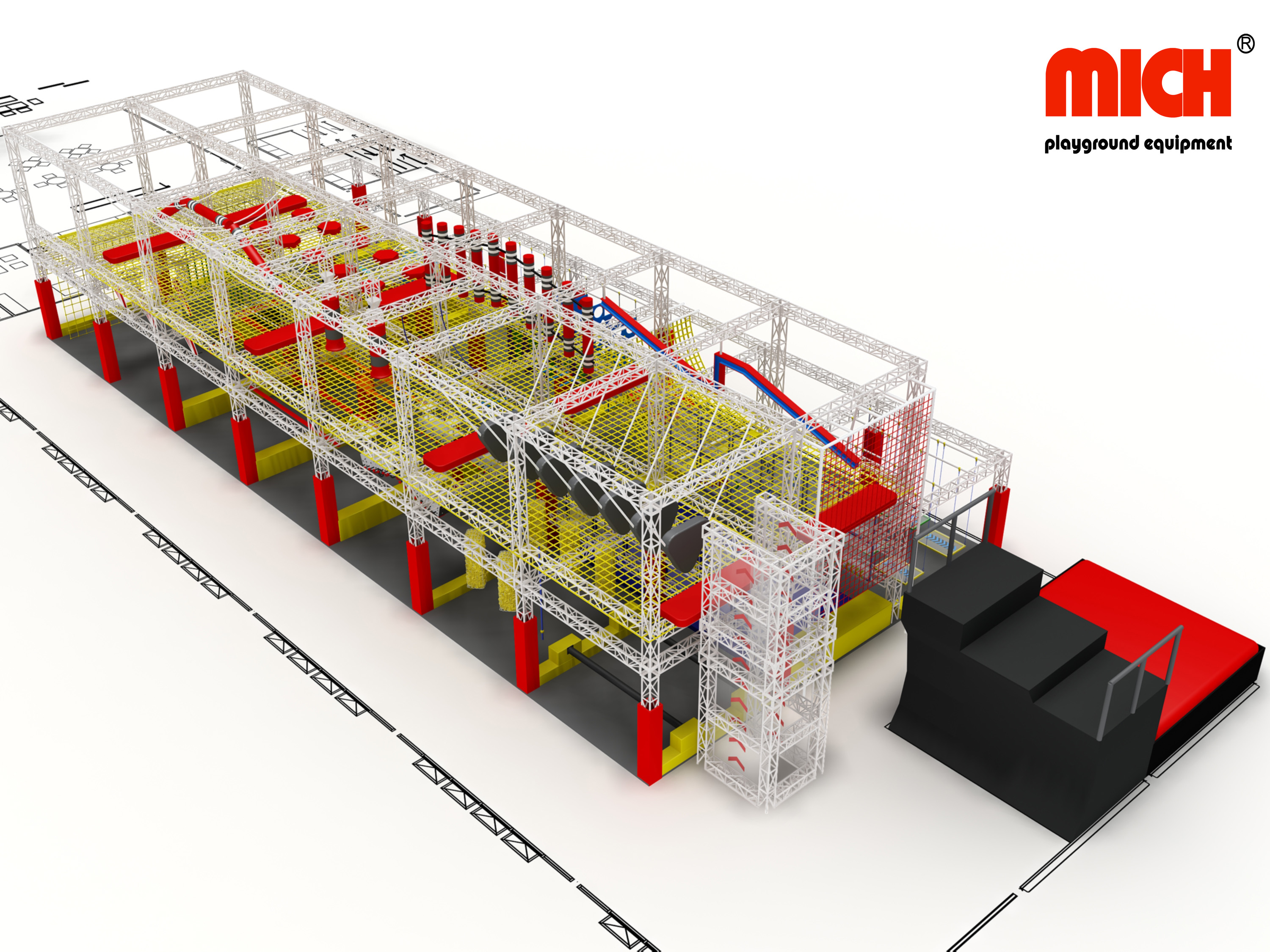
Assess the supplier's engineering team. They should provide detailed 3D renderings tailored to your specific floor plan. A competent manufacturer will easily modify standard designs to navigate your site's structural columns or ceiling height restrictions. Request examples of past custom projects. Their willingness and ability to adjust structural elements demonstrate their technical expertise. Ask them to explain how they calculate load-bearing limits for multi-level structures. A knowledgeable engineering team will provide clear, mathematically backed answers rather than vague assurances.
First-time buyers often accept quotes based on generic CAD designs without providing custom dimensions. This leads to equipment that does not fit the final site. Watch for critical warning signs. Prices significantly below the market average usually indicate inferior raw materials. Refusal to allow third-party pre-shipment inspections is a major red flag. Vague communication regarding plastic grades or steel thickness means you will likely receive substandard goods. Another common mistake is failing to request physical material samples. Always pay the express shipping fee to receive samples of their PVC leather, foam padding, and powder-coated steel before signing a contract.
The initial quote from the factory only represents the cost of goods. You must calculate the total landed cost to understand your true financial commitment. This cumulative expense includes ocean freight, port handling fees, customs duties, insurance, and local truck delivery to your site. Failing to account for these additional layers will destroy your project budget. You must build a comprehensive spreadsheet that tracks every single fee from the factory floor to your facility doors. Do not rely on rough estimates provided by the manufacturer for destination charges, as they rarely reflect the actual local rates.
Incoterms define who assumes the risk and cost during international shipping. Understanding these terms is critical for controlling your logistics budget.
| Incoterm | Definition | Buyer Responsibility |
|---|---|---|
| EXW (Ex Works) | Buyer handles all transport from the factory floor. | Maximum responsibility. Buyer arranges inland China transport, export clearance, and ocean freight. |
| FOB (Free on Board) | Seller loads goods onto the ship at the origin port. | Buyer pays for ocean freight, insurance, and destination port charges. Highly recommended for control. |
| CIF (Cost, Insurance, Freight) | Seller pays freight and insurance to the destination port. | Buyer handles destination port fees, which are often inflated by the seller's forwarder. |
| DDP (Delivered Duty Paid) | Seller handles all shipping, duties, and delivery to the final site. | Minimum responsibility, but usually the most expensive option as sellers add high risk margins. |
FOB is generally recommended for buyers who want strict control over shipping costs. CIF often hides inflated destination port fees that surprise buyers upon arrival. When you control the freight forwarder under FOB terms, you receive transparent invoices for terminal handling charges, chassis fees, and customs clearance.
Proper customs classification prevents delays and fines. Commercial play structures typically fall under Chapter 95 of the Harmonized System. Use HS Code 95069990 for outdoor and indoor play equipment. Check the current tariff rates in your destination country using this code. Be aware of country-specific import policies. The US requires a Customs bond for commercial imports, while EU buyers must account for import VAT upon entry. Work directly with a licensed customs broker in your country before the cargo leaves China. They will verify the HS code and calculate the exact duty percentage based on the commercial invoice value.
Never authorize the final balance payment until the equipment passes inspection. Hire an independent inspection agency in China. They will visit the factory to verify dimensions, measure material thickness, and check safety joints. They also count the components against the packing list to ensure nothing is missing before the container is loaded. Instruct the inspector to perform a trial assembly of complex components. This ensures that bolt holes align correctly and that custom parts fit together seamlessly. Catching a manufacturing defect at the factory costs nothing to fix; discovering it at your installation site will halt your entire project.
Improper packing leads to severe damage during ocean transit. Industry standards require wrapping galvanized steel frames in thick cotton and stretch film to prevent scratches. Plastic slides and panels must be secured in bubble wrap. Small hardware and fasteners should be boxed and clearly labeled. Inspect the packing photos provided by your supplier before loading begins.
| Component Type | Required Packing Method |
|---|---|
| Steel Pipes & Frames | Wrapped in industrial cotton, tightly bound with stretch film. |
| Plastic Slides & Panels | Double-layered bubble wrap, secured with packing tape. |
| Soft Play Mats & Padding | Woven bags to prevent moisture buildup and tearing. |
| Screws, Bolts & Fasteners | Sorted into heavy-duty cardboard boxes, clearly labeled with part numbers. |
Dismantled play structures have irregular, volumetric shapes. You must choose between Full Container Load (FCL) and Less than Container Load (LCL). FCL gives you exclusive use of a 20ft or 40ft container, minimizing handling and shipping damage. LCL consolidates your goods with other shipments, increasing the risk of damage and loss. FCL is almost always the better choice for commercial recreation infrastructure. Even if your equipment only fills 70% of a 20ft container, the cost difference between LCL and FCL is often negligible when you factor in the reduced risk of damage and lower destination handling fees.
Select a reliable freight forwarder with experience handling oversized cargo. Ocean freight is the only viable method for heavy commercial equipment due to weight restrictions and air freight costs. Typical transit times range from 20 to 40 days depending on the destination port. Your forwarder will manage the booking, container drayage, and vessel tracking. Provide your forwarder with the exact packing list and commercial invoice as early as possible. This allows them to secure vessel space well in advance, preventing delays during peak shipping seasons.
Smooth customs clearance requires flawless documentation. You must prepare a specific set of documents for the customs broker. Ensure all details match exactly across every form.
Manufacturers provide detailed 3D installation maps and manuals. While DIY installation saves upfront labor costs, it carries significant risks. Improper assembly voids warranties and creates severe safety hazards. Hiring local certified installers ensures the structure is built to code. They understand regional safety requirements and possess the necessary tools to tension nets and secure load-bearing joints properly. Professional crews also work significantly faster. A project that might take your untrained staff three weeks to assemble can be completed by a professional crew in five days, allowing you to open your facility and generate revenue sooner.
You cannot open your facility to the public immediately after assembly. You must hire a local certified safety inspector. In the US, this is a Certified Playground Safety Inspector (CPSI). In Europe, use a registered RPII inspector. They will audit the installation, check fall zones, and issue a safety certificate required for your commercial liability insurance. The inspector will use specialized tools, such as head probes and torso probes, to check for entrapment hazards in nets and gaps. They will also verify that the impact-absorbing surfacing meets the required critical fall height standards.
Negotiate warranty terms clearly before placing your order. Establish a strict protocol for handling missing or damaged parts upon arrival. The manufacturer should agree to ship replacement parts via express air freight at their expense if they are at fault. Document any container damage immediately upon unloading and cross-reference all boxes with the packing list. Take clear photographs of any damaged components while they are still inside the container. This evidence is required to file a successful claim with your marine insurance provider or the manufacturer.
Commercial play structures require rigorous upkeep. Implement routine inspection schedules to check for loose fasteners, worn netting, and cracked plastics. Keep a detailed maintenance log. Regular cleaning and tightening of joints extend the equipment's lifespan and keep your facility compliant with local safety regulations over time.
Importing commercial recreation infrastructure directly from overseas is a highly viable strategy for reducing capital expenditure. Success depends entirely on how rigorously the buyer manages compliance, quality control, and logistics. By controlling the shipping terms and demanding strict safety documentation, you can build a profitable and safe facility. To streamline your decision-making process, verify all safety test reports directly with the issuing labs. Calculate your total landed cost before signing any contracts. Select FOB trade terms to maintain control over ocean freight. Finally, mandate third-party pre-shipment inspections to guarantee quality.
A: Commercial play structures typically fall under Chapter 95 of the Harmonized System. The specific HS Code is 95069990, which covers outdoor and indoor play equipment. Always consult with a licensed customs broker to confirm the exact classification and current tariff rates for your specific destination country.
A: The entire process usually takes 35 to 70 days. Production requires 15 to 30 days depending on the design complexity. Ocean freight takes 20 to 40 days based on the destination port. Customs clearance and local truck delivery typically add another 3 to 7 days to the timeline.
A: Reputable manufacturers do comply with international standards. However, buyers must explicitly request equipment built to ASTM (US) or EN1176 (EU) specifications. You must verify their compliance by demanding authentic test reports from recognized laboratories like TUV or SGS before placing an order.
A: Yes, the manufacturing cost is significantly lower. However, you must calculate the total landed cost to determine realistic ROI. The savings on the equipment must outweigh the added costs of ocean freight, customs tariffs, port fees, and hiring local installation crews.
A: Ocean freight via Full Container Load (FCL) is the industry standard. The equipment is bulky, heavy, and has irregular shapes. FCL minimizes handling during transit, significantly reducing the risk of damage and loss compared to Less than Container Load (LCL) consolidation.
A: Buyers have two options. You can hire local professional installers, which is highly recommended for safety and compliance. Alternatively, you can use your own crew following the manufacturer's detailed 3D installation manuals. Regardless of who installs it, a certified local inspector must approve it before opening.
A: First-time buyers often provide incorrect site measurements, leading to equipment that does not fit. They also frequently ignore local safety zone certifications and fail to verify third-party test reports. Accepting CIF shipping terms and getting hit with hidden destination fees is another major pitfall.