- All
- Product Name
- Product Keyword
- Product Model
- Product Summary
- Product Description
- Multi Field Search

Views: 0 Author: Site Editor Publish Time: 2026-09-30 Origin: Site
Outdoor fitness installations demand significant capital to design, procure, and build. Unlike climate-controlled indoor gyms, these community recreation spaces face relentless environmental degradation. UV exposure, heavy rain, coastal salt, and uncontrolled public usage constantly wear down the hardware. You also have to account for potential vandalism. Neglecting routine upkeep accelerates asset depreciation and introduces severe liability risks for facility managers. Implementing a structured, proactive maintenance framework is the definitive strategy to protect your investment. It ensures user safety and maintains strict compliance with industry standards. We will break down exactly how to execute daily inspections, manage surface wear, and prevent structural failures. This guide provides actionable, field-tested steps to preserve equipment functionality, mitigate hazards, and sustain community recreation spaces over the long term without wasting labor hours.
Successful maintenance achieves zero preventable failures, extends asset lifespan, and maintains consistent aesthetic appeal. Facility managers must shift away from reactive fixes. Waiting for a component to break before servicing it introduces unnecessary downtime and safety hazards. When you manage public spaces, the expectation is that every machine works perfectly every single day. A broken elliptical or a rusted pull-up bar reflects poorly on the municipality or property management company. Proactive maintenance flips the script. You identify wear and tear before it compromises the structural integrity of the unit.
Routine upkeep prevents catastrophic part failures. Simple actions like touch-up painting and bearing lubrication stop degradation early. This approach avoids expensive full-unit replacements and keeps the park operational. Consistently maintaining Outdoor Fitness Equipment ensures that the community always has access to safe, functional workout stations. When you lubricate a bearing on a regular schedule, you prevent the metal-on-metal friction that eventually destroys the entire housing. Replacing a bearing takes ten minutes. Replacing an entire swing arm takes hours of labor and significant material costs.
Poorly maintained equipment carries significant legal implications. If a user suffers an injury due to a rusted joint or loose fastener, the facility owner faces severe liability. Meeting ASTM or EN safety standards is not just a pre-installation requirement. These standards must be upheld throughout the lifecycle of the park to mitigate risk effectively. Courts look favorably upon facilities that can produce a documented history of regular inspections and immediate repairs. If you cannot prove that you inspected the equipment, you cannot defend yourself against a negligence claim.
| Maintenance Approach | Operational Impact | Safety Risk | Asset Lifespan |
|---|---|---|---|
| Reactive (Fix when broken) | High downtime, unpredictable labor needs | High (users exposed to failing parts) | Significantly reduced |
| Proactive (Scheduled upkeep) | Minimal downtime, planned labor allocation | Low (hazards caught early) | Maximized |
Breaking down maintenance into manageable, time-bound phases ensures nothing gets overlooked. A tiered approach distributes the workload efficiently among groundskeeping staff. You cannot expect a single groundskeeper to perform a full structural audit every day. Instead, you assign specific tasks to specific intervals. This keeps the workload realistic and ensures that high-priority safety checks happen frequently.
Daily visual inspections identify immediate hazards. Staff should look for loose parts, sharp edges, biological waste, and fresh vandalism. High-touch contact points require daily sanitation. Wiping down handles, seats, and grips prevents the buildup of grime and bacteria. You want your staff to walk the site every morning before peak usage hours. They need to carry a basic toolkit and cleaning supplies to handle minor issues on the spot.
Weekly deep cleans focus on joints, frames, and high-friction contact points. Removing sweat, dirt, and body oils prevents premature wear on moving components and protects the powder-coated finishes. Sweat is highly corrosive. If left on metal surfaces, it will eat through the protective coating and initiate rust. A weekly washdown with a low-pressure hose and mild detergent removes this corrosive buildup.
Monthly checks involve detailed mechanical inspections. Technicians must verify fastener torque to ensure tamper-resistant hardware remains secure. Bearing lubrication is critical for moving parts like elliptical arms or pendulum swings. Early rust identification during these checks allows for immediate remediation before structural damage occurs. You need to get hands-on during the monthly check. Shake the equipment. Listen for squeaks or grinding noises. These auditory cues often indicate internal wear that a visual inspection misses.
Annual audits require comprehensive evaluations. This includes checking the foundation for shifting or concrete cracking. Third-party safety audits provide an objective assessment of the entire installation, ensuring compliance with current safety regulations. Dig down around the concrete footings to ensure the soil has not eroded. Check the welds for hairline fractures. This is the time to bring in a certified inspector who can sign off on the safety of the park for another year.
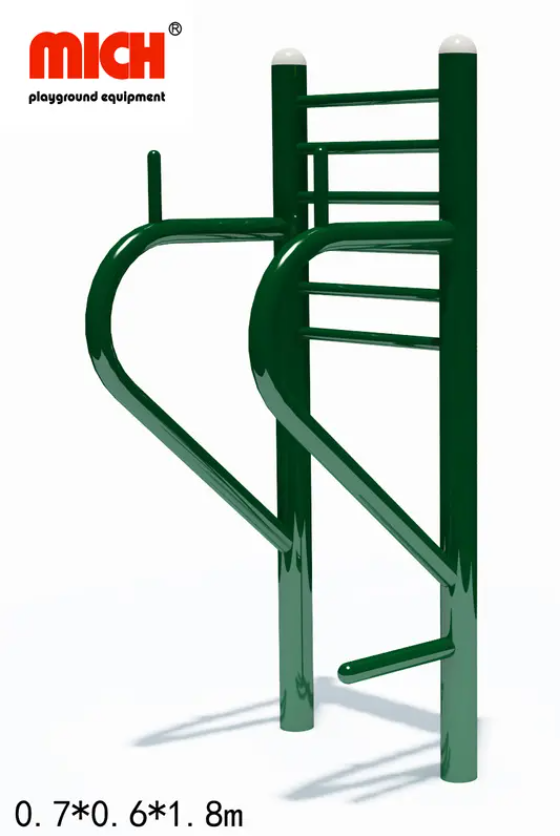
Specific maintenance actions directly preserve equipment functionality. Understanding how to execute these tasks properly prevents accidental damage during the cleaning process. Many facilities ruin their own equipment by using the wrong chemicals or tools. You must train your staff on the specific requirements of outdoor fitness hardware.
Standardize your maintenance kit. Equip staff with mild non-abrasive detergents, soft-bristle brushes, microfiber cloths, protective gloves, and gentle solvent-free cleaners. Never use abrasive materials, chlorine bleach, or harsh solvents. These chemicals degrade powder-coated finishes, strip UV protectants, and dry out rubber components. If you strip the UV protectant off a plastic seat, it will become brittle and crack within a few months of sun exposure.
Inspect moving parts systematically. Listen for grinding noises that indicate worn bearings. Replace bearings immediately to prevent damage to the surrounding housing. Ensure all tamper-resistant hardware is tight and requires specialized tools for removal. Public parks attract individuals who try to dismantle equipment for scrap metal. Using tamper-proof bolts and checking them monthly deters theft and keeps the units structurally sound.
When finishes wear thin, exact prep work is necessary. Clean and sand exposed iron or steel to remove oxidation. Apply rust inhibitors and zinc-rich primers before using color-matched touch-up paint. Inspect weep holes, joints, welds, and crevices regularly. Rain pooling in these areas accelerates internal corrosion if drainage paths become blocked. Weep holes are small drainage holes drilled into the bottom of metal tubing. Insects often build nests in these holes, trapping water inside the frame. Clear them out with a wire brush during your monthly inspections.
The ground beneath the equipment requires as much attention as the metal frames. Maintain engineered wood fiber by raking it level and topping it off annually. Inspect poured-in-place rubber for cracks or separation at the seams. These protocols often overlap directly with the care required for Commercial Playground Equipment. If the surfacing degrades, the fall protection is compromised. A perfectly maintained pull-up bar is still a massive liability if the rubber surfacing below it has worn down to the concrete base.
Managing public outdoor assets involves unpredictable variables. Facility managers must prepare for external threats that degrade equipment rapidly. You cannot control the weather or the public, but you can control your response to them.
Rapid response to graffiti discourages further vandalism. Keep specialized, non-damaging removal solvents on hand. Removing tags within 24 hours signals that the area is monitored and cared for. Vandals target neglected areas. If a park looks pristine, they are less likely to deface it. Train your morning inspection crew to carry graffiti wipes and handle small tags immediately.
Biological hazards cause rapid corrosion. Bird droppings, animal urine, and feces must be removed immediately using safe sanitizers. Mitigate nesting behaviors by inspecting hollow frame tubing. Remove rodent burrows, bird nests, and insect infestations promptly to protect users. Bird guano is highly acidic. If left on a powder-coated frame for a week, it will permanently etch the paint. Wash it off daily.
Regional climates dictate specific maintenance actions. Freezing climates require winterization, which may involve covering sensitive moving parts or removing them entirely. Coastal areas with high airborne salinity demand aggressive anti-corrosion schedules and more frequent fresh-water washdowns. Saltwater spray will destroy steel equipment in months if it is not washed regularly. Facilities within five miles of the ocean should implement a weekly fresh-water rinse protocol.
Facility managers must weigh the trade-offs between different operational approaches to maintenance. You have to decide who actually turns the wrench and logs the data.
Utilizing existing municipal groundskeepers is often cost-effective for daily visual checks and basic sanitation. However, contracting specialized fitness equipment technicians for monthly mechanical checks and annual audits ensures a higher standard of safety and compliance. Groundskeepers are great at picking up trash and wiping down seats. They usually lack the mechanical training to identify a failing internal bearing. A hybrid model often works best: in-house staff handles the daily and weekly tasks, while contractors handle the monthly and annual technical work.
Combining maintenance schedules creates operational efficiencies. Sites featuring both fitness and play areas can utilize the same bulk cleaning gear and surfacing care protocols. This streamlined approach reduces labor hours and material expenses. If you have a contractor coming out to inspect the playground surfacing, have them inspect the fitness area surfacing on the same day. Buy your touch-up paint and tamper-proof bits in bulk to service both areas.
Digital asset management tools track inspection logs and schedule preventative tasks. Maintaining an auditable trail of all maintenance activities provides crucial liability protection. If an incident occurs, these records prove that the facility adhered to a strict safety protocol. Paper logs get lost or ruined by rain. Equip your field staff with tablets or smartphones. Have them take photos of the equipment during their daily checks and upload them to a centralized database.
A: Perform visual inspections daily to identify immediate hazards like vandalism or loose parts. Conduct deeper mechanical checks monthly, and schedule a comprehensive structural audit annually.
A: Sand the rusted area down to bare metal. Clean the surface, apply a zinc-rich rust-inhibiting primer, and finish with a color-matched outdoor-rated touch-up paint.
A: Use a dry Teflon or silicone-based lubricant on bearings and joints. Avoid heavy greases that attract dirt and sand, which can grind down internal components over time.
A: Use mild, non-abrasive detergents mixed with water. Apply with soft-bristle brushes or microfiber cloths. Never use bleach or harsh solvents, as they strip the protective coating.
A: Proper surfacing absorbs impact and prevents severe injuries from falls. Uneven or degraded surfacing creates tripping hazards and violates critical fall height safety standards.
A: Yes, many protocols overlap. Both require daily visual checks, fastener tightening, rust prevention, and identical ground surfacing maintenance procedures.
A: Maintain a digital or physical logbook recording every inspection, cleaning, and repair. Include dates, specific actions taken, and the signature of the technician performing the work.