- All
- Product Name
- Product Keyword
- Product Model
- Product Summary
- Product Description
- Multi Field Search

Views: 0 Author: Site Editor Publish Time: 2026-09-30 Origin: Site
Outfitting a daycare center’s outdoor play area requires balancing strict safety regulations, high-traffic durability, and tight procurement budgets. Residential-grade toys deteriorate rapidly in commercial daycare settings, increasing replacement costs and liability risks. Conversely, domestic commercial equipment often strains facility budgets, driving procurement teams to look overseas without a clear framework for vetting quality. A structured evaluation process is required to assess commercial-grade viability, verify safety compliance, and successfully procure equipment from a reliable China Playground Manufacturer that supports early childhood development while minimizing long-term replacement cycles. You need equipment that withstands daily use by dozens of children, harsh weather, and aggressive cleaning protocols. We will break down exactly how to evaluate material specifications, zoning strategies, and international safety standards. This ensures childcare directors can build engaging, safe, and durable outdoor environments without compromising on quality or compliance.
Defining what makes outdoor equipment suitable for a licensed childcare facility goes far beyond visual appeal. Daycare environments subject equipment to relentless daily use, varying weather conditions, and rigorous cleaning protocols. Selecting the right components requires strict adherence to safety, durability, and developmental suitability. You cannot simply place backyard equipment in a commercial setting and expect it to survive or pass state inspections.
Evaluating potential equipment requires a systematic approach to mitigate risks and ensure regulatory compliance. Use this checklist when reviewing product specifications from any supplier.
Material degradation is a primary concern for outdoor play areas. Continuous UV exposure breaks down inferior plastics, causing them to become brittle and crack. Moisture resistance is equally vital to prevent rust on metal components and rot in wooden elements. Extreme temperature fluctuations cause materials to expand and contract, leading to structural fatigue over time.
Evaluating structural integrity involves looking closely at the construction methods. Galvanized steel frames offer superior rust resistance compared to untreated metals. Heavy-duty hardware and tamper-proof fasteners ensure that the equipment remains secure despite constant vibration and use. Look for 5-inch or 3.5-inch steel posts with a minimum wall thickness of 2mm. Plastics should be rotationally molded and UV-stabilized to prevent color fading and structural weakening.
| Component | Residential Grade (Avoid) | Commercial Grade (Require) |
|---|---|---|
| Main Support Posts | Thin PVC or untreated wood | Galvanized steel (3.5" - 5" diameter) |
| Plastic Elements | Thin, hollow blow-molded plastic | Rotationally molded LLDPE, UV-stabilized |
| Hardware | Standard zinc-plated screws | Stainless steel, tamper-resistant bolts |
| Decks and Platforms | Treated lumber | Perforated steel with PVC or rubberized coating |
Aligning equipment types with developmental milestones, play value, and facility space constraints is necessary for a well-rounded playground. A successful outdoor area offers a variety of play experiences that cater to different energy levels and learning styles. You must balance active physical play with quiet, focused activities.
Active play structures are the anchor points of any daycare yard. Commercial slides, low-level climbing walls, outdoor swings, and balance beams encourage children to develop balance, coordination, and physical strength. When selecting these items, space-to-play ratio considerations are critical. Stationary Kids Outdoor Playground Equipment requires designated fall zones. These are areas filled with impact-attenuating surfacing that must remain clear of other obstacles to prevent collision injuries. For example, a slide requires a minimum use zone extending at least six feet from the exit region.
Sensory play is fundamental to early childhood development. Commercial-grade sandboxes and water tables offer immense value but require careful selection. Drainage efficiency is crucial for water tables to prevent stagnant water, while sandboxes need heavy-duty cover mechanisms to prevent contamination from animals and debris.
Mud kitchens, outdoor art easels, and washable sidewalk chalk stations allow for creative expression. The material requirements for these stations are high; they must endure daily exposure to water, mud, paint, and vigorous scrubbing. High-density polyethylene (HDPE) is the preferred material for these fixtures due to its impermeability and ease of cleaning. Wood components in these areas should be avoided unless they are specifically treated for marine environments.
Playhouses, modular building blocks, and heavy-duty ride-on toys facilitate social interaction and imaginative play. Imitation outdoor toys, such as toy lawnmowers and gardening tools, foster roleplay and peer cooperation as children mimic adult activities. To prevent classroom boredom without consuming the entire budget, facilities should source multi-size ball sets, hula hoops, and basic active-play gear. These high-engagement essentials are highly versatile and encourage spontaneous group games.
Effective playground design balances high-energy active zones with quiet, creative zones. Separating these areas prevents accidents, such as a child running from a sandbox directly into the path of a moving swing. Designing clear sightlines is a non-negotiable safety requirement. Supervisors must have a 100% unobstructed view of all play zones from any vantage point within the yard to monitor children effectively and respond instantly to emergencies.
| Play Zone Type | Recommended Equipment | Surfacing Requirement | Location Strategy |
|---|---|---|---|
| Active/Gross Motor | Climbers, Slides, Swings | Poured-in-place rubber or engineered wood fiber | Center or perimeter, away from quiet zones |
| Sensory/Tactile | Water tables, Sandboxes | Concrete pad or artificial turf | Shaded areas, near water access |
| Dramatic Play | Playhouses, Trike paths | Solid, flat surfacing (asphalt/concrete for trikes) | Perimeter paths, distinct from fall zones |
Sourcing equipment internationally offers significant advantages, but it requires a robust vetting process to ensure commercial reliability and regulatory compliance. Facilities must look beyond glossy catalogs and focus on verifiable data. When you source china outdoors toys for kids, you take on the responsibility of verifying the manufacturer's claims.
Authenticating safety compliance is the most critical step in vendor evaluation. Buyers must request third-party lab reports from recognized testing bodies such as SGS or TUV. These reports must specifically map to regional safety standards, such as ASTM F1487 in the United States or EN1176 in Europe. Do not accept generic certificates; ask for test reports tied to the specific product lines you intend to purchase. Cross-referencing the factory's operational credentials, including ISO 9001 for Quality Management and ISO 14001 for Environmental Management, provides insight into their manufacturing consistency and corporate responsibility.
A comprehensive warranty reflects a manufacturer's confidence in their product. Analyzing warranty tiers is essential. A standard commercial warranty might offer 10 years on structural steel and main posts, but only one year on moving parts or plastic components. Establishing service level agreements for replacement part availability, shipping times, and hardware replenishment ensures that the playground will not be out of commission for months due to a single broken component. Ask the supplier how they handle warranty claims and whether they stock replacement parts for immediate air freight.
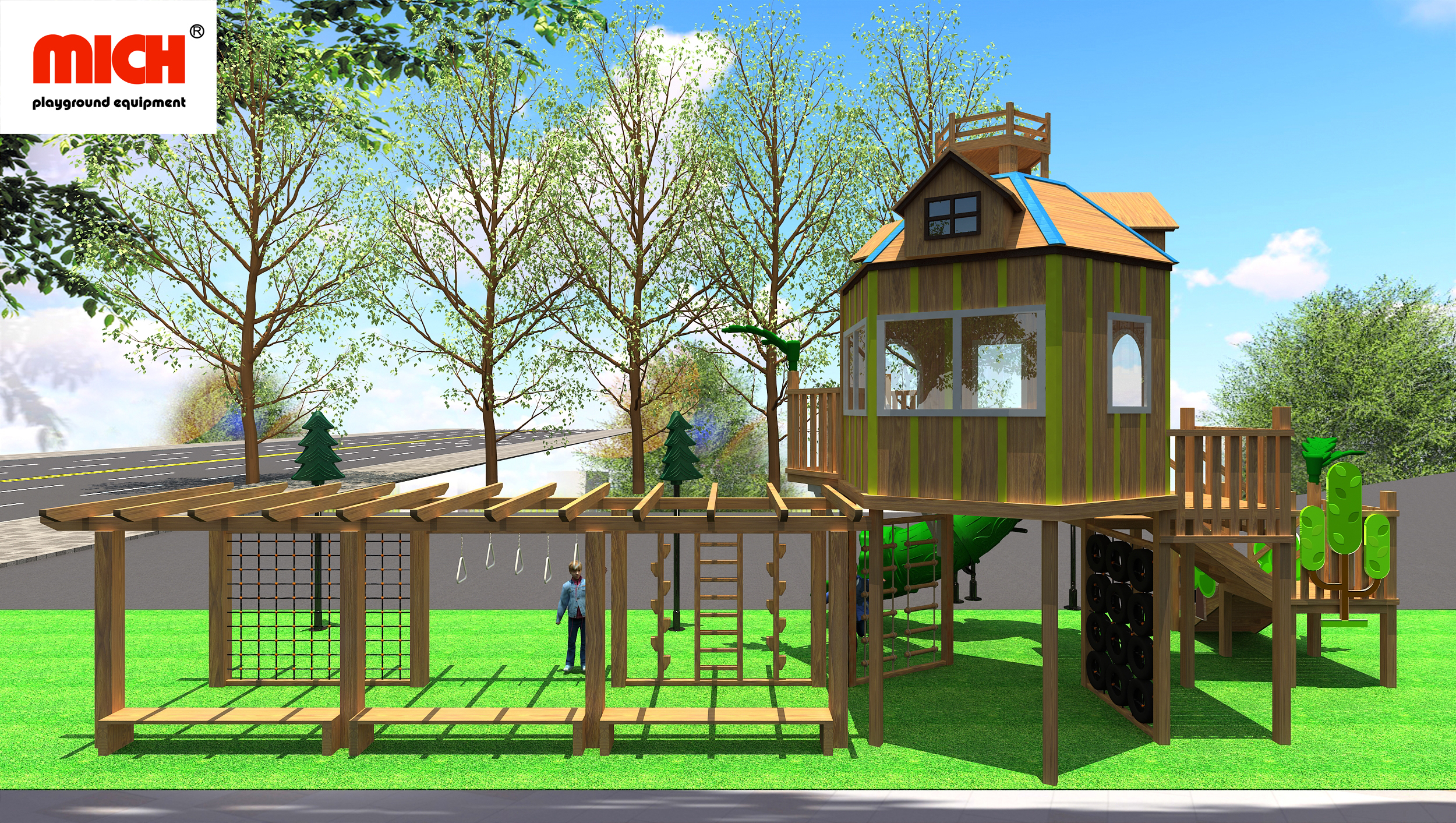
Daycare yards rarely feature perfectly square, flat footprints. Evaluating the manufacturer's ability to modify designs to fit custom daycare footprints or specific regulatory zone requirements is highly beneficial. A capable supplier can adjust platform heights, alter slide trajectories, or reconfigure climbing elements to maximize the available space while maintaining strict adherence to fall zone regulations. Request 3D renderings of the proposed equipment placed within your specific site dimensions to verify clearances.
Analyzing the financial realities beyond the initial catalog price is crucial for budget-conscious home daycares and large commercial centers alike. The sticker price of an imported play structure is only one component of the final investment. You must account for the entire lifecycle of the equipment and the logistics required to get it onto your property.
Calculating the true lifecycle cost reveals why cheaper residential-grade plastics are a poor investment for commercial facilities. Residential toys require frequent replacement due to rapid degradation, quickly surpassing the initial cost of commercial-grade imports. Maintenance overhead must be factored into the budget. Commercial equipment generally demands less labor for daily safety inspections, cleaning, and hardware tightening compared to fragile residential alternatives. Investing in heavy-duty materials upfront reduces the frequency of repairs and minimizes facility downtime.
Navigating international shipping requires an understanding of Incoterms such as FOB (Free On Board), CIF (Cost, Insurance, and Freight), and DDP (Delivered Duty Paid). Each term dictates who bears the risk and hidden freight costs at various stages of transit. For buyers without import experience, DDP is often the safest route, as the supplier handles all shipping and customs clearance. Facilities must factor in customs clearance fees, import duties, and potential seasonal shipping delays. Accurate logistical planning ensures the equipment arrives in alignment with the daycare center's opening or renovation timeline, avoiding costly delays in facility operations.
Anticipating and solving execution roadblocks during daycare playground installation prevents safety hazards and budget overruns. The final phase of procurement is just as critical as the initial selection. Poor installation can render the safest equipment hazardous.
The risks of DIY installation are significant. Improperly anchored equipment or incorrectly assembled components pose severe safety threats. Hiring certified playground safety inspectors (CPSI) or professional installers guarantees that the equipment is erected according to manufacturer specifications and local building codes. Preparing the sub-base is a prerequisite. This includes planning for proper ground drainage and installing impact-attenuating safety surfacing, such as poured-in-place rubber or engineered wood fiber, before the equipment arrives on site. Ensure your site prep contractor coordinates directly with the equipment manufacturer regarding footer depths and concrete requirements.
Mitigating vendor risk can be achieved by ordering smaller freestanding equipment or sample play units before committing to large, anchored custom structures. This phased approach allows the facility to evaluate material quality, shipping reliability, and ease of assembly firsthand. Upon arrival, implementing a rigorous unboxing, inventory mapping, and pre-assembly inspection protocol ensures that all parts are present and undamaged before installation begins. Cross-reference the packing list with the physical hardware immediately upon delivery to prevent mid-assembly delays.
A: Always look for third-party testing reports that confirm compliance with regional standards, such as ASTM F1487 in the US or EN1176 in Europe. Certifications from recognized bodies like SGS or TUV validate that the equipment meets strict safety and structural requirements.
A: High-quality commercial outdoor equipment constructed from galvanized steel and high-density polyethylene (HDPE) can last 10 to 15 years or more with proper maintenance, whereas residential-grade toys often degrade within a single year of heavy commercial use.
A: Yes, provided you conduct rigorous due diligence. You must verify that the manufacturer provides authentic third-party lab reports proving compliance with your local safety standards and utilizes certified non-toxic, commercial-grade materials.
A: Commercial equipment is engineered for continuous, multi-child use with heavier gauge metals, thicker UV-stabilized plastics, and tamper-proof hardware. Residential equipment is designed for light use by one or two children and lacks the durability for daycare environments.
A: Request specific material safety data sheets (MSDS) and independent laboratory testing certificates that explicitly state the plastics are free from lead, BPA, and phthalates, complying with international chemical safety regulations.
A: Beyond the unit price, you must budget for ocean freight, customs clearance, import duties, inland transportation to your facility, professional installation labor, and the necessary impact-attenuating safety surfacing.