- All
- Product Name
- Product Keyword
- Product Model
- Product Summary
- Product Description
- Multi Field Search

Views: 0 Author: Site Editor Publish Time: 2026-07-22 Origin: Site
Sourcing directly from a manufacturer eliminates heavy Western distributor markups, which often hit 30% to 50%. However, mismanaged logistics can quickly erode those cost savings through hidden fees, delays, or transit damage. Buyers of Commercial Playground Equipment face a complex supply chain involving ocean freight forwarders, Incoterms, customs clearance, and the physical challenge of unloading massive, unpalletized steel and plastic components at their facility. This guide breaks down the end-to-end shipping process for importing an indoor playground china project, providing a realistic framework for managing costs, mitigating risks, and ensuring a smooth delivery to your Family Entertainment Center (FEC).
Buyers often accept default shipping terms without understanding their liability. This oversight leads to unexpected port charges, uninsured losses, or cargo held hostage by destination agents. Knowing your Incoterms is the foundation of international shipping. You must establish exactly when the risk transfers from the factory to your company.
EXW means the buyer handles everything from the factory floor. You arrange the truck to pick up the goods in China. You handle export customs and port delivery. This offers high control but a massive logistical burden for anyone without a local export team. FOB means the supplier handles export clearance and loading onto the vessel. The buyer takes over once the goods are physically resting on the ship. FOB is the industry standard for experienced importers because it splits the workload logically. The factory handles local Chinese logistics, and you control the ocean freight and domestic delivery.
Under CIF, the supplier pays for ocean freight and insurance to your destination port. The buyer handles import customs and final delivery. Be highly aware of the risk of inflated destination agent fees with CIF. The factory might get a cheap ocean rate, but their partner agent at your local port will overcharge you for document handover and handling. DDP means the supplier handles everything. They deliver directly to your facility door. It is easiest for beginners but often the most expensive. DDP offers the least transparency over customs declarations, and you have no control over which trucking company shows up at your site.
| Incoterm | Supplier Responsibility | Buyer Responsibility | Best Application |
|---|---|---|---|
| EXW | Manufacturing and packing only | All transport, customs, and insurance | Buyers with established local logistics teams in Asia |
| FOB | Export customs and loading on vessel | Ocean freight, import customs, final delivery | Most standard commercial imports and experienced buyers |
| CIF | Ocean freight and insurance to port | Import customs and inland delivery | Buyers who want simplified ocean transit but accept port fee risks |
| DDP | All freight, customs, and final delivery | Unloading at the facility | First-time buyers wanting a completely hands-off approach |
Shipping logistics actually begin on the factory floor before a container is booked. Catching errors here saves massive headaches later. You cannot easily return a container of galvanized steel pipes across the ocean. Once the container doors are sealed, you own whatever is inside.
Reputable Chinese manufacturers conduct a trial installation of the steel frame structure at the factory. This ensures all parts fit together perfectly. Request video and photo evidence of the test build. Use this to verify structural alignment, slide connections, and platform leveling before disassembly and packing. If a pipe is cut too short or a bracket is welded at the wrong angle, the factory must fix it before the metal goes into the shipping crate.
Independent inspection services like SGS or QIMA play a vital role. They verify material thicknesses, soft padding density, and compliance with ASTM or EN safety standards. Discovering a manufacturing defect after the equipment has cleared customs in your home country is a financial disaster. Inspectors will physically measure the wall thickness of the steel pipes and check the fire-retardant certificates of the PVC vinyl.
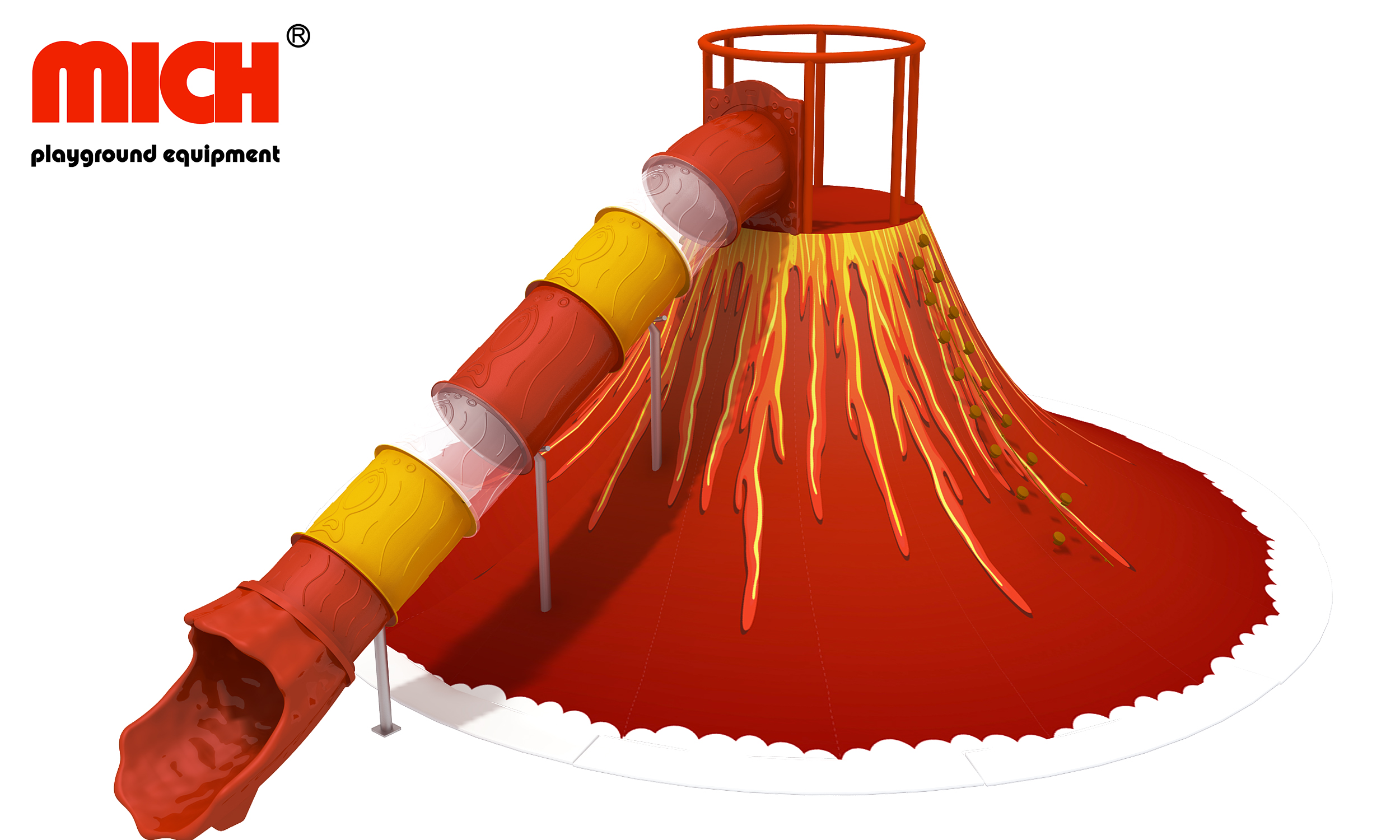
Equipment volume dictates shipping methods and installation efficiency. Playgrounds take up massive amounts of space. Weight is rarely the limiting factor. You are essentially paying to ship air when dealing with spiral slides and plastic crawl tubes.
A standard 20ft container holds approximately 28 CBM. A 40ft HQ container holds about 68 CBM. 40ft HQ containers are the standard for playground equipment. The bulky nature of slides, padding, and steel frames requires maximum vertical space. A typical 3,000-square-foot indoor playground will easily fill one or two 40ft HQ containers. Using standard 40ft containers instead of High Cubes often results in left-behind cargo because the internal height is slightly too low for stacked plastic components.
LCL is used for small add-on orders or replacement parts. It carries a high risk of damage when sharing container space with other goods. A forklift driver at a consolidation warehouse might accidentally ram a pallet of heavy machinery into your soft play blocks. FCL is mandatory for full park builds. It prevents damage from co-mingled cargo and reduces handling steps. The container is sealed at the factory and remains locked until it reaches your facility.
A top China Indoor Playground Manufacturer uses 3D packing software. Experienced loading crews at the factory maximize every inch. Efficient packing reduces the number of required containers. This directly lowers your freight costs. They will nest smaller plastic parts inside larger tubes and use the heavy steel pipes as a base layer to stabilize the load.
Unlabelled cargo is a nightmare. You do not want thousands of steel pipes and foam mats mixed together in a giant pile on your floor. Top manufacturers pack and label crates in matching zones. Zone A might be the Toddler Area. Zone B might be the Ninja Course. These labels map directly to your 3D installation manual. When unloading, your team can stage the materials in the exact area of the building where they will be built.
Mapping the physical journey of the equipment helps you plan your facility build-out. Delays happen, so buffer your timeline. Never schedule your grand opening based on the estimated time of arrival (ETA) of a cargo ship.
The process starts with booking the vessel. The container is loaded at the factory. The supplier clears Chinese export customs. This usually takes a few days before the ship departs. The factory must submit the Verified Gross Mass (VGM) declaration to the shipping line before the container is allowed onto the terminal.
Transit times vary based on geography. Expect 14-20 days to the US West Coast. Expect 25-35 days to the US East Coast or Europe. You can track the vessel using the Bill of Lading (BOL) number provided by your forwarder. Weather events, port congestion, and routing changes will affect the actual arrival date.
A Customs Broker files entry summaries, such as the ISF 10+2 in the US. You must pay import duties, tariffs, and port handling fees before the container is released. Clear communication with your broker prevents port delays. If your ISF is filed late, customs will issue a massive fine before the ship even docks.
Move beyond the factory invoice to understand your total financial commitment. Landed cost includes every expense required to get the goods to your door. Failing to calculate this accurately will destroy your project budget.
Ocean freight rates fluctuate based on seasonality. Pre-Chinese New Year spikes and holiday shipping rushes drive up costs. Lock in your rates early. Comprehensive marine insurance is non-negotiable. It typically costs a fraction of a percent of the commercial value. If the ship encounters a storm and containers are lost overboard, marine insurance is your only protection.
Find the correct HS (Harmonized System) codes for your equipment to estimate duty rates. Address regional trade tariffs, such as Section 301 tariffs in the US. Account for Value Added Tax (VAT) if you are importing into Europe or the UK. Playground equipment often falls under specific sporting goods or amusement park categories, which carry different duty percentages than standard furniture or building materials.
Demurrage refers to fees for leaving the container at the port beyond free days. Detention refers to fees for keeping the empty container too long before returning it. A chassis split occurs when the trucking company has to pick up the trailer chassis from a different location than the container. Mitigate these budget-destroying penalties by scheduling trucks well in advance and unloading the container the exact same day it arrives.
| Fee Type | Definition | How to Avoid It |
|---|---|---|
| Demurrage | Charges for leaving a full container at the port terminal beyond the allotted free time. | Pre-clear customs and have your drayage trucker booked weeks in advance. |
| Detention | Charges for keeping the empty container at your facility beyond the allowed return window. | Unload the container immediately (live unload) or within 48 hours (drop and pick). |
| Customs Exam | Fees charged by customs to X-ray or physically inspect your cargo. | Ensure all paperwork is flawless and safety certificates are attached. |
| Chassis Split | Extra trucking fees when the chassis and container are at different port locations. | Work with a drayage company that owns its own chassis fleet. |
International trade involves legal and physical risks. Proper documentation keeps your cargo moving. A single missing stamp on a commercial invoice can stall your shipment for weeks.
Required paperwork includes the Bill of Lading (BOL), Commercial Invoice, Packing List, and Certificate of Origin. A Telex Release allows you to claim goods without the physical Original BOL. This speeds up the release process. Ensure the packing list clearly details the exact weight, CBM, and material composition of every crate.
Missing safety documentation can trigger intensive customs exams. X-ray or physical inspections delay shipments. The buyer bears the cost of customs holds and exams. Ensure ASTM, EN1176, CE, and UL certificates are ready. If your playground includes electrical components like interactive light panels or motorized spinning rides, customs will look closely for proper electrical safety marks.
Establish a protocol for receiving goods. Photograph the container seal before breaking it. Document the unloading process carefully. File insurance claims immediately if you find structural damage. Do not throw away any damaged packaging until the insurance adjuster has reviewed the claim.
Preparing your physical location to receive commercial-scale freight is your final hurdle. This requires manual labor and heavy machinery. You cannot unload a 40ft container with just two people and a box cutter.
Hire a drayage trucking company to move the container. Discuss weight limits and residential or commercial zoning restrictions. Ensure your local roads legally allow heavy container traffic. The truck needs a massive turning radius to back a 40ft container up to your building doors.
Most FECs do not have commercial loading docks. You will likely need to rent a forklift with extended forks. Hire a manual labor crew and secure a pallet jack. Drivers usually allow 1-2 hours for live unloads before charging steep hourly wait fees. You must have a team of at least four to six strong workers ready to pull heavy steel pipes and bulky plastic slides out of the container by hand if they are not palletized.
Importing an indoor playground from China requires strict attention to logistical details. You must manage the process proactively to protect your investment and keep your facility build-out on schedule. Follow these next steps to ensure success:
A: Ocean transit typically takes 14 to 35 days depending on your location. Add another 7 to 14 days for factory loading, export customs, and final destination port clearance.
A: Most countries do not require a specific import license for playground equipment. However, you must have a registered business entity and a tax identification number to clear customs.
A: Document the damage immediately with photos before fully unloading. Note the damage on the delivery receipt and file a claim with your marine insurance provider within their specified deadline.
A: No. Playground equipment arrives in heavy shipping containers. You must hire a specialized drayage trucking company to transport the container from the port to your facility.
A: The importer is financially responsible for all customs inspection fees, including X-rays, physical unloads, and any resulting storage fees at the port.
A: You need a minimum of four to six physically capable workers, plus a certified forklift operator, to safely unload unpalletized playground equipment within the standard two-hour trucking window.