- All
- Product Name
- Product Keyword
- Product Model
- Product Summary
- Product Description
- Multi Field Search

Views: 2 Author: Site Editor Publish Time: 2026-04-29 Origin: Site


Modern children average over seven hours of screen time daily. This digital immersion makes structured outdoor play an absolute necessity. It is no longer just a default childhood habit. We must actively create environments encouraging physical movement. Installing a kids outdoor playground represents much more than a backyard entertainment purchase. It serves as a measurable investment in a child’s physical, cognitive, and emotional development. The right setup becomes a daily catalyst for healthy growth. Understanding how specific play structures trigger these developmental milestones remains critical. This knowledge provides the most reliable method to evaluate your options. We will show you how to shortlist and select an outdoor play set yielding true long-term value. You will learn exactly what to look for.
Physical ROI: Dedicated play structures actively lower BMI, build core/upper-body strength, and improve sleep cycles through unregulated physical exertion.
Mental & Emotional Health: Outdoor play mitigates screen fatigue, lowers cortisol levels (via "soft fascination" with nature), and builds emotional resilience through safe risk-taking.
Social Architecture: Multi-feature play sets provide the environmental framework for children to learn negotiation, spatial awareness, and peer collaboration.
Smart Purchasing: Evaluating an outdoor play set requires balancing current age-appropriateness with scalable features, material durability, and strict safety compliance (e.g., ASTM standards).
Parents face a persistent behavioral challenge today. We need reliable ways to combat heavily sedentary habits. Facilitating daily, vigorous exercise without constant adult orchestration is exhausting. You need tools encouraging movement naturally. A dedicated play area solves this problem perfectly.
Every component serves a specific developmental purpose. We can map structural features directly to physiological outcomes.
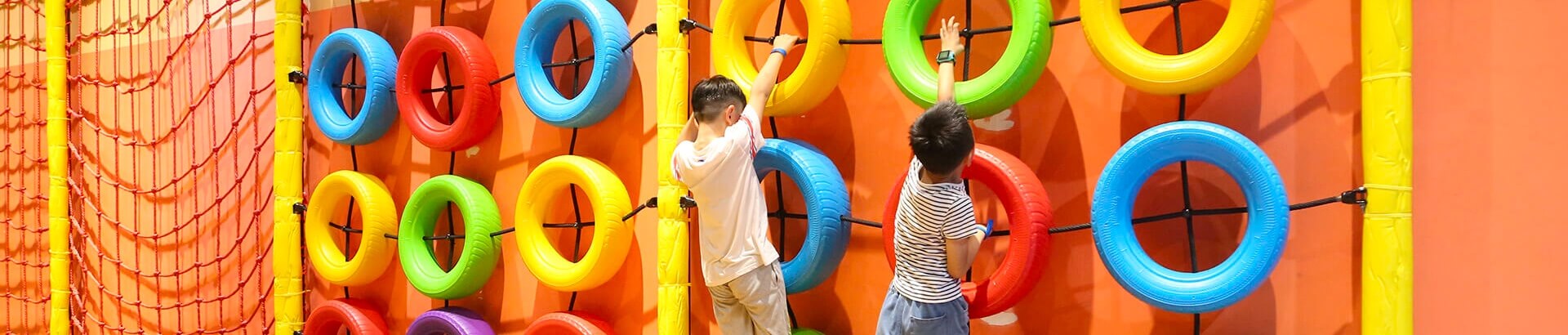
Climbing Walls and Ladders: These components develop essential bilateral coordination. Children learn spatial awareness as they climb. They build proprioception reaching for various handholds.
Monkey Bars and Rings: These elements remain critical for upper-body strength. They develop grip strength required for fine motor tasks later. Swinging across bars builds cardiovascular endurance over time.
Swings: Swinging directly stimulates the vestibular system. This internal sensory network governs balance. It dictates spatial orientation constantly.
Unstructured physical activity delivers measurable biological benefits. Playing on playground equipment naturally regulates sleep quality. Physical exertion outdoors tires children out healthily. They fall asleep faster and stay asleep longer. Furthermore, outdoor activity supports immune health globally. Safe sun exposure synthesizes Vitamin D efficiently. This process builds stronger bones and fortifies the immune system against common illnesses.
We can use the backyard playground strategically. It serves as an accessible "attention restoration" environment. Digital devices create intense hyper-stimulation. They leave children mentally exhausted and highly irritable. An outdoor play area offers the perfect psychological antidote.
Outdoor environments trigger specific psychological responses. These mechanisms repair digital fatigue efficiently.
Cortisol Reduction: Nature provides a state called "soft fascination." This describes unforced attention toward outdoor environments. It actively lowers stress hormones compared to digital stimulation. Cortisol levels drop naturally when children play outside.
Executive Function: Imaginative play on a static structure forces cognitive growth. A child might turn a wooden fort into a pirate ship. They must create rules to govern the game. They solve spatial problems and self-regulate emotions. These actions form the bedrock of strong executive function.
The Serotonin Boost: Tactile outdoor play stabilizes overall mood. Exposure to natural elements provides distinct neurological benefits. Digging near soil exposes children to microbes like M. vaccae. These harmless bacteria trigger serotonin release in the brain. Happy children learn faster and adapt better.
Emotional resilience grows when children face manageable challenges. They need spaces allowing them to fail safely.
An outdoor play set provides a highly controlled environment. Children learn to test their physical boundaries here safely. They jump from an elevated deck. They climb a bit higher each day. They assess the risk before attempting a new ladder. This constant risk assessment builds immense emotional resilience. It fosters lasting self-confidence.
Organized linear sports have strict adult rules. Playground play requires constant peer negotiation instead. Kids take turns going down the slide. They collaborate inside a wooden playhouse. They manage open-ended scenarios without adult referees. This peer interaction shapes essential social architecture. They learn empathy, patience, and conflict resolution.
A well-designed playground adapts as children mature. Toddlers aged two to three engage in solitary or parallel play. They explore sensory features alone alongside others. By age five, play becomes highly complex. It transforms into cooperative group play. A good structural setup accommodates both extremes easily.
You must ensure the play structure scales as your child grows. This prevents premature obsolescence. We evaluate specific physical needs per age bracket to do this effectively.
Different ages require vastly different physical challenges. Matching these needs ensures long-term engagement.
Ages 0–3 (Sensory & Stability): Toddlers need physical security. Prioritize bucket swings and low-incline ramps. Look for tactile steering wheels or tic-tac-toe panels. Add shaded ground-level sandboxes. These features build sensory awareness safely.
Ages 4–6 (Agility & Imagination): Preschoolers want dynamic movement. Look for standard belt swings. Mid-level slides work perfectly here. Rock walls need secure, textured holds. Enclosed fort spaces drive their imaginative play dramatically.
Ages 7+ (Strength & Challenge): Older kids require significant physical challenges. You need taller deck heights. You must include monkey bars and trapeze rings. Steeper climbing elements keep them physically engaged.
Buying a purely "toddler-only" set leads to a very short lifespan. Children outgrow these small structures within two years. We highly recommend choosing modular setups instead. You can swap bucket swings for belt swings later. You can add harder climbing elements as children age. This modularity protects your initial investment.
Below is a quick reference guide matching ages to ideal play features.
Age Group | Primary Developmental Focus | Recommended Play Features |
|---|---|---|
Ages 0–3 | Sensory processing, stability, early motor skills | Bucket swings, low ramps, tactile wheels, sandboxes |
Ages 4–6 | Agility, balance, imaginative group play | Belt swings, mid-level slides, rock walls, forts |
Ages 7+ | Upper-body strength, cardiovascular endurance | Tall decks, monkey bars, trapeze rings, steep climbs |
Now we move from understanding benefits to making a confident purchasing decision. Evaluating a kids outdoor playground requires a strict framework. You must balance materials, safety standards, and yard logistics.
The core material dictates longevity and maintenance requirements. You generally choose between wood and metal.
Wood (Cedar/Redwood): Cedar and redwood resist decay naturally. They repel insects without harsh chemicals. Wood structures blend seamlessly into residential landscaping. However, you must apply sealant annually to maintain structural integrity.
Vinyl-Coated and Metal: These materials offer extremely low maintenance. They provide high durability against harsh weather. Metal sets use heavy-duty vinyl coatings to resist rust. Just remember they can retain significant heat during direct sunlight.
Trustworthiness in manufacturing matters immensely. Always look for ASTM (American Society for Testing and Materials) compliance. This certification guarantees rigorous safety testing. Check the stated weight capacity per user carefully. Ensure the manufacturer uses commercial-grade hardware for all structural joints. These metrics ensure absolute structural integrity.
You cannot simply drop a play structure onto your lawn. Proper installation requires precise spatial planning.
Establish a Fall Zone: The industry rule of thumb requires a 6-foot clearance perimeter. This obstacle-free zone must surround all equipment entirely. It prevents collisions with fences or trees.
Install Proper Ground Cover: Hard dirt or standard grass is highly insufficient. You must install impact-absorbing material underneath the structure. Use rubber mulch, engineered wood fiber, or pea gravel. This step prevents serious injuries during inevitable falls.
An outdoor play area is fundamentally a developmental tool disguised as pure entertainment. It shapes physical strength, emotional resilience, and cognitive flexibility simultaneously. Providing a dedicated space for unstructured movement pays continuous dividends. It keeps children healthy, happy, and mentally sharp.
To move forward, follow these immediate next steps:
Measure your available yard space carefully, ensuring you include the mandatory 6-foot safety perimeter.
Assess your children's current gross motor skills and project their future physical needs.
Shortlist two to three scalable play sets offering modular features to maximize long-term utility.
A: Benefits begin as early as 18 months with sensory and balance play. Development peaks in gross motor advancement between ages three and eight. However, modular sets continue providing physical challenges well into pre-teen years.
A: Focus on ASTM-certified sets exclusively. Adhere strictly to stated weight limits. Secure all ground anchors properly during installation. Finally, maintain a 6-foot obstacle-free fall zone filled with shock-absorbing surfacing like rubber mulch or wood fiber.
A: Yes, provided it offers age-appropriate physical challenges. Making outdoor play a high-friction alternative—by having a ready-to-use structure close to home—naturally displaces sedentary indoor time. It creates an accessible environment where children actively want to play.