- All
- Product Name
- Product Keyword
- Product Model
- Product Summary
- Product Description
- Multi Field Search

Views: 16 Author: Site Editor Publish Time: 2026-01-02 Origin: Site
Ball pits are fun and engaging spaces for children, but they can also become breeding grounds for germs. With constant use, dirt and bacteria accumulate, making proper sanitization essential. In this article, you will learn how to effectively sanitize ball pit balls to ensure a safe and healthy play environment for kids.
The first step in sanitizing ball pit balls is to remove all the balls from the pit. This may seem like a simple task, but it is a crucial one. If you miss a single ball or fail to gather them all, you risk leaving behind dirt or bacteria, which could reduce the effectiveness of your cleaning efforts.
Gathering all the balls ensures that no ball is overlooked, and it makes it easier to clean every ball thoroughly. Whether you’re cleaning a small ball pit in a daycare or a large one in a recreational center, collecting all the balls at once helps streamline the entire process.
Removing the balls also provides an opportunity to inspect the pit itself for dirt, debris, or other contaminants that may have accumulated on the ground or in the corners. By cleaning both the balls and the pit, you ensure that the entire play area is sanitary.
Tip: For large ball pits, use a large net bag or basket to help you collect the balls quickly. You can also use an industrial vacuum cleaner designed for ball pits to make the process faster and more efficient.
Once the balls are collected, it’s time to prepare them for washing. This step will remove any visible dirt, oils, or grime that may be on the surface of the balls. Ensuring that you gather all the balls at the beginning also saves time by allowing you to complete the entire process at once.
Table 1: Tools for Gathering Ball Pit Balls
Tool | Description |
Net Bag | A large, durable net bag to collect balls quickly and efficiently. |
Ball Collector | A ball collector or industrial vacuum that picks up balls from the pit. |
Basket | Use a basket to store balls while you clean them. |
After gathering all the balls, the next step is to wash them. Washing the balls removes visible dirt, grime, and oils that may have accumulated on the surface. Using a basin or large container with warm soapy water helps to clean the balls effectively.
● Mild Soap: Use a mild detergent to avoid harsh chemicals that could damage the plastic material of the balls.
● Soft Sponge: A soft sponge or cloth is ideal for scrubbing the balls to remove dirt without causing scratches or surface damage.
● Warm Water: Using warm water, rather than hot water, will ensure that the balls do not warp or become misshapen during cleaning. Hot water can cause plastic balls to lose their shape, leading to cracks and other damage.
Warm water helps loosen dirt and grime more effectively than cold water, making the cleaning process more efficient. Hot water, however, could cause the balls to soften and lose their durability. Therefore, it is important to use a temperature that is warm enough to aid in cleaning but not too hot to cause harm to the material.
In addition, the soap you use must be gentle enough to clean the balls effectively without damaging their surface. Strong chemicals could leave harmful residues that could irritate children's skin or even degrade the plastic over time.
Table 2: Cleaning Tools and Materials
Item | Recommended Use |
Mild Dish Soap | Ideal for cleaning ball pit balls without causing damage. |
Soft Sponge | Helps to scrub away dirt and grime without scratching. |
Warm Water | Use warm (not hot) water to ensure the balls remain intact. |
Tip: If the ball pit balls have sticky residues or oil-based grime, use a slightly stronger cleaning solution (such as a vinegar-water mixture) to break down these substances before scrubbing. Vinegar is a great natural cleaner that can remove stubborn stains without damaging the plastic.
Once the balls are washed, it’s important to thoroughly rinse them to remove all soap residues. Soap residue can attract dust and dirt, making it harder to keep the balls clean. Additionally, leftover soap on the surface can cause skin irritation for children who play with the balls.
● Prevent Soap Residue: Soap left on the balls will continue to attract dirt, reducing the effectiveness of your cleaning.
● Skin Safety: Soap left on the balls may cause irritation, especially for children who come in direct contact with the balls. Ensuring that the balls are completely free of soap is an essential part of the cleaning process.
Table 3: Rinsing Process for Ball Pit Balls
Step | Action |
Rinse with Water | Use clean, running water to remove all soap residues. |
Ensure Clear Water | Check that the rinse water is free of soap before drying the balls. |
Tip: If you’re cleaning a large number of balls, you can rinse them in batches. Make sure that each ball is thoroughly rinsed to avoid soap buildup. You can also use a colander or strainer to help rinse a large number of balls more efficiently.
Now that the balls are cleaned and rinsed, it’s time to disinfect them. Disinfection is a key step in the sanitization process, as it kills harmful bacteria, viruses, and germs that could cause illness.
There are various disinfecting methods available. You can choose to use a commercial disinfectant or make your own using a simple homemade solution. A common DIY disinfectant is a mixture of water and vinegar (1 part vinegar to 1 part water).
● Commercial Disinfectants: Look for disinfectants that are specifically designed for use with toys or children’s play equipment. These products are typically safe for use around children but are highly effective in killing germs.
● DIY Disinfectant: For a natural solution, mix equal parts of water and vinegar. Vinegar has natural antibacterial and antiviral properties, making it a safe and effective choice for disinfecting.
Table 4: Disinfection Methods
Disinfectant Type | Description |
Commercial Disinfectants | Use disinfectants designed for children’s toys, ensuring they are safe for contact. |
DIY Vinegar Solution | A 1:1 mixture of water and vinegar acts as a natural disinfectant. |
Tip: Allow the disinfectant to sit on the balls for a few minutes to ensure maximum effectiveness before wiping it off or rinsing. This ensures that the disinfectant has sufficient contact time to kill any lingering germs. If you're cleaning a large number of balls, consider soaking them briefly in the disinfecting solution.
Once the disinfectant has had time to work, the next step is to dry the balls. It’s crucial to ensure that the balls are completely dry before they are returned to the ball pit. Moisture can lead to the growth of mold or bacteria, which defeats the purpose of cleaning in the first place.
● Use Towels: For faster drying, lay the balls on clean towels to absorb excess moisture. This is especially helpful if you are cleaning a smaller number of balls. You can place multiple towels on a clean, flat surface to maximize the drying area.
● Air Dry: If possible, let the balls air dry in a well-ventilated area. Using fans can also speed up the drying process by circulating air around the balls.
● Sunlight: Natural sunlight helps to further disinfect the balls while drying them. The ultraviolet (UV) rays from the sun have natural disinfecting properties that kill bacteria.
Table 5: Drying Methods for Ball Pit Balls
Drying Method | Description |
Towel Drying | Lay the balls on clean towels to absorb moisture. |
Air Drying | Place the balls in a well-ventilated area to dry naturally. |
Sunlight Drying | Use sunlight to dry and naturally disinfect the balls. |
Tip: If you have a large quantity of balls, consider using a fan or blow dryer (on a low setting) to speed up the drying process. Just ensure the balls do not get too hot, as this can damage the plastic material.
After the balls have been cleaned, disinfected, and dried, it’s time to return them to the ball pit. Before doing so, make sure the pit itself is clean and free from debris. This will ensure that the entire environment remains hygienic for children.
● Pit Cleanliness: Ensure the ball pit area is free from dirt, sticky substances, or contaminants. This includes wiping down any surfaces around the pit, such as the walls or floor, that may have come into contact with the balls.
● Ball Inspection: Inspect each ball for cracks or damage. Damaged balls should be removed to avoid potential injury. Cracked or broken balls can cause sharp edges that may hurt children. Replace any damaged balls as soon as possible.
Tip: If your indoor soft playground has a lot of foot traffic, consider placing mats or liners around the ball pit to prevent dirt from entering the area.
Step | Action |
Gather Balls | Collect all balls from the ball pit to ensure complete cleaning. |
Wash the Balls | Use warm, soapy water and a mild detergent to scrub away dirt. |
Rinse the Balls | Rinse with clean water to remove all soap residue. |
Disinfect | Use a child-safe disinfectant or a homemade vinegar solution. |
Dry the Balls | Lay the balls out in a well-ventilated area to dry thoroughly. |
Refill Pit | Return the sanitized balls to the ball pit, ensuring the area is clean. |
Comment: Regularly sanitizing the ball pit ensures a safer, cleaner environment for children, minimizing health risks and enhancing the play experience.
By following these steps and maintaining consistency in cleaning and sanitizing, you can keep your ball pit safe, hygienic, and enjoyable for every child who plays in it.
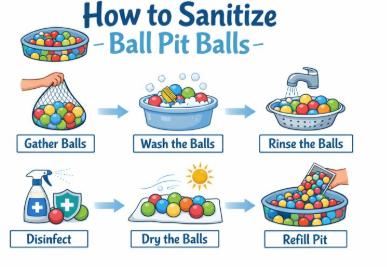
Sanitizing ball pit balls is essential for maintaining a safe and clean play environment in any indoor soft playground. The process involves multiple steps: gathering, washing, rinsing, disinfecting, drying, and refilling. Following these steps will ensure that the balls remain hygienic, safe, and free from harmful germs.
At MICH, the company behind the production of high-quality ball pit balls, we understand the importance of cleanliness in play areas. Regular cleaning not only helps maintain the health of the children using the ball pit but also extends the lifespan of the balls and reduces the need for frequent replacements. By making sanitization a routine part of your maintenance schedule, you ensure a fun, safe, and hygienic space for children to enjoy.
Tip: Consider scheduling regular sanitization sessions for the ball pit to maintain optimal hygiene, especially during peak usage times.
A: To sanitize ball pit balls, begin by gathering all the balls and washing them with warm soapy water. Rinse thoroughly to remove soap residue, then disinfect using a child-safe disinfectant or a DIY vinegar solution. Finally, dry the balls completely before returning them to the pit. This ensures a hygienic environment for children playing in the ball pit, particularly in indoor soft playgrounds.
A: It's recommended to sanitize ball pit balls at least once a week, especially in high-traffic indoor soft playgrounds. Frequent cleaning helps eliminate germs and bacteria, ensuring a safe and clean play area for children.
A: Sanitizing ball pit balls is important because they can collect dirt, bacteria, and viruses over time. Regular cleaning reduces the risk of illness and creates a safer environment, particularly in busy indoor soft playgrounds where children frequently come into contact with the balls.
A: Disinfect ball pit balls by using a child-safe disinfectant or a homemade solution (1 part vinegar to 1 part water). Spray the disinfectant on each ball and let it sit for a few minutes before wiping or rinsing. This step kills germs and bacteria on the ball surfaces.