- All
- Product Name
- Product Keyword
- Product Model
- Product Summary
- Product Description
- Multi Field Search

Views: 3 Author: Site Editor Publish Time: 2026-03-10 Origin: Site
When people ask whether an indoor soft playground is worth it, they are often thinking about two very different things at the same time. Parents want to know if it creates a safer, more engaging place for children to play. Business owners want to know if the investment will actually attract families, improve customer stay time, and support long-term returns. In reality, both questions lead to the same core issue: does soft play deliver enough practical value—in safety, flexibility, and customer appeal—to justify the cost?
From our perspective as a playground equipment supplier, the answer is often yes, but not simply because soft play “looks fun.” A well-designed indoor soft playground does much more than fill space. It creates a controlled play environment, supports age-appropriate activity, reduces the hard-impact feel of play structures, and gives venues a more family-friendly identity. Whether the project is for a shopping mall, family entertainment center, kindergarten, restaurant, or community play zone, soft indoor playground equipment is often chosen because it combines safety-focused design, strong visual appeal, and repeat-use value in a way that many other play formats cannot.
In this article, we will break down what an indoor soft playground really offers, why many buyers consider it worth the investment, what factors affect its value, and how to decide whether it fits your space and business goals.
An indoor soft playground is a play area built with padded, cushioned, and child-friendly structures designed for indoor use. Instead of relying on hard metal frames and exposed rigid surfaces, soft playground systems typically use:
foam-padded components
soft-covered climbing shapes
enclosed play routes
netted safety zones
cushioned flooring
low-impact slides, tunnels, obstacles, and interactive features
The key idea is to create an environment where children can climb, crawl, slide, and explore in a way that feels active and exciting, while reducing the hard-contact surfaces found in less protected play environments.
Most buyers look at indoor soft playgrounds for one or more of these reasons:
they want a play solution for indoor, all-weather use
they need a child-friendly attraction that increases family traffic
they want a safer-feeling environment for younger children
they need a flexible play setup that can fit different room sizes
they want to improve the commercial value of a family-oriented venue
This is why the question is not just “Is it fun?” but “Is it worth the space, budget, and maintenance compared with other options?”
The strongest reason many people choose an indoor soft playground is the safety-oriented structure.
Children are energetic. They run, jump, climb, and lose balance. In any active play environment, bumps and slips can happen. Soft playgrounds are designed to reduce the hard-edge feel of those moments through:
padded barriers
foam-wrapped structures
cushioned floor zones
enclosed climbing routes
soft-surface obstacles
This does not mean “zero risk,” but it does mean the environment is built to feel more forgiving and more appropriate for active indoor play.
For parents, that creates more confidence. For operators, it creates a more child-focused and family-friendly experience.
For commercial buyers, “worth it” usually means the equipment needs to support business performance, not just occupy floor space.
An indoor soft playground is often a strong visual attraction. Families notice it quickly, and it can turn a general venue into a child-friendly destination.
This is especially valuable for:
shopping centers
family entertainment centers
kids’ cafés
restaurants with family seating
indoor recreation venues
When children are engaged in a safe, interesting play zone, parents are more likely to stay longer. Longer stay time can support:
more food and beverage spending
better repeat visits
stronger customer satisfaction
improved overall venue value
Unlike one-time attractions, soft playgrounds are built for repeated daily play. Children often return to them again and again, especially when the layout includes multiple activities and age-appropriate features.
Indoor soft playgrounds can be planned around different layouts, ceiling heights, and target age groups. This means buyers can create:
compact toddler zones
medium-sized commercial play areas
larger multi-level soft play systems
That flexibility helps make the investment more practical across different business models.
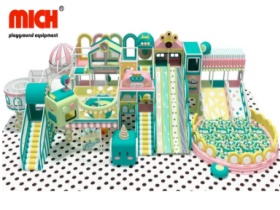
For schools, kindergartens, learning centers, and community spaces, the value of an indoor soft playground is often measured in daily usability.
One of the strongest advantages is that indoor soft playgrounds are not dependent on outdoor weather. Rain, strong sun, wind, or cold conditions do not stop children from using the space.
Soft play environments are especially popular for younger children because the equipment feels more approachable. Bright colors, padded shapes, enclosed layouts, and lower-impact structures often create a more comfortable play experience for early-age users.
In indoor environments where children may otherwise have limited physical play options, soft playgrounds give them a dedicated place to move, explore, and interact.
To understand whether an indoor soft playground is worth it, it helps to compare what you are paying for and what you are getting.
Factor | What You Invest In | What You Gain |
Equipment cost | Structures, soft components, customization | Long-term reusable play attraction |
Space use | Dedicated indoor floor area | Higher family appeal and venue identity |
Installation | Layout planning and setup | Professional, integrated play environment |
Maintenance | Cleaning, inspection, routine upkeep | Continued safe use and longer equipment life |
Design planning | Age zoning, activity balance, theme matching | Better user experience and stronger repeat visits |
The key point is that value does not come only from the equipment itself. It comes from how the playground improves the usefulness and attractiveness of the space over time.
An indoor soft playground is often a strong investment when:
your venue targets children or families
you want to increase repeat visits
you need a weather-independent attraction
you want a safer-feeling alternative to harder play structures
you want to turn unused indoor space into a stronger customer feature
In these cases, soft play often delivers value beyond basic recreation—it becomes part of the venue’s appeal and identity.
Even though indoor soft playgrounds offer many advantages, they are not automatically the right fit for every project.
A very small area may not support enough play value unless the design is carefully planned.
If the venue does not naturally attract children or families, the return may be weaker.
Soft playgrounds need regular cleaning, inspection, and responsible operation. A great installation can lose value if maintenance is treated as an afterthought.
A toddler-focused area and a mixed-age commercial soft play zone require different planning. The right equipment must match the users.
So, is an indoor playground soft worth it? In many cases, yes—especially when the goal is to create a safer-feeling indoor play environment, attract families, and make better long-term use of indoor space. An indoor soft playground offers value through padded design, strong visual appeal, flexible layouts, and reliable all-weather use. For commercial venues, it can support customer traffic and repeat visits. For schools and child-focused spaces, it can provide a practical and engaging daily play solution. The real value comes from matching the design to the users, the space, and the purpose of the project.
At Zhejiang Mich Playground Co.,Ltd., we believe a well-planned indoor soft playground should do more than look colorful—it should work well in everyday use and support the goals of the space it serves. If you are considering an indoor soft playground for your venue and want to explore suitable options, you are welcome to learn more through Zhejiang Mich Playground Co.,Ltd. We are glad to share product details and help you evaluate the right solution based on your project size, layout, and target users.
In many cases, it is designed to feel safer because it uses padded structures, soft surfaces, and enclosed play zones that help reduce hard-contact areas.
It can be, especially if your business serves families and wants to increase customer stay time, repeat visits, and child-friendly appeal.
Indoor soft playgrounds are especially popular for toddlers and younger children, but designs can also be adapted for mixed-age family use.
You should confirm the available space, target age group, usage frequency, maintenance plan, and the overall purpose of the play area before choosing a design.