- All
- Product Name
- Product Keyword
- Product Model
- Product Summary
- Product Description
- Multi Field Search

Views: 0 Author: Site Editor Publish Time: 2026-07-30 Origin: Site
Sourcing commercial recreational infrastructure presents a massive tension for buyers. You want the substantial cost advantages of overseas manufacturing, but you cannot risk liability, injury, or regulatory non-compliance. When evaluating play equipment china, the core problem is distinguishing between high-tier, export-focused manufacturers that adhere to strict global safety standards and lower-tier factories that cut corners on materials and structural integrity. A systematic evaluation framework is essential for assessing the safety, durability, and compliance of imported playground structures. This allows you to make risk-adjusted procurement decisions without compromising the safety of the end-users.
The Chinese manufacturing market for recreational equipment is heavily bifurcated. On one side, you have factories built specifically for Western export compliance. These facilities operate with stringent quality controls, utilize high-grade raw materials, and maintain active certifications for international safety standards. On the other side, you have factories catering primarily to unregulated domestic markets. These operations often prioritize aggressive cost reduction over structural integrity, using thinner steel gauges and recycled plastics that degrade quickly under UV exposure.
Navigating online sourcing platforms often obscures this critical distinction. Trading companies frequently present themselves as direct manufacturers, masking the true origin and quality control processes of the equipment. Identifying a legitimate China Playground Equipment Manufacturer requires looking past polished marketing materials to verify actual production capabilities, factory floor conditions, and a documented history of successful Western exports.
| Feature | Export-Focused Manufacturer | Domestic-Focused Factory / Trading Co. |
|---|---|---|
| Steel Quality | Hot-dip galvanized, 114mm OD, 2.5mm wall thickness | Cold-rolled or untreated steel, thinner walls |
| Plastic Components | Virgin LLDPE with UV stabilizers (Colorfast) | Recycled plastics, prone to fading and cracking |
| Certifications | Verifiable TÜV, SGS, ASTM F1487, EN 1176 | Missing, expired, or forged certificates |
| Hardware | 304/316 Stainless Steel, tamper-resistant | Standard zinc-plated, prone to rust and vandalism |
The specific environment of use dictates the necessary safety margins and material requirements. Daycares and preschools demand hyper-durable, highly sanitizable, and low-abrasion equipment designed specifically for younger, more vulnerable age groups. In these settings, fall heights must be strictly minimized, and every surface must withstand daily scrubbing with harsh chemical disinfectants without degrading.
Resorts and Family Entertainment Centers face a different set of intense operational demands. Here, equipment endures continuous, high-volume guest traffic from a wider age range. These high-liability environments require massive structural stability. The equipment must withstand strict commercial insurance audits, rigorous daily use, and dynamic loading without compromising user safety or requiring constant maintenance downtime.
The financial appeal of sourcing overseas is undeniable, often involving significant reductions in raw material and labor costs compared to domestic alternatives. However, the liability risk associated with installing non-compliant Commercial Play Equipment in schools, daycares, or public parks is immense. A single structural failure or entrapment incident can lead to devastating legal action, massive financial penalties, and irreparable reputational damage.
Successful procurement in this sector means achieving cost efficiency without ever compromising on verifiable safety data or insurance eligibility. You are not just buying steel and plastic; you are buying risk mitigation. The upfront savings must be weighed against the absolute necessity of structural integrity and regulatory compliance.
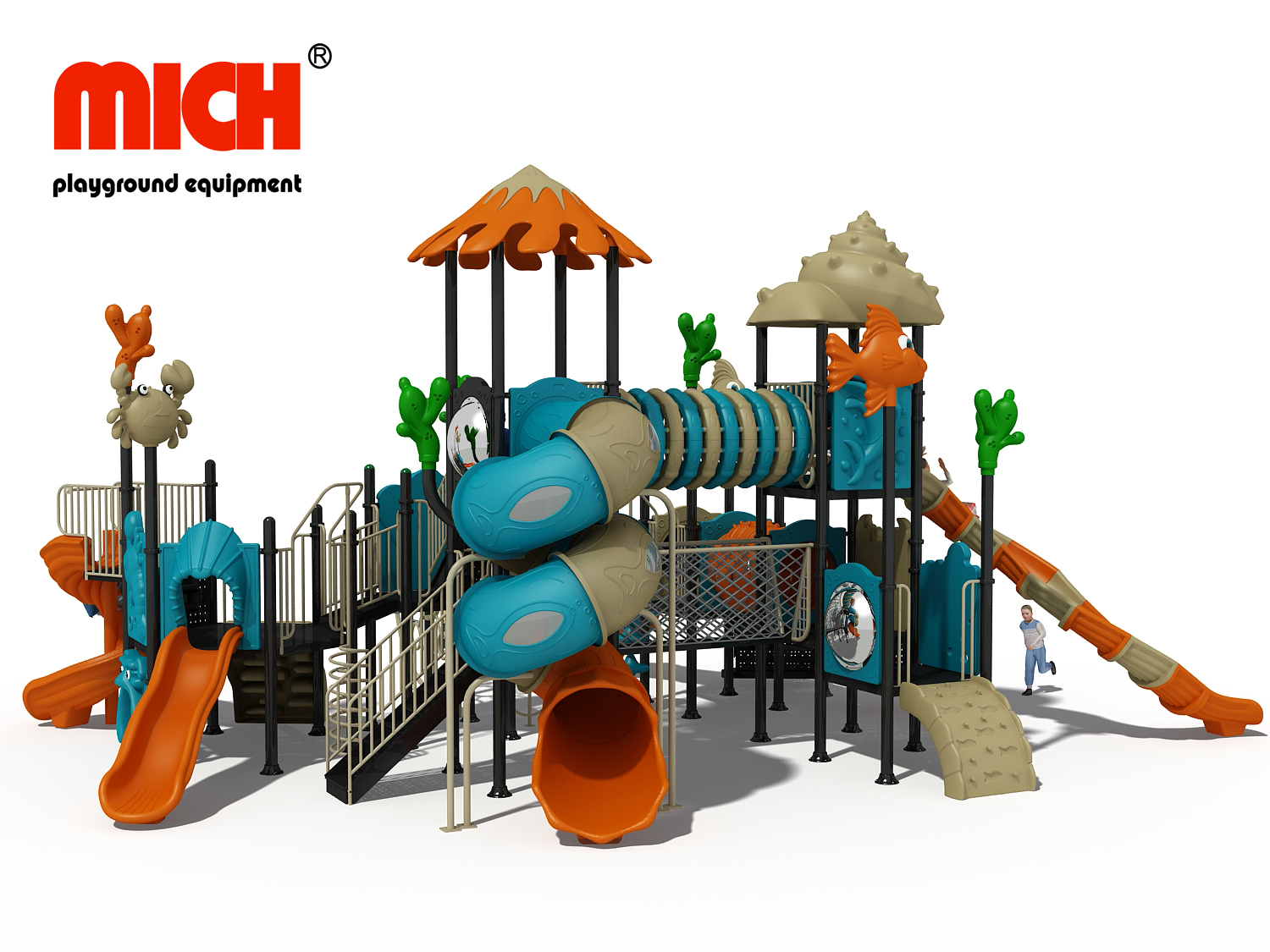
Commercial playgrounds must adhere to specific, rigorous structural requirements. In the United States, this is dictated by ASTM F1487 (Standard Consumer Safety Performance Specification for Playground Equipment for Public Use). In Europe, EN 1176 governs these standards. These are not mere guidelines; they are exact engineering specifications.
Critical safety metrics include precise use zones (the required impact-absorbing surfacing area around equipment), strict mitigation of entrapment hazards, and exact guardrail height specifications. For example, ASTM standards require that any opening on the equipment must not allow the passage of a torso probe while trapping a head probe, preventing fatal head and neck entrapments. Guardrails and protective barriers must be engineered to specific heights based on the target age group to prevent accidental falls from elevated platforms.
Specialized safety requirements apply heavily to high-altitude, multi-level, or indoor adventure structures, such as ropes courses, trampoline parks, and massive indoor play centers. These systems require high-tensile safety netting, impact-absorbing barrier systems, and redundant anchoring points.
Structural anchoring is critical. Equipment must be secured using deep concrete footings or heavy-duty surface mounts that can withstand immense dynamic loads—the combined force of dozens of children running, jumping, and swinging simultaneously. Safety netting must be woven from high-denier synthetic fibers, tested for tensile strength, and secured with minimal gaps to prevent falls from upper levels.
Compliance with Consumer Product Safety Commission (CPSC) requirements regarding heavy metals and phthalates is mandatory. You cannot install equipment that leaches toxins into a child's environment. Lead paint, once common in cheap manufacturing, is strictly prohibited.
Buyers must request comprehensive chemical composition reports for all accessible coatings, plastics, and synthetic rubbers. These reports must come from accredited third-party laboratories. You need documented proof that the powder coatings on the steel posts and the colorants used in the plastic slides are 100% free of lead, cadmium, and dangerous phthalates.
High-traffic commercial environments require equipment tested for both dynamic and static load-bearing capacities. A platform might hold 1,000 pounds of static weight, but it must also survive the dynamic impact of users jumping onto it repeatedly over a decade.
Identifying counterfeit or expired safety certificates requires direct, aggressive verification. Do not take a PDF certificate at face value. Forgeries are common in the lower tiers of the manufacturing sector.
ISO 9001 (Quality Management) and ISO 14001 (Environmental Management) certifications indicate a manufacturer's operational maturity. However, these alone do not guarantee product safety. Commissioning third-party factory audits through services like QIMA or AsiaInspection before finalizing large commercial orders provides an objective, boots-on-the-ground assessment of production capabilities.
An auditor will verify the factory's actual machinery, inspect their raw material storage (ensuring they use virgin plastics and proper steel), and review their internal quality control checkpoints. This step separates the true manufacturers from the trading desks.
Standard warranty expectations for commercial play equipment typically include 10 to 15 years on steel posts and main structural components, and 5 years on plastics and moving parts. However, enforcing a warranty across international borders presents massive logistical challenges.
If a slide cracks, the manufacturer might offer a free replacement, but the international freight cost could exceed the value of the part. Therefore, it is necessary to negotiate the inclusion of critical spare parts in the initial contract and shipment. Understand exactly what the warranty covers, who pays for shipping on replacement parts, and the expected lead time for manufacturing those replacements.
The backbone of any commercial playground is its steel structure. Hot-dip galvanized steel combined with a thick, baked-on powder coating offers superior corrosion resistance. This process protects the steel from the inside out, preventing rust even in high-humidity or coastal environments.
Cheaper, untreated steel or thin electro-galvanized alternatives will rust rapidly once the surface paint is scratched. High weld quality—smooth, continuous, and slag-free—combined with robust rust prevention directly impacts the structural safety and long-term lifespan of the equipment.
| Material Spec | Commercial Grade (Required) | Residential/Low Grade (Avoid) |
|---|---|---|
| Main Posts | 114mm or 89mm OD Hot-Dip Galvanized Steel | Thin-wall steel, untreated internally |
| Coating | Zinc-rich primer + UV-resistant powder coat | Basic liquid paint, prone to chipping |
| Welds | Robotic or high-grade TIG, ground smooth | Spot welds, sharp edges, visible slag |
Linear Low-Density Polyethylene (LLDPE) is the absolute standard for commercial slides, roofs, and activity panels. It offers the perfect balance of tensile strength, impact resistance, and flexibility. Crucially, commercial-grade LLDPE must be compounded with heavy UV stabilizers.
Poor UV stabilization results in rapid color fading, brittleness, and eventual cracking under commercial wear and tear. A cracked plastic slide is a severe laceration hazard and immediately takes the equipment out of commission. Insist on virgin LLDPE with documented UV resistance ratings.
Plastics and coatings in daycare settings must withstand frequent, aggressive cleaning. Health regulations mandate daily sanitization protocols using bleach solutions, quaternary ammonium compounds, or other harsh disinfectants.
Material specifications must resist degrading, clouding, or releasing micro-particles when exposed to these chemicals. Inferior plastics will become porous over time, harboring bacteria and defeating the purpose of sanitization. The powder coating on metal parts must also be chemical-resistant to prevent peeling and flaking in high-touch areas.
The structural integrity of a massive play system relies entirely on its hardware. Tamper-resistant, stainless steel hardware (specifically 304 or 316 marine grade) is required. This prevents vandalism, ensures connections do not vibrate loose over time, and stops environmental degradation.
Using cheap, zinc-plated bolts will result in rust streaks down the equipment within a year. Worse, rusted bolts lose their shear strength, creating catastrophic failure points. Every bolt, nut, and washer must be specified as high-grade stainless steel.
Inadequate or poorly translated assembly instructions pose significant risks during the build phase. A playground is only as safe as its installation. Hiring Certified Playground Safety Inspectors (CPSI) and specialized local installation crews ensures the final build meets municipal codes and safety standards.
Local crews understand the required footing depths for your specific soil type and frost line. They know how to properly tension safety nets and calibrate fall zones. Attempting a DIY installation with a general contractor often leads to failed municipal inspections and voided warranties.
Importing heavy infrastructure involves hidden costs and logistical hurdles. You must account for freight forwarding fees, import duties, customs bonds, and potential port storage delays. A container delayed at the port can rack up thousands of dollars in demurrage fees.
Working with experienced customs brokers and calculating the true landed cost before purchase mitigates these unexpected financial burdens. Ensure the manufacturer provides accurate packing lists, commercial invoices, and Bill of Lading documents to facilitate smooth customs clearance.
A damaged component—like a cracked bubble panel or a broken swing chain—can shut down a commercial play area for months while you await international shipping for a replacement part. This operational downtime is unacceptable for resorts, FECs, and schools.
Mitigate this risk by ordering a surplus of high-wear replacement parts alongside the initial shipment. Stockpile extra fasteners, swing seats, chains, touch-up paint, and high-traffic plastic components. Having these on hand turns a three-month closure into a two-hour maintenance task.
A: Many top-tier Chinese manufacturers produce equipment that meets ASTM standards, but certification must be verified per product line through independent testing labs like TÜV or SGS.
A: Contact the issuing laboratory directly (e.g., SGS, Intertek) and provide the certificate number to confirm it is authentic, current, and applies to the specific equipment you are purchasing.
A: Commercial durability requires hot-dip galvanized steel for structural posts, UV-stabilized LLDPE for plastics, and 304/316 stainless steel for tamper-resistant hardware.
A: Inspectors will approve equipment that demonstrates compliance with local standards (like ASTM F1487) and is installed correctly, often requiring sign-off by a Certified Playground Safety Inspector (CPSI).
A: Yes, provided the manufacturer specializes in these structures and provides verifiable dynamic load testing, high-tensile safety netting specifications, and redundant anchoring systems.
A: High-quality LLDPE resists degradation from standard sanitizers, but inferior plastics may become brittle, fade, or release micro-particles when subjected to aggressive chemical cleaning.
A: High-quality imported equipment can last 15-20 years for steel components and 5-10 years for plastics, depending on environmental factors, usage volume, and maintenance routines.