- All
- Product Name
- Product Keyword
- Product Model
- Product Summary
- Product Description
- Multi Field Search

Views: 7 Author: Site Editor Publish Time: 2025-10-17 Origin: Site
The simple backyard trampoline of decades past has evolved into a global phenomenon: the Trampoline Park. These sprawling indoor entertainment centers have revolutionized recreational fitness, offering a dynamic and safe environment for jumpers of virtually all ages. When asking, “What age is a big trampoline for?” the answer, today, is less about a single age and more about the structured, specialized activities offered within a state-of-the-art recreational facility. The modern Trampoline Park is designed to accommodate everyone from supervised toddlers to professional gymnasts, with each age group benefiting from carefully segregated zones and specialized attractions. This comprehensive guide will explore the age-specific safety protocols, the thrilling activities, and the massive business behind the modern bounce industry.
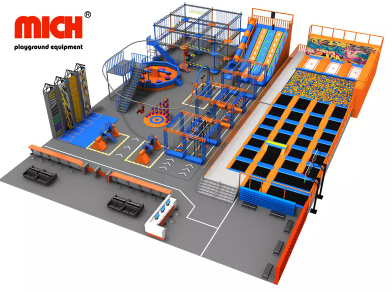
While a traditional, uncovered, backyard trampoline is typically deemed unsafe for children under the age of 6 by organizations like the American Academy of Pediatrics (AAP) due to underdeveloped coordination and risk of injury, the controlled environment of an indoor amusement center offers tailored solutions. A modern Trampoline Park is a multi-faceted facility that applies specific safety measures and equipment to cater to a broader age range.
For the youngest jumpers, the question of "What age is a big trampoline for?" is answered with "supervision and separation." Many facilities, such as the widely known Altitude Trampoline Park and others like airbound trampoline park, recognize the demand from parents of preschoolers and offer dedicated programs.
Trampoline Park Toddler Time: This is a key offering designed specifically for children generally under 5 or 6 years old. During these low-sensory, low-crowd hours, the large indoor center is sectioned off. The music is often quieter, and only toddlers and their accompanying adult guardians are allowed to jump. This eliminates the risk of collision with older, heavier jumpers, which is the primary danger on standard trampolines.
Soft Play Areas: Beyond the jumping zones, many facilities incorporate soft-play structures, foam pits, and low-impact areas, providing an age-appropriate physical outlet within the family entertainment center.
This is the sweet spot for the modern entertainment venue. Children in this age group have the necessary motor skills, coordination, and ability to follow multi-step instructions crucial for safely navigating the complex attractions. This demographic fuels the most popular offerings at a Trampoline Park:
Structured Fun: From dodgeball courts to the basketball trampoline park areas where kids can effortlessly dunk, this age group engages with the competitive and skill-based elements of the facility.
Birthday Bashes: The all-inclusive nature of the trampoline park birthday party is immensely popular for this group, providing a high-energy, easy-to-manage celebration package for parents.
Summer Programs: To maintain engagement during school breaks, the trampoline park summer camp provides supervised, daily activities that blend fitness, play, and often educational elements, a testament to the versatility of the Trampoline Park model.
Contrary to popular belief, the adult demographic accounts for a significant portion of the indoor jumping market. Market data shows that adult consumers hold a majority share of the overall market, using the centers for fitness and specialized challenges.
Performance Zones: Features like the high-performance trampolines, often used for "wall running," are aimed squarely at older teens and adults seeking advanced training or competitive sport.
Ninja Kidz Trampoline Park Style Challenges: The rise of challenging obstacle courses, often inspired by TV shows, has made the Trampoline Park a destination for serious athletes and fitness enthusiasts. These demanding courses test balance, strength, and agility—attracting a mature user base.
Glow Nights: These themed evening events, often marketed as glow in the dark trampoline park nights, are specifically marketed towards teens and young adults, combining a vibrant, blacklight atmosphere with jumping, music, and social interaction. This trend keeps the center relevant and appealing beyond daylight hours.
Understanding the core operational logistics is vital for any user, whether a first-time visitor or a business owner analyzing best practices. The strict adherence to safety rules is what separates a certified family entertainment center from a standard backyard setup.
The first step upon entering any reputable Trampoline Park, including franchise giants like Sky Zone or local spots like jump trampoline park or helium trampoline park, is the waiver and the gear.
Safety & Logistics Checkpoint | Requirement/Typical Standard | Purpose and Relevance |
Footwear | Mandatory branded socks for trampoline park use (e.g., "SkySocks"). | Non-slip grip is essential for safety, reducing friction and preventing slips, particularly on angled walls and performance areas. Regular socks are prohibited. |
Weight Limit | General weight limit at trampoline park is $\mathbf{250 \text{ to } 300 \text{ lbs}}$. | Adherence is crucial for both safety (spring load capacity, risk of bottoming out) and the longevity of the trampoline park equipment. |
Attire | What to wear trampoline park? Comfortable, athletic clothing. | Avoid clothing with sharp embellishments, buckles, or exposed zippers that could tear the mats or injure other jumpers. Empty pockets are mandatory. |
Age Limit | No universal trampoline park age limit for entry, but typically $6+$ for solo jumping. | Minimum age for unsupervised jumping is usually $13$, with $18$ required to sign their own waiver. Younger participants must have a guardian-signed waiver. |
The modern Trampoline Park business model relies heavily on repeat visitors and year-round revenue generation.
Membership & Loyalty: Offering a trampoline park summer pass or annual membership is a common trend. These passes provide unlimited or deeply discounted access, encouraging families to visit frequently, especially during school breaks or poor weather. This stable revenue stream is key to the overall profitability of the venue.
Specialized Times: Beyond Toddler Time, these centers often offer Sensory-Friendly Jumps for individuals with special needs, or fitness classes, ensuring the trampoline park equipment is utilized across various demographics and interests.
To stay competitive, a successful indoor center must constantly evolve and incorporate the latest trends. The shift is moving toward creating immersive, multi-attraction Family Entertainment Centers (FECs).
The days of a jumping facility being just trampolines are over. Current trends show successful Trampoline Park venues incorporating hybrid entertainment models:
Interactive Jumping: Utilizing AR (Augmented Reality) and motion-tracking technology where jumpers control a video game or an interactive wall projection with their bounces. This adds a digital layer of engagement that transcends the traditional jump experience.
Sports Integration: The basketball trampoline park areas are now standard, but many parks are also adding elements like dodgeball leagues and ninja kidz trampoline park training sessions, formalizing the sports aspect of the center.
Atmospheric Experiences: The success of the glow in the dark trampoline park nights highlights the importance of themed experiences. These events transform the space, encouraging repeat visits and attracting the lucrative young adult market, often utilizing specialized lighting and sound systems to create a party atmosphere.
Q: Is there a maximum weight limit at the facility?
A: Yes, almost all commercial indoor jumping facilities enforce a maximum weight limit at trampoline park attractions for safety and equipment integrity. This limit typically ranges from 250 lbs to 300 lbs. Always check the specific park’s rules, whether it’s airbound trampoline park, jump trampoline park, or helium trampoline park.
Q: Do I need to buy special socks for jumping?
A: Absolutely. Virtually every Trampoline Park requires the use of their proprietary, brand-specific non-slip socks for trampoline park activities. These are mandated for safety, as the rubberized grips on the soles provide necessary traction on the high-performance mats and angled walls, greatly reducing the risk of slipping.
Q: What is the typical age limit for jumping alone?
A: There is generally no maximum trampoline park age limit, but there is a recommended minimum. Most major safety guidelines suggest 6 years old as a safe starting age for unsupervised bouncing. Children under 13 usually require direct adult supervision, while infants and very young toddlers (0−4) should be restricted to dedicated, low-crowd areas like trampoline park toddler time.
Q: How can I save money if my child wants to go to the center often?
A: Many operators, recognizing the demand for frequent visits, offer various cost-saving options. Look for a trampoline park summer pass, which provides unlimited or heavily discounted access for the entire season. They also often provide monthly membership options and multi-visit punch cards.
The journey from a single backyard bounce mat to the multi-million dollar Trampoline Park industry is a reflection of changing consumer demand for safe, active, and social entertainment. The question of "What age is a big trampoline for?" has been answered by the industry's innovation—it’s for everyone, provided they adhere to the rules and use the specialized areas designed for their age and skill level.
From trampoline park toddler time to the high-stakes basketball trampoline park games and the vibrant, themed atmosphere of the glow in the dark trampoline park events, the future of these indoor centers remains buoyant. As more entrepreneurs ask how to start a trampoline park and work closely with an expert trampoline park manufacturer, the industry continues to grow at a rapid pace, solidifying the Trampoline Park as a premier destination for fun and physical activity. The careful engineering that accommodates a diverse age range, from the smallest jumper to the adult well within the weight limit at trampoline park boundaries, is what guarantees the venue’s ongoing success as a premier destination for fun and physical activity. The focus remains on safety, innovation, and providing a dynamic, high-flying experience for all.