- All
- Product Name
- Product Keyword
- Product Model
- Product Summary
- Product Description
- Multi Field Search


Views: 2 Author: Site Editor Publish Time: 2026-03-11 Origin: Site
When parents, venue owners, and school planners look at children’s play equipment, they are not only looking for something colorful or exciting. They are looking for a play environment that feels safe, works in all seasons, keeps children engaged, and creates a better overall experience for families. That is exactly why the indoor soft playground has become such a popular choice in shopping centers, family entertainment venues, kindergartens, indoor parks, and children’s activity spaces. Unlike traditional hard-surface play areas, an indoor soft playground is designed to combine active play with a more controlled and child-friendly environment. It supports climbing, crawling, sliding, balancing, and exploring, while using padded structures and enclosed layouts to reduce many of the risks associated with more rigid play equipment.
An indoor soft playground is a children’s play structure designed for indoor environments and built with padded, cushioned, and impact-reducing materials. These systems are typically made up of modular play elements that allow children to move through different activity zones safely.
Common features may include:
padded climbing frames
soft stairs and ramps
tunnels and crawl spaces
enclosed slides
ball pools
interactive play panels
obstacle elements
themed role-play areas
The structure is designed to encourage active movement while helping reduce direct impact from falls, bumps, and collisions. This makes it especially suitable for younger children and family-oriented indoor spaces.
The most recognized advantage of an indoor soft playground is safety. Children naturally move quickly when they play. They run, jump, climb, slide, and sometimes lose balance. A soft playground is designed to support this type of active behavior with more forgiving materials.
Why safety is better in a soft play system
Padded surfaces help reduce the impact of falls
Soft barriers and enclosures reduce collisions with hard edges
Child-scaled layouts are designed around children’s height and movement patterns
Controlled play zones help separate activities more effectively
For parents, this creates confidence. For venue operators, it helps create a more suitable and manageable play environment. In many cases, this safety advantage is the main reason indoor soft playground systems are chosen over more rigid play options.
Outdoor play areas are strongly affected by rain, wind, heat, cold, and seasonal changes. An indoor soft playground is not limited by those conditions. Because it is installed indoors, it can remain usable in a much more consistent way throughout the year.
Why this matters for users and operators
children have a play destination in any season
bad weather does not stop daily operation
parents are more likely to choose indoor activities in extreme weather
operators can maintain more stable foot traffic across the year
This all-weather advantage is especially important for malls, family centers, and other commercial venues that want to reduce seasonal fluctuation in customer visits.
Comfort is a major part of the play experience, even if it is not always the first thing people mention. Indoor soft playgrounds are usually placed in spaces with temperature control, cleaner flooring, and more organized layouts. This improves the overall environment for both children and adults.
Comfort advantages include
no direct exposure to strong sun
no wet ground or muddy surfaces
more stable temperature during play
softer contact surfaces for climbing and movement
easier access to seating or waiting areas for parents
Children are more likely to stay engaged when they feel physically comfortable, and parents are more likely to stay longer when the environment feels clean, safe, and relaxing.
An indoor soft playground supports active play, which is one of its strongest developmental and behavioral advantages. Instead of sitting and watching, children are encouraged to move through the structure and interact with the space.
Common movement activities supported
climbing
balancing
crawling
sliding
stepping
jumping in soft zones
navigating obstacle paths
This kind of play keeps children physically engaged and gives them a more dynamic experience. It also helps the play area feel more valuable because children can return to the same structure and still use it in many different ways.
Another important advantage is that indoor soft playgrounds naturally encourage children to play together. Unlike single-user devices, soft play structures often create shared spaces where children move, wait, follow, explore, and interact side by side.
Social benefits of shared play spaces
encourages group play
supports turn-taking and interaction
creates a more lively play atmosphere
helps siblings play in the same environment
makes group visits more enjoyable
For family venues, this matters because it improves the overall emotional value of the visit. A good indoor soft playground is not just a physical activity zone—it is also a social space.
One of the most practical benefits of an indoor soft playground is that it can be designed for different age levels. A well-planned layout can include age-appropriate zones so that smaller children and older children can use the same general space more comfortably.
Typical age-zone design approach
Age Group | Common Features | Main Benefit |
Toddlers | Low platforms, sensory play, mini slides | Safer and simpler play |
Preschool children | Small tunnels, soft obstacles, ball pits | Active exploration |
Young children | Multi-level climbing, larger slides, challenge zones | Longer engagement and variety |
This flexibility makes the indoor soft playground suitable for many venues, from early education spaces to commercial family centers.
Indoor soft playgrounds are designed to be bright, welcoming, and visually attractive. This visual appeal is a major business advantage, especially in venues where children’s attention and family decision-making matter.
Why visual appeal matters
attracts children from a distance
makes the venue look more family-friendly
creates a more energetic and inviting atmosphere
helps the play area become a focal point in the venue
supports themed branding and better customer memory
For operators, visual impact is often one of the reasons a soft playground performs well as a traffic-driving feature.
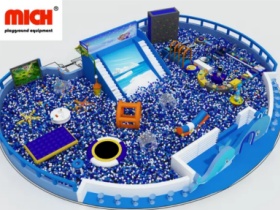
An indoor soft playground is often designed to maximize the use of available indoor space, including height as well as floor area. Because these systems can be modular and multi-level, they can deliver a large amount of play value in a relatively compact footprint.
Space efficiency benefits
uses vertical space effectively
allows multiple play functions in one structure
can be adapted to different room shapes
works in both compact and larger locations
can be planned around columns, walls, or existing layouts
This makes indoor soft playgrounds especially useful in places where floor area must be used carefully, such as shopping malls, indoor parks, and mixed-use commercial venues.
Venue Type | Why It Works Well |
Shopping centers | Attracts families and increases dwell time |
Family entertainment centers | Adds strong repeat-visit value |
Kindergartens | Supports organized indoor activity |
Children’s cafés | Combines play with parent seating |
Community centers | Creates safe, weather-independent recreation |
Because indoor soft playgrounds are installed in enclosed and planned environments, they are often easier to supervise than many open outdoor spaces. Visibility, entry points, and movement routes can all be managed more effectively.
Supervision advantages
easier to monitor children in a contained area
more controlled entry and exit points
better line of sight in well-designed layouts
easier routine inspection and cleaning
simpler staff management in commercial venues
This helps both parents and operators feel more in control of the environment, which improves trust in the play space.
So, what are the advantages of an indoor soft playground? In practical terms, it offers a better balance of safety, comfort, all-weather usability, active play value, flexible design, and commercial appeal. It creates a child-friendly environment where children can climb, slide, crawl, and explore more confidently, while parents enjoy a cleaner, more controlled indoor setting. For operators, it can improve space usage, strengthen family attraction, and support a more reliable year-round play business.
At Zhejiang Mich Playground Co.,Ltd., we believe a good indoor soft playground should not only look attractive—it should create lasting value for children, families, and venue owners. If you are planning a new indoor play area or upgrading an existing one, you are welcome to learn more about suitable solutions through Zhejiang Mich Playground Co.,Ltd. and explore the right design for your project.
The main advantages include safer play, all-weather use, better comfort, easier supervision, and stronger appeal for family-friendly venues.
It uses padded materials, soft barriers, and child-focused layouts that help reduce impact and create a more controlled play environment.
Yes. It is widely used in malls, family entertainment centers, children’s cafés, and community venues because it can attract families and encourage repeat visits.
Yes. Indoor soft playground systems can usually be customized by theme, age group, layout, and available space, making them suitable for many different indoor venues.