- All
- Product Name
- Product Keyword
- Product Model
- Product Summary
- Product Description
- Multi Field Search

Views: 0 Author: Site Editor Publish Time: 2026-10-30 Origin: Site
Selecting the right ground material is the most critical safety decision facility managers and school planners make when designing a play area. The vast majority of playground injuries result directly from falls to the surface. A structure is only as safe as the ground beneath it. Material selection dictates liability, accessibility, and daily maintenance requirements.
Planners constantly struggle to balance strict safety compliance with upfront budget constraints, climate variables, and ongoing maintenance realities. You need a reliable framework to evaluate surfacing options. This evaluation must look beyond the initial installation. It requires analyzing critical fall height ratings, wheelchair accessibility, and long-term durability when pairing the surface with high-quality Kids Outdoor Playground Equipment.
This guide breaks down the mechanics, advantages, and drawbacks of the most common playground surfaces. You will learn how to match specific materials to your climate, equipment height, and maintenance capacity, ensuring a safe and compliant play environment for all children.
Before comparing specific materials, you must establish the baseline requirements for your site. Surface selection is never a purely aesthetic choice. It is a strict engineering decision driven by safety standards, local weather patterns, and user demographics. You have to look at the site conditions first. Soil composition, water table levels, and existing slopes dictate what you can actually install.
Critical Fall Height is the maximum height from which a child can fall onto a surface without sustaining a life-threatening head injury. The highest designated play surface of your equipment dictates this metric. If a slide platform sits eight feet off the ground, the surface below must possess a CFH rating of at least eight feet. Different materials achieve different CFH ratings based on their composition and installed depth. You cannot guess this metric. You must rely on independent laboratory testing data provided by the material manufacturer. When we install these systems on site, we always add an extra inch of material beyond the lab recommendation to account for settling and compaction over time.
Modern play spaces must accommodate users of all abilities. ADA compliance, or regional equivalents, requires surfaces to be firm, stable, and slip-resistant. Wheelchairs and mobility aids must navigate the area without sinking or encountering excessive rolling resistance. Loose-fill materials often struggle to meet these strict accessibility standards without heavy, daily maintenance. Unitary surfaces generally provide superior navigation for children and caregivers using mobility devices. If you use loose fill, you must install specialized transition ramps and maintain the material depth daily to keep it compliant.
Your local climate heavily influences material performance. Freeze and thaw cycles can cause rigid surfaces to crack or heave. Extreme summer heat can elevate the temperature of synthetic materials to dangerous levels, causing contact burns. Heavy rainfall demands a robust sub-surface drainage system. If your site naturally pools water, installing a premium surface without correcting the drainage will lead to rapid material failure and voided warranties. We always recommend a minimum one percent slope on the sub-grade to direct water toward a perforated drain pipe system.
Many people assume natural grass or packed dirt provides a soft landing. This is a dangerous misconception. Environmental factors quickly compact dirt and grass, stripping them of any impact attenuation properties. A dry summer or a freezing winter turns soil into a surface as hard as concrete. Consequently, safety standards explicitly exclude natural grass and dirt from certified commercial play areas. They simply cannot provide consistent, predictable shock absorption.
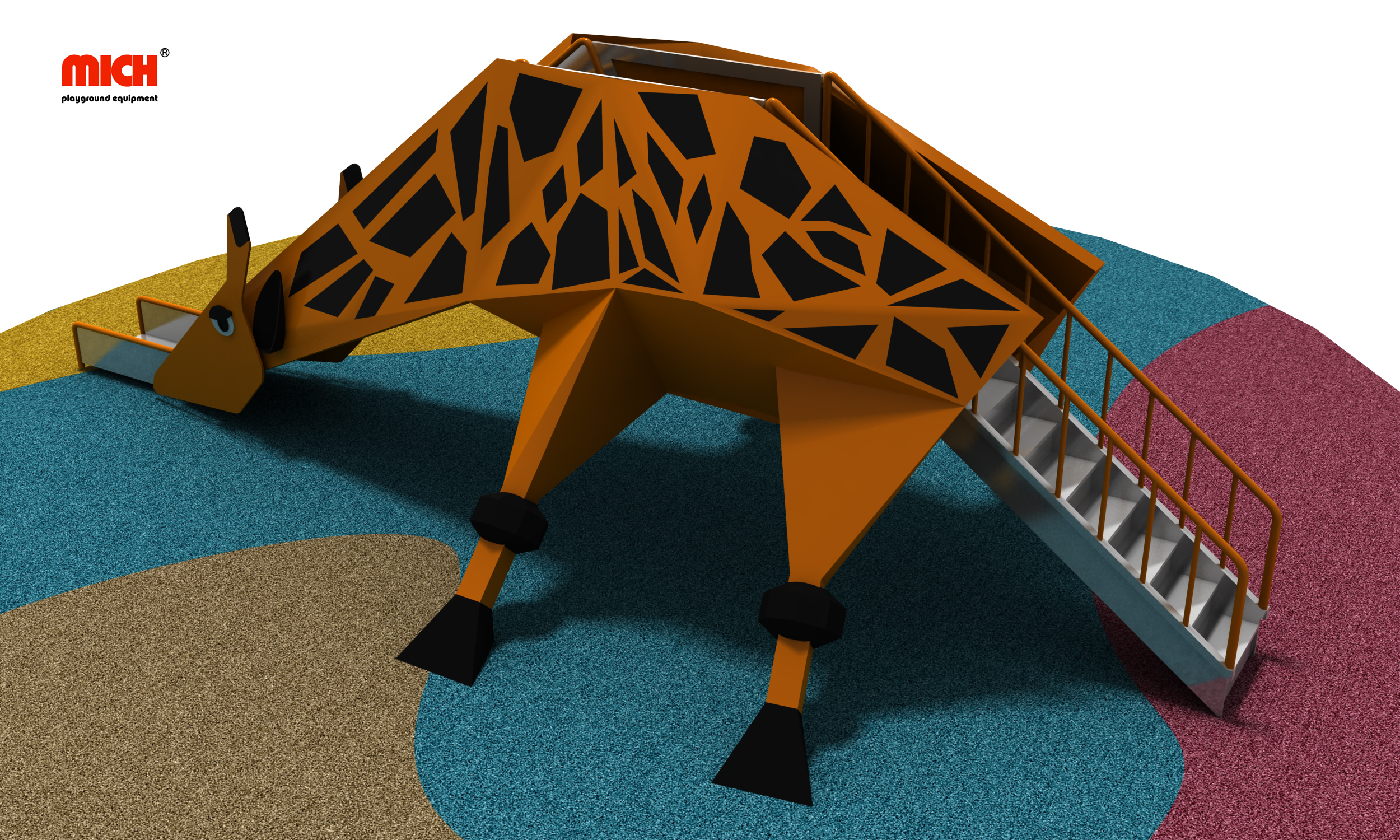
The market offers several distinct categories of safety surfacing. Each material utilizes a different mechanism to absorb impact and presents a unique set of maintenance demands. Let us look at the physical properties and installation realities of each option.
Poured-in-Place rubber is a premium, unitary surface mixed and troweled directly on the site. It consists of a two-layer system. The bottom layer utilizes coarse rubber granules designed specifically for impact attenuation. The top layer consists of finer, colorful rubber granules mixed with a polyurethane binder to resist wear and UV degradation.
Engineered Wood Fiber is not standard landscaping mulch. It consists of processed wood ground to specific dimensions. These irregular pieces knit together to form a relatively firm surface that provides excellent impact absorption.
Rubber tiles are pre-manufactured squares joined by pins or interlocking edges. They sit over a solid, perfectly flat sub-base, usually concrete or asphalt.
Playground turf systems pair synthetic grass with a specialized foam shock pad underneath. Installers then brush sand or alternative infill into the turf fibers to keep them standing upright.
Rubber mulch utilizes shredded, recycled tires. Manufacturers process the tires to remove steel belts and wires, creating a loose-fill material designed for impact absorption.
These are unprocessed organic or mineral aggregates laid over a simple geotextile membrane. They represent the oldest style of playground surfacing.
Wear mats are heavy-duty, molded rubber mats. You do not use them for the entire playground. Instead, you place them on top of loose-fill materials or integrate them into high-stress areas like swing bays and slide exits.
Choosing the right surface requires analyzing how the material interacts with your specific equipment and environment. A surface that works perfectly in a shaded, temperate park might fail miserably in a sun-baked, high-traffic schoolyard.
You must match surface types to the specific structures you install. When importing china outdoors toys for kids, pay close attention to the designated fall heights. High-traffic zones, such as the base of a spiral slide or the area beneath a multi-bay swing set, experience intense friction and impact. If you use loose-fill materials under these imported outdoor toys, you must install heavy-duty wear mats to prevent children from kicking away the protective surfacing and exposing the hard sub-base.
Climate dictates material lifespan. UV exposure aggressively degrades the polyurethane binders used in PIP rubber, causing the surface to harden and lose its impact attenuation properties over time. Aromatic binders yellow under UV light, while aliphatic binders resist fading but require more precise mixing. Conversely, heavy rainfall severely impacts Engineered Wood Fiber. Without excellent sub-surface drainage, EWF retains moisture, accelerating rot, freezing into solid blocks in winter, and fostering mold growth. Evaluate your local weather extremes before committing to a material chemistry.
True inclusivity requires analyzing the rolling resistance of your chosen surface. IPEMA-recommended unitary surfaces, such as PIP rubber and interlocking tiles, provide a firm, stable path of travel. Children using wheelchairs, crutches, or walkers can navigate these surfaces independently. Loose-fill surfaces, including EWF, sand, and pea gravel, create significant rolling resistance. Even when properly compacted, loose materials shift under the weight of mobility devices, restricting access and isolating children with physical disabilities.
| Surface Material | Impact Attenuation (CFH) | Accessibility (ADA) | Maintenance Level | Climate Resilience |
|---|---|---|---|---|
| Poured-in-Place (PIP) | Excellent (Customizable) | High | Low | Moderate (UV sensitive) |
| Engineered Wood Fiber | Excellent (At proper depth) | Low to Moderate | High | Low (Prone to rot/freezing) |
| Interlocking Tiles | Consistent | High | Low | High |
| Artificial Turf | Excellent (With pad) | High | Moderate | Moderate (Heat retention) |
| Rubber Mulch | Excellent | Low | High | High |
Procuring surfacing materials requires strict due diligence, especially when coordinating international shipments or working with overseas vendors. Safety compliance relies entirely on verifiable data and proper installation techniques.
Never accept verbal assurances regarding safety ratings. You must demand independent laboratory testing reports from recognized bodies like TÜV or SGS. These reports must explicitly prove compliance with ASTM F1292 for impact attenuation and EN 1177 standards. When sourcing materials or bundled equipment internationally, verifying these documents ensures the products actually perform as advertised under impact.
Synthetic materials, particularly recycled rubber products, require careful chemical evaluation. You must evaluate heavy metal content, phthalates, and VOC emissions. Ensure any imported rubber products comply with strict chemical safety frameworks like REACH or CPSIA standards. Children frequently touch the ground and then touch their faces. The chemical composition of the surface is just as important as its physical shock absorption.
The best material in the world will fail if installed over a poor sub-base. Mitigate installation risks by separating the procurement of equipment from the localized installation of the surfacing. Local civil contractors usually handle excavation, drainage, and aggregate compaction better than general laborers. Ensure your China Playground Manufacturer provides detailed sub-base engineering drawings. Proper drainage slopes and aggregate depths are non-negotiable prerequisites for unitary surface installations.
To ensure a stable foundation, follow these sub-base preparation steps:
Every surfacing choice requires a compromise between initial effort and long-term labor. Understanding these trade-offs prevents unexpected facility management burdens.
Evaluate the lifecycle of the material. Engineered Wood Fiber requires a very small initial installation effort. However, you must dedicate significant weekly labor to raking, leveling, and removing debris. You will also need to install top-off loads annually to maintain the required CFH depth. Poured-in-Place rubber requires a massive initial installation effort involving specialized mixing equipment and troweling. Yet, its daily maintenance involves little more than occasional sweeping or leaf blowing. You must align your choice with your organization's ongoing labor capacity.
Public spaces face the risk of vandalism. Repairing a damaged PIP surface is difficult. It requires cutting out the damaged section, mixing new binders and granules, and pouring a patch that rarely matches the faded color of the original surface. In contrast, repairing damaged rubber tiles simply involves pulling up the ruined squares and dropping in replacements. Fixing vandalized wood mulch usually just requires a rake and a few fresh wheelbarrows of material.
Consider the environmental impact when the surface eventually fails. Synthetic materials lose their impact attenuation properties after a decade of UV exposure and heavy use. Removing and disposing of thousands of pounds of bonded rubber or artificial turf carries significant environmental and logistical burdens. Organic materials like EWF simply decompose and can be tilled into the soil or removed with minimal environmental friction.
A: Safety is measured by impact attenuation. IPEMA-recommended Poured-in-Place (PIP) rubber and properly maintained Engineered Wood Fiber (EWF) generally offer the best protection for high fall heights. The safest material is always the one installed at the correct depth for the equipment's specific Critical Fall Height.
A: Rubber mulch provides excellent shock absorption. However, buyers must weigh this benefit against concerns regarding potential wire fragments from recycled tires, chemical toxicity, and ingestion risks for toddlers. Always demand wire-free, certified non-toxic rubber mulch.
A: Thickness is strictly dictated by the Critical Fall Height of the equipment and the specific material's testing data. A six-foot fall might require 9 inches of EWF but only 3 inches of PIP rubber. Always consult the manufacturer's ASTM F1292 test results.
A: Engineered Wood Fiber (EWF) and standard play sand demand the most ongoing labor. Facility managers must account for constant raking, leveling under high-traffic zones, and frequent material top-offs to maintain safety compliance.
A: No. Installing directly over grass or dirt leads to rapid failure and voids safety compliance. Unitary surfaces require a compacted aggregate or concrete sub-base. Loose-fill materials require proper excavation and integrated drainage layers to prevent flooding and rot.
A: They can, but verification is mandatory. You must ensure that the overseas manufacturer holds valid, third-party IPEMA or ASTM certifications. Always request independent laboratory test reports for impact attenuation and chemical safety before purchasing.