- All
- Product Name
- Product Keyword
- Product Model
- Product Summary
- Product Description
- Multi Field Search

Views: 0 Author: Site Editor Publish Time: 2026-08-28 Origin: Site
Investing in play spaces demands serious planning and careful selection. A commercial play environment represents a major capital expenditure for any organization. Relentless UV exposure, intense freeze-thaw cycles, and heavy rainfall ruthlessly attack structural integrity. Without the right materials, structural aesthetics and safety degrade within just a few seasons. You risk destroying your initial investment completely.
We must move past vague marketing claims about weatherproof equipment. You will discover the specific engineering, protective coatings, and composite materials necessary to genuinely resist rust, rot, and UV damage. This guide provides a pragmatic breakdown of building materials, surface drainage solutions, and lifecycle maintenance realities. Expect actionable advice to help you confidently specify your next project.
Steel requires multi-layer defense: Galvanization combined with baked-on powder coating is the baseline for commercial longevity against rain and humidity.
Plastics must be UV-stabilized: High-Density Polyethylene (HDPE) resists the fading, cracking, and brittleness caused by direct sun better than standard commercial plastics.
Wood requires specific treatments: For an outdoor playhouse or natural-style playground, cedar, redwood, or pressure-treated pine are necessary to combat rot and wood-boring insects.
Surfacing dictates usability: Poured-in-place (PIP) rubber and engineered wood fiber (EWF) require proper sub-base drainage to prevent washout and freezing during extreme weather.
Maintenance is non-negotiable: No material is truly maintenance-free; long-term durability relies on routine inspections for coating breaches and hardware corrosion.
Defining specific environmental threats before evaluating solutions prevents over-spending or under-speccing. We need to identify exactly what forces degrade an Outdoor Playground. Understanding the threat matrix helps you allocate your budget toward materials engineered for your exact climate zone.
UV radiation acts as a constant destructive force. The sun breaks down molecular bonds in exposed plastics. This chemical breakdown causes rapid brittleness and severe aesthetic fading. UV rays also superheat bare metals quickly. Hot metal components create serious burn hazards for young users during summer months.
Moisture and humidity present another aggressive challenge. Rain drives relentless oxidation in vulnerable metals. This oxidation manifests as deep structural rust. High ambient humidity promotes aggressive fungal rot in untreated woods. Heavy downpours also cause expensive washouts in loose-fill surfacing materials. Standing water breeds mold and deteriorates sub-base materials rapidly.
Thermal expansion destroys rigid structures over time. Temperature swings force materials to expand and contract continually. Freeze-thaw cycles loosen critical hardware joints. This movement cracks rigid plastics under tension. It also degrades poured rubber surfaces by expanding trapped subsurface water into ice. Recognizing these distinct threats allows you to specify precise engineering countermeasures.
Let us evaluate the primary structural components available today. We must link specific material features to actual field outcomes. Choosing the correct structural core determines the overall lifespan of the equipment.
Galvanized and powder-coated steel remains the absolute commercial standard. Manufacturers use a zinc layer for initial galvanization. This zinc barrier prevents ambient moisture from reaching the vulnerable steel core. A thick powder coating provides the final protective shell. This exterior shell delivers highly durable, UV-resistant color. When evaluating proposals, you should look for multi-stage powder coating processes. Inspect the weld-joint treatments closely, as welds represent the highest risk for rust propagation.
Aluminum offers distinct regional advantages. It features natural rust resistance and weighs significantly less than steel. Coastal environments bombard structures with high salt moisture. Aluminum performs perfectly in these aggressive, salty climates. Keep in mind it offers slightly less raw impact resistance than heavy-duty steel. You must weigh the rust-prevention benefits against the structural demands of your specific site.
Treated and naturally resistant woods offer immense aesthetic value. They remain essential for building a heavy-duty Outdoor Playhouse or a natural-style play environment. Certain species outperform others. Cedar and redwood naturally resist aggressive rot and wood-boring insects. However, they require strict periodic sealing. Routine sealing prevents the rich timber color from succumbing to UV greying.
Pressure-treated wood provides extremely high resistance to moisture and ground-contact rot. You must ensure the wood meets strict chemical safety standards for children. Specify modern ACQ-treated timber for all structural posts. Always reject older, toxic CCA treatment methods.
Comparison of Core Structural Playground Materials
Material Type | Primary Advantage | Primary Vulnerability | Best Use Case |
|---|---|---|---|
Powder-Coated Steel | Maximum strength and impact resistance | Scratches lead to rapid rust | High-traffic urban parks |
Marine-Grade Aluminum | Complete immunity to red rust | Lower tensile strength than steel | Coastal or high-humidity regions |
Cedar / Redwood | Natural aesthetics and rot resistance | Requires intensive sealing schedules | Nature parks and premium playhouses |
Pressure-Treated Pine | Cost-effective ground contact survival | Splintering and warping over time | Under-structure framing and borders |
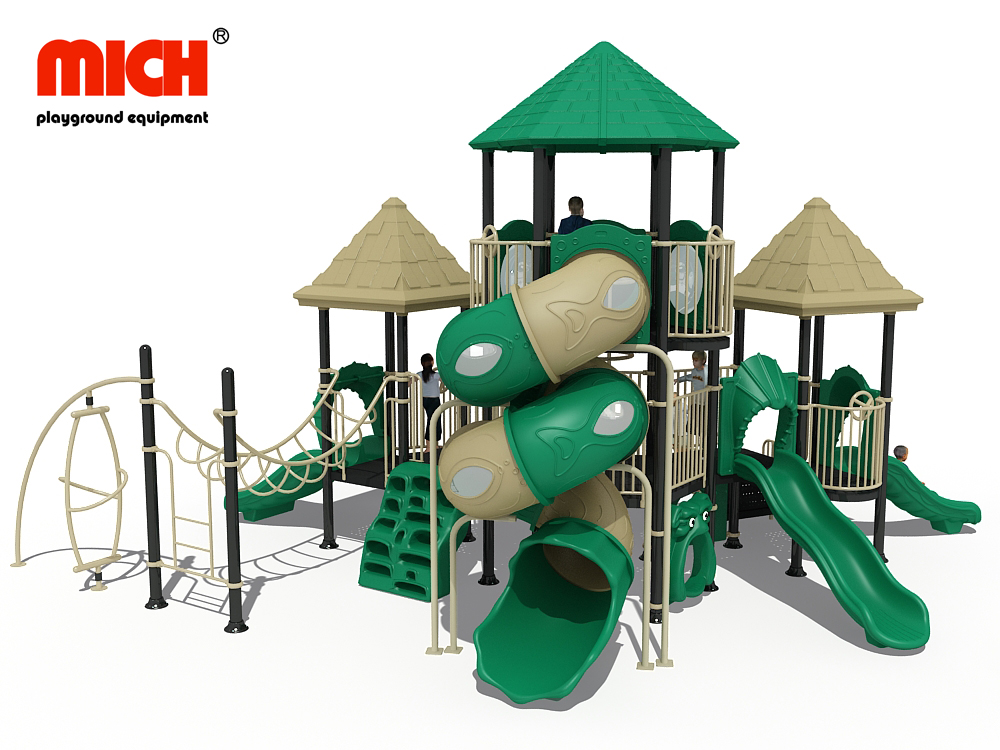
High-Density Polyethylene (HDPE) serves as the premier plastic for modern slides, roofs, and activity panels. It works exceptionally well due to its manufacturing process. Factories extrude HDPE with powerful UV stabilizers. They integrate this chemical protection directly into the raw material. It never acts as just a superficial surface coating. This deep integration prevents catastrophic structural brittleness. It also stops severe aesthetic fading under intense sunlight.
Hardware and fasteners represent the weakest link in many installations. A premium galvanized steel post becomes entirely useless if assembled with cheap screws. Rust bleeds quickly from inferior hardware. This bleeding stains the equipment permanently. Worse, it severely compromises structural joint integrity over time.
Follow these specific implementation requirements for hardware and accessories:
Insist on commercial-grade stainless steel fasteners for all major load-bearing joints.
Specify specially coated, tamper-resistant caps to protect bolt heads from standing water.
Choose steel-core ropes for all climbing nets to prevent stretching and snapping.
Ensure ropes feature tightly woven, UV-stabilized nylon or polyester wrapping to stop sun-rot.
Using premium hardware significantly reduces routine maintenance intervals. It stops localized rust points before they start. Investing slightly more in superior fasteners protects the massive investment you made in the primary structural materials.
A weather-resistant play environment requires advanced surfacing solutions. We must balance strict fall safety requirements with harsh weather resilience. Proper surfacing aggressively manages massive water displacement. It must also resist freezing solid during winter months.
Poured-in-Place (PIP) rubber offers phenomenal long-term durability. It provides a seamless, accessible surface for all users. You must verify the installer uses a UV-protective aliphatic binder. Cheaper aromatic binders yellow and degrade rapidly under direct sunlight. PIP carries a distinct implementation risk. It requires highly engineered sub-base drainage. Poor drainage lets water pool beneath the rubber. This trapped water freezes in winter. Expanding ice causes immediate, irreparable surface cracking.
Engineered Wood Fiber (EWF) remains highly cost-effective for large areas. It drains very well when properly installed. You must install EWF over a dedicated gravel bed. You also need a heavy commercial geotextile fabric layer. The primary weather risk involves heavy rain. EWF washes out easily during severe storms. You must schedule regular material top-offs. Mechanical raking remains necessary to maintain strict compliance with required fall-height safety ratings.
Rubber mulch provides an exceptional alternative for wet climates. It never absorbs ambient water. It will not freeze into dangerous solid blocks like organic wood mulch does. It delivers highly consistent impact attenuation in both cold and wet climates. Rubber mulch allows heavy rain to percolate directly through to the sub-surface drainage system.
Poured-in-Place Rubber: High upfront cost, low maintenance, demands flawless sub-drainage.
Engineered Wood Fiber: Low upfront cost, high maintenance, vulnerable to heavy flooding.
Rubber Mulch: Medium cost, excellent drainage, resists freezing and fungal growth.
Acknowledging lifecycle durability demonstrates trustworthiness in project planning. Cheaper upfront materials often lead to exponential maintenance burdens later. You must look beyond the initial purchase price. Evaluate the long-term resilience of the materials you specify.
You must decode manufacturer warranties carefully. Read the fine print regarding explicit weather damage. Reputable manufacturers warrant heavily against catastrophic structural failure from corrosion. However, they will explicitly exclude normal cosmetic fading. They also exclude damage caused by deliberate vandalism. Understanding these exclusions helps you plan realistic maintenance budgets.
Routine maintenance implications dictate long-term success. No site exists entirely maintenance-free. Facility managers must keep touch-up paint kits readily on hand. Fixing deep scratches immediately prevents aggressive rust propagation on metal posts. Wood components require strict power washing and re-staining schedules to survive. Moving parts, such as swings and complex spinners, need frequent applications of all-weather commercial lubricants.
Use strict logic when shortlisting vendors. Demand they supply comprehensive material specification sheets. Require them to clearly define their specific coating thicknesses. Ask for documentation proving their exact UV-stabilization methods. Reject bids offering generic "weatherproof" labels without accompanying technical proof.
Building a resilient play area requires strategic material alignment. Match your structural choices directly to your specific local climate threats. Prioritize marine-grade aluminum in humid coastal areas. Rely heavily on UV-stabilized high-density polyethylene and multi-layer powder-coated steel in high-sun, high-traffic zones. Taking these deliberate steps ensures your investment survives harsh environmental conditions.
Take these actionable next steps to secure your project:
Assess local weather threats, including prevailing humidity and extreme temperature swings, before reviewing equipment catalogs.
Mandate multi-layer protective coatings for all metal structural components in your bidding documents.
Verify sub-base drainage engineering plans before approving any poured rubber surface installations.
Draft your formal Request for Proposal (RFP) to explicitly demand UV-stabilized HDPE and commercial-grade stainless hardware.
A: HDPE plastics and powder-coated steel perform exceptionally well in extremely cold climates. You should avoid standard PVC components, as they frequently become brittle and shatter in freezing temperatures. Additionally, ensure surfacing options like EWF feature exceptional sub-surface drainage so the material does not freeze into a solid, unsafe block.
A: Bare metal will absorb immense heat, but modern commercial equipment mitigates this risk effectively. Manufacturers utilize thick, baked-on powder coatings and strategically place fabric shade structures to reduce heat retention. Stair platforms and decks are often coated in specialized PVC or heavy rubberized compounds to keep surface temperatures safe for children.
A: A commercial-grade wooden play structure constructed from treated pine, cedar, or redwood typically lasts between 15 and 20 years if properly maintained. Achieving this lifespan requires a strict maintenance schedule. You must commit to professionally sealing or staining the timber every two to three years to combat severe rain and UV damage.
A: Yes. Rubber mulch provides superior performance in persistently wet environments. It does not absorb water, rot, or attract mold like organic materials. It allows heavy rain to percolate straight through the pieces down to the drainage layer, ensuring the surface maintains its critical cushioning properties year-round.