- All
- Product Name
- Product Keyword
- Product Model
- Product Summary
- Product Description
- Multi Field Search

Views: 1 Author: Site Editor Publish Time: 2026-06-10 Origin: Site
Importing large-scale recreational infrastructure carries immense stakes. When you discover post-shipment defects, the results include catastrophic project delays, severe safety liabilities, and unrecoverable capital. The geographical and operational disconnect between buyers and overseas factories complicates the procurement process. Once a container leaves the port, rectifying manufacturing errors, sourcing missing components, or replacing non-compliant materials becomes financially prohibitive and logistically complex.
To mitigate these severe risks, buyers must implement a rigorous, documented Pre-Shipment Inspection (PSI) framework. This article serves as a definitive blueprint for verifying safety, structural integrity, and compliance before you authorize final payment to a supplier. By executing these checks, you ensure that the equipment arriving at your site matches your exact specifications and regional safety mandates.
A successful shipment means zero missing parts, complete compliance with regional safety standards, and absolutely no transit damage. Achieving this requires proactive intervention on the factory floor. Relying on basic factory assurances leaves you vulnerable when dealing with complex structural assemblies. You must define success early and measure it objectively before the goods are packed into a shipping container.
The financial math of post-shipment defect discovery is unforgiving. Imagine receiving a shipment only to find that a main deck is structurally compromised or a slide tube lacks the correct mounting flanges. Replacing these components once they reach North America or Europe involves exorbitant costs. You face new freight charges, potential tariffs, and the severe cost of installation crew downtime. A crew standing idle while waiting for replacement parts drains project budgets rapidly. The timeline delay can push project completion back by months, jeopardizing launch dates and stakeholder commitments.
Beyond direct financial losses, regulatory compliance and liability risks loom large. Installing Commercial Play Equipment that fails to meet regional safety mandates due to manufacturing shortcuts exposes your organization to severe legal action. If an injury occurs due to a substandard weld, toxic paint, or improper gap sizing, the liability falls squarely on the importer and installer. A rigorous PSI acts as your primary shield against these liabilities. It ensures every component meets stringent safety directives before it ever leaves the manufacturing facility.
Field experience shows that missing hardware is the most common cause of installation delays. A missing box of M10 stainless steel tamper-proof bolts can stop a five-person crew in its tracks. Sourcing specialized hardware locally often takes days and costs ten times the factory price. A thorough pre-shipment inspection includes a strict hardware audit, matching the packing list against the actual box contents down to the last washer.
Before an inspection can take place, you must establish foundational quality baselines. This requires a systematic approach to vendor management and quality control. You cannot inspect quality into a product at the end of the line. You must build it into the procurement process from day one.
Adapting the shift-left methodology is highly effective in manufacturing. This means integrating quality expectations, testing parameters, and feedback loops during the early fabrication stages. By shifting quality checks left in the timeline, you prevent massive bottlenecks at the final pre-shipment phase. Monitor raw material intake, review initial welding samples, and approve coating processes before mass production begins. This proactive stance ensures that the final PSI is a verification step rather than a desperate search for systemic failures.
Setting expectations in the purchase order is a legal safeguard. You must legally bind your China Playground Equipment Manufacturer to specific inspection terms. The purchase order should explicitly state the required safety standards, the right to third-party inspections, and the specific AQL tolerances. It must define who bears the cost of rework and re-inspection if the initial check fails. If the factory knows they will pay for secondary inspections due to their own defects, their internal quality control naturally improves.
Smoothly onboarding third-party inspectors requires clear protocols. Introduce external QA teams to the factory well in advance. Define clear communication channels and schedule access rights before production begins. Align the factory internal QA personnel with your external inspectors to prevent friction. When both teams understand the testing criteria and the shared goal of a successful shipment, the inspection process becomes collaborative.
Defining the Acceptable Quality Limit (AQL) provides a mathematical framework for passing or failing a shipment. For recreational structures, tolerances must be exceptionally tight.
| Defect Category | Description | Standard AQL Tolerance | Field Example |
|---|---|---|---|
| Critical Defects | Hazards that could cause injury or structural failure. | 0% | Sharp weld slag, missing guardrails, toxic lead paint. |
| Major Defects | Issues affecting functionality, assembly, or lifespan. | 1.0% - 1.5% | Misaligned bolt holes, deep scratches exposing bare metal, missing hardware. |
| Minor Defects | Cosmetic issues not affecting safety or structural use. | 2.5% - 4.0% | Slight color variations in plastic, minor surface scuffs on non-contact areas. |
When drafting the PO, include specific technical requirements. Do not just ask for "good welding." Specify "continuous fillet welds, ground smooth, with zero porosity or undercut." Do not just ask for "thick plastic." Specify "LLDPE rotational molded components with a minimum wall thickness of 6mm." Clear specifications leave no room for interpretation during the final inspection.
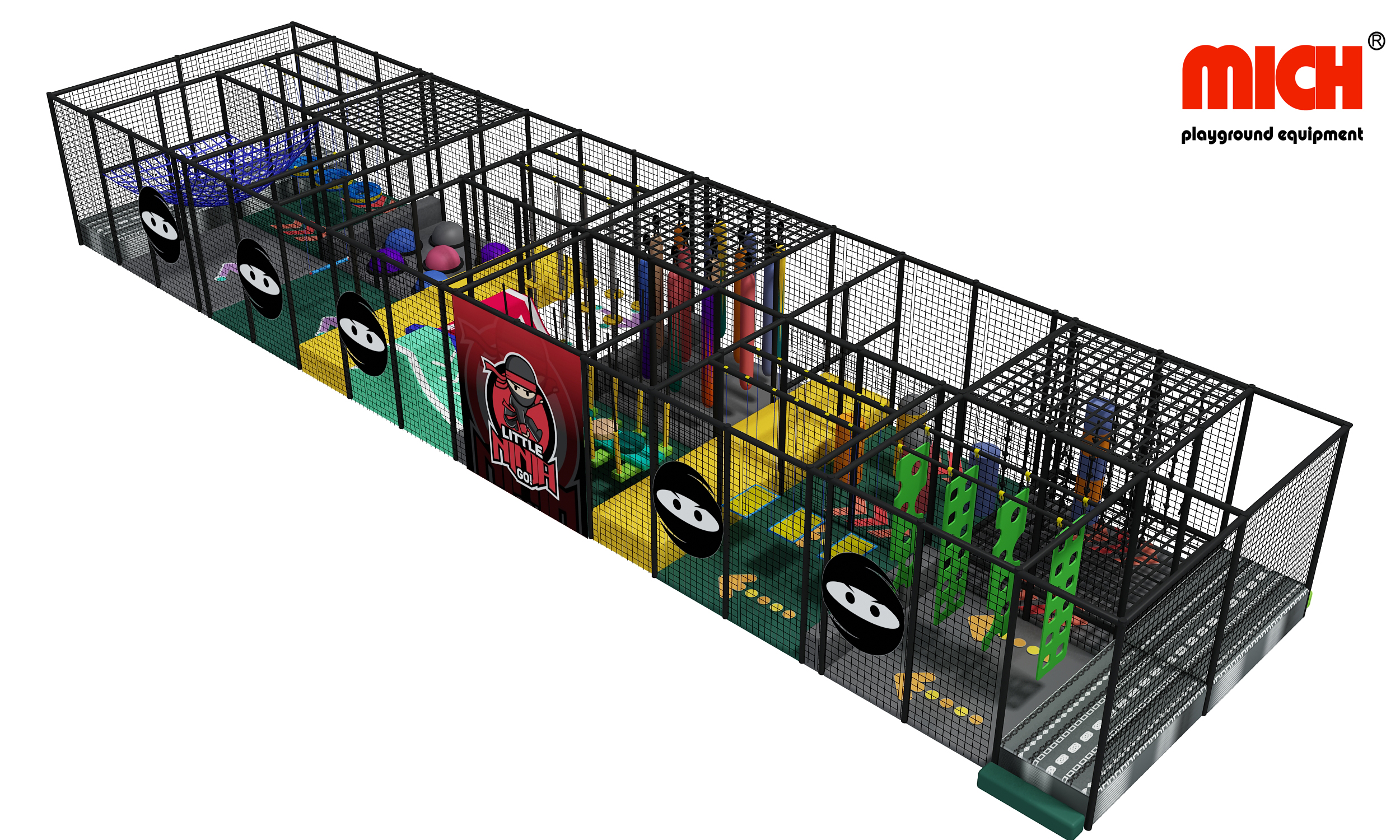
The physical inspection on the factory floor must be exhaustive. Break down the evaluation dimensions from specific features to required outcomes. Every check must directly correlate with safety, durability, or ease of installation.
Plastics form a massive portion of modern recreational structures. Inspectors must check LLDPE (Linear Low-Density Polyethylene) components for thickness, color uniformity, and tensile strength. Rotational molded plastics must maintain a consistent wall thickness to prevent structural failure under load. Inspectors should measure thickness at multiple points, especially at corners and stress nodes, using ultrasonic thickness gauges.
Equally important is verifying the absence of heavy metals and phthalates in plastics and powder coatings. Toxic materials pose severe health risks to children. Inspectors must review recent, batch-specific laboratory reports confirming compliance with regional toxicity standards. Do not accept generic, outdated certificates. The inspector should verify the powder coating thickness using a digital coating thickness gauge, ensuring it meets the minimum micron requirements for outdoor weather resistance.
The steel framework is the skeleton of the structure. Inspectors must conduct visual and tactile inspections of galvanized steel pipes. They must check for adequate rust protection, proper gauge thickness, and structural integrity. Welds are critical failure points. Every weld must be smooth, continuous, and completely free of slag or porosity. Sharp, poorly finished welds present severe laceration hazards and accelerate corrosion.
Inspectors should use calipers to verify the outside diameter and wall thickness of the main support posts. A common factory shortcut is using a thinner gauge steel than specified. If the PO calls for 114mm OD pipe with a 2.5mm wall thickness, the inspector must physically verify this on multiple posts selected at random from the production batch.
Physical testing against safety standards like ASTM F1487 or EN 1176 is mandatory. Inspectors use standard probe tools to test for entrapment hazards. They must check for head, neck, and finger entrapment risks in all gaps, openings, and moving parts. Fall height specifications and guardrail dimensions must be measured physically and verified against the approved CAD drawings.
Fact-checking safety certificates is a vital administrative task during the PSI. You must rigorously vet the authenticity of laboratory test reports. Ensure they match the specific batches being shipped, are traceable to accredited testing bodies, and are neither expired nor falsified. Cross-reference report numbers directly with the issuing laboratory if necessary.
Never assume parts will fit together perfectly based on CAD files alone. Mandate a dry run assembly of complex nodes and main structures. This fit-testing verification ensures that bolt holes align perfectly, hardware matches the specifications, and the overall structural geometry is stable. Discovering a misaligned mounting bracket on the factory floor is a minor inconvenience. Discovering it on a job site with a crane waiting is a disaster.
During the pre-assembly check, the inspector should verify the torque requirements for critical connections. They should ensure that the provided tamper-proof nuts thread smoothly onto the bolts without cross-threading. The dry run also allows the inspector to verify the overall footprint of the structure, ensuring it will fit within the designated safety use zone on the actual site.
The physical transition from the factory floor to the shipping container introduces new risks. Excellent equipment can be destroyed by poor packaging or careless loading. Address these implementation realities directly during the final inspection phase.
Ocean freight exposes cargo to extreme humidity and temperature fluctuations. Check for the inclusion of industrial desiccants within the packaging. Metal parts require proper shrink-wrapping to prevent condensation buildup. Fragile plastic components need robust edge-protection to survive the vibrations and impacts of maritime transit.
Test the durability and composition of all packaging components. Verify the burst strength of fiber packaging and check the thickness of protective PE films. Assess any rigid plastics used for corner guards to ensure they will not shatter under pressure. Ensure packaging materials comply with regional import recycling regulations, such as Extended Producer Responsibility laws in Europe and North America, to avoid customs delays or fines.
Missing fasteners halt an installation entirely. Conduct strict hardware audits. Verify that all fasteners, anchors, caps, and specialized tools are accurately counted, clearly labeled, and securely packed in reinforced boxes. Installation manuals must be present, printed clearly, and provided in the destination language.
Container Loading Supervision is the final line of defense. Monitor the actual loading process to prevent crush damage caused by poor weight distribution. Heavy steel components must be secured at the bottom, with lighter plastics loaded carefully above. Verify that the container itself is free of holes or severe rust, and ensure the final customs seal is applied and documented before the truck departs.
The inspector should check the blocking and bracing inside the container. Unsecured heavy steel posts can shift during transit, acting like battering rams against fragile plastic slides. Proper use of dunnage, heavy-duty strapping, and load bars is essential to secure the cargo for rough seas.
When executing pre-shipment checks for play equipment china, you must evaluate the overall value influencing factors and conceptual trade-offs between different inspection methods.
Relying on factory self-reporting carries high risk. There is an inherent conflict of interest when a manufacturer acts as its own final judge. Internal QC photos and reports can be selectively framed, omitting problematic areas. While internal QC is necessary for the factory process, it should never be the sole basis for releasing final payment on a large international order.
Deploying certified third-party inspectors provides independent oversight. Firms like SGS, TÜV, or specialized local QA agencies act as your proxy on the ground. The ROI of hiring independent quality assurance firms is substantial. The cost of a two-day inspection is negligible compared to the financial devastation of receiving a container full of defective, non-compliant, or unsalvageable equipment. Independent inspectors provide objective data, standardized reporting, and peace of mind.
A third-party inspector brings specialized testing equipment that the factory might lack or fail to calibrate. They bring calibrated torque wrenches, ultrasonic thickness gauges, and standardized entrapment probes. This ensures the testing data is accurate and defensible.
Even with the best preparation, inspections sometimes fail. Knowing how to handle the fallout of a negative inspection report is critical for mitigating implementation risks.
When an inspection fails, immediately issue a Corrective Action Report (CAR). This document must detail every defect found, referencing the agreed-upon AQL standards. Establish strict rework timelines with the factory management. Schedule a secondary inspection to verify that all corrections have been made. Do not accept photographic proof for critical structural rework. A physical re-inspection is mandatory.
The most powerful leverage you have is capital. Tie your final payment strictly to the inspection sign-off. Reiterate the golden rule of international sourcing: never release the final balance until the independent PSI report is fully approved and the container is sealed. Once the money is transferred, your ability to demand rework or replacements diminishes to near zero.
If the factory pushes back on rework, refer directly to the signed purchase order. If you established the AQL tolerances and rework penalties clearly in the PO, you have the contractual high ground. Stand firm on safety-critical defects. A delayed shipment is always preferable to installing an unsafe structure.
A: For commercial recreational structures, standard AQLs are typically set at 0% for Critical defects, 1.0% to 1.5% for Major defects, and 2.5% to 4.0% for Minor defects. These strict limits ensure high safety and durability.
A: Inspectors must verify compliance with regional standards such as ASTM F1487 or EN 1176. They should also vet laboratory reports for material toxicity, ensuring compliance with REACH or CPSIA regulations.
A: No. While factory photos provide progress updates, they present an inherent conflict of interest. Factories may selectively photograph good components while hiding defects. Independent third-party verification is essential for objective quality assurance.
A: A standard inspection usually requires one to two man-days. Complex orders requiring extensive pre-assembly, detailed hardware audits, and container loading supervision may require three or more days on-site.
A: You issue a Corrective Action Report detailing the failures. The factory must rework or replace the defective parts at their expense. A secondary inspection is then conducted before you authorize the final payment.
A: Pre-assembly acts as a physical dry run. It verifies that bolt holes align, structural geometry is stable, and all necessary hardware is present. This prevents catastrophic installation delays and costly on-site modifications.
A: Inspectors verify the use of desiccants, proper shrink-wrapping, and robust edge protection. They also audit packaging materials to ensure compliance with destination recycling laws, such as Extended Producer Responsibility directives.