- All
- Product Name
- Product Keyword
- Product Model
- Product Summary
- Product Description
- Multi Field Search

Views: 0 Author: Site Editor Publish Time: 2026-07-20 Origin: Site
Sourcing commercial play structures internationally brings massive upfront savings, but distance creates operational risks when parts fail. Buyers often hit a wall of vague terms, unenforceable lifetime guarantees, or hidden freight costs that make overseas warranties useless during a structural failure. To protect your capital investment, you must evaluate a China Playground Manufacturer based on legal clarity, duration, and the logistical reality of their after-sales support. We will break down exactly what terms to demand, how to handle replacement freight, and why parts-only coverage is the industry standard. You need a contract that explicitly defines material degradation limits, structural failure conditions, and shipping responsibilities. Without these specifics, a broken slide or rusted main post turns into a massive unbudgeted expense. This guide outlines the exact warranty benchmarks you should expect and how to enforce them across borders.
A warranty holds value only if the manufacturer possesses the operational capacity and willingness to honor it across international borders. The core objective of any warranty policy is minimizing equipment downtime and eliminating unexpected replacement costs. You need clear mechanisms to resolve structural failures quickly. When dealing with international suppliers, physical distance complicates simple parts replacements. A reliable warranty bridges this gap through precise, actionable terms that leave no room for interpretation.
You must differentiate between marketing claims and legally binding documentation. Phrases like absolute quality guarantee or lifetime durability look great on a sales brochure. They carry zero legal weight in a contract dispute. Written, English-language contracts define actual coverage. These documents must explicitly state what constitutes a failure. They should separate manufacturing defects from normal wear-and-tear, vandalism, or environmental degradation. Exclusions require just as much attention as covered items. Without a formal contract, you rely entirely on goodwill, which rarely survives complex international shipping disputes.
Field experience shows that vague warranties fall apart the moment a major component fails. If a main support post rusts through at the base plate within three years, a weak warranty will blame local weather conditions or improper concrete drainage. A strong, well-defined warranty will specify the exact micron thickness of the powder coating and galvanization. If the failed part does not meet those manufacturing specifications, the claim is approved. You must demand this level of technical specificity in your warranty documents.
To ensure your warranty is enforceable, the document must contain several specific clauses. First, it needs a clear definition of the claim process, including required evidence like photos, videos, and maintenance logs. Second, it must outline the expected response time from the manufacturer's technical team. Third, it should detail the exact shipping terms for replacement parts. If the document lacks these operational details, it is a marketing prop, not a legal safeguard.
Understanding standard industry benchmarks helps you identify credible suppliers. A reputable china playground supplier categorizes coverage based on material durability. Different materials degrade at different rates under physical stress and UV exposure. Blanket warranties covering the entire structure for a single time period usually signal a lack of engineering knowledge or an intent to deny claims later.
| Component Category | Material Specification | Expected Warranty | Common Failure Modes | Standard Exclusions |
|---|---|---|---|---|
| Main Support Posts | Hot-Dip Galvanized Steel, Aluminum | 10 - 15 Years | Internal corrosion, weld fracture at base plate | Vandalism, salt-water proximity (unless marine-grade), improper footing drainage |
| Decks and Platforms | PVC-Coated Punched Steel | 5 - 10 Years | Coating delamination, rust at punch holes | Scratches from debris, intentional cutting of the PVC coating |
| Plastic Components | Rotational Molded LLDPE | 2 - 5 Years | Severe UV fading, structural cracking, warping | Cosmetic surface scratches, normal color shift, melting from external heat sources |
| Moving Parts | Bearings, Swing Chains, Spinners | 1 - 2 Years | Bearing seizure, chain link wear, bushing failure | Lack of documented lubrication, exceeding weight limits, sand ingress |
| Hardware and Fasteners | 304/316 Stainless Steel | 5 - 10 Years | Thread stripping, shear failure, galvanic corrosion | Improper installation torque, use of non-approved power tools |
| Indoor Soft Padding | High-Density Foam, PVC Leather | 1 - 2 Years | Seam tearing, foam compression, zipper failure | Punctures from sharp objects, fluid damage, improper chemical cleaning |
Commercial metal components form the backbone of any play structure. A solid manufacturer offers 10 to 15 years of coverage on primary load-bearing structures. This protects against structural failure due to internal corrosion or manufacturing defects. Critical connection points require similar protection. Stainless steel fasteners, aluminum clamps, support beams, and post caps should carry a 5 to 10-year guarantee. These joints bear massive dynamic loads daily from children running, jumping, and swinging.
Material reality dictates these timelines. Hot-dip galvanization and thick powder-coating layers directly impact lifespan. The galvanization process dips the raw steel into molten zinc, creating a metallurgical bond that prevents rust. The powder coating adds a second layer of defense and provides the color. If a factory cuts corners and uses thin pre-galvanized pipes with a cheap paint job, the metal will rust from the inside out within three years. A 15-year warranty from an overseas supplier reflects realistic performance lifespans for heavily used commercial structures built with proper hot-dip galvanization. It provides ample protection during the equipment's actual operational life cycle.
You must also look at the welding standards. Poor welds are the most common point of structural failure in commercial playgrounds. The warranty should explicitly cover weld fractures. High-quality manufacturers use robotic welding for consistency on main posts and decks. If a weld breaks under normal use, it is a clear manufacturing defect. The warranty must cover the replacement of the entire welded component, not just offer a repair patch.
Interactive elements endure constant friction and environmental exposure. Linear Low-Density Polyethylene (LLDPE) plastics, swing bearings, and steel-core nylon ropes degrade faster than steel. Expect 2 to 5 years of coverage for these parts. This warranty should protect against severe color fading, structural cracking, or mechanical failure under normal use. LLDPE is rotationally molded, meaning plastic powder is heated and spun inside a mold. If the cooling process is rushed, the plastic develops internal stress points that crack after a year of temperature fluctuations.
Geographic location heavily influences warranty terms for plastics and ropes. Intense UV exposure accelerates plastic degradation, causing it to become brittle. Proximity to saltwater accelerates metal fatigue in moving parts and causes galvanic corrosion where different metals touch. Manufacturers often adjust warranty validity based on the installation site's climate. You must disclose your site conditions during negotiations to ensure the warranty remains valid in your specific environment. If you are installing a playground near the ocean, you need marine-grade stainless steel hardware and extra UV stabilizers in the plastics, which must be noted in the warranty contract.
Moving parts like swing bearings, zip line trolleys, and merry-go-round central axes take the most abuse. These components require regular lubrication and inspection. Warranties on moving parts are strictly tied to maintenance logs. If a bearing seizes and you cannot produce a log showing it was greased according to the manual, the manufacturer will deny the claim. Expect a maximum of 1 to 2 years of coverage on these high-friction items.
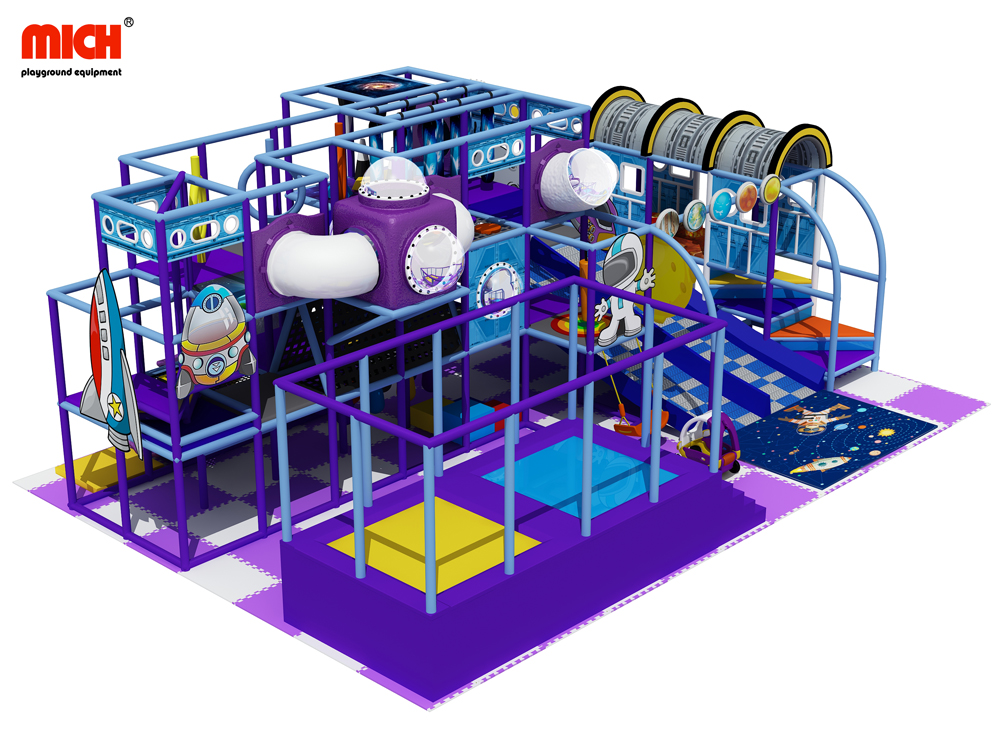
Indoor soft playground equipment operates under entirely different physical constraints. Indoor structural warranties differ heavily from outdoor standards. They do not face rain, snow, or UV rays. However, they endure intense, concentrated physical wear from high foot traffic in a confined space. The engineering focus shifts from weather resistance to impact absorption and hygiene.
Chinese manufacturers typically offer a shorter 2-year warranty on indoor metal frames. They guarantee these against structural failure and weld fractures. The steel used indoors is usually standard galvanized pipe, cut and assembled on-site with cast iron or aluminum clamps. Because it is not exposed to the elements, it does not require the heavy powder coating of outdoor equipment. However, the constant vibration from hundreds of kids climbing requires tight clamp connections. If the frame shifts and bends due to loose clamps, the warranty will not cover the bent pipes.
Soft components receive even shorter terms. Expect 1 year of coverage for soft padding, PVC covers, foam blocks, and safety netting. These materials compress and tear through standard use. Warranties here cover strict manufacturing defects, such as failed stitching, delamination of the PVC leather, or improper foam density, rather than general wear. If a child cuts the PVC with a sharp toy, that is vandalism, not a warranty claim. You must inspect indoor soft play areas daily to catch small tears before they expand and become unrepairable.
The true value of a warranty hides in the operational clauses. You must read the fine print to understand the actual financial protection provided. Many buyers assume a warranty covers everything needed to restore the playground to working order. This assumption leads to costly surprises when a major component fails and the logistical reality of international shipping sets in.
Almost all international playground equipment warranties cover parts only. This represents a significant implementation risk. If a spiral slide cracks, the manufacturer will provide a new plastic slide section. However, you remain responsible for the labor required to dismantle the broken part and install the replacement. Heavy commercial components require specialized tools, scaffolding, and sometimes heavy machinery to replace safely.
Replacing a main support post is a massive undertaking. You have to remove the roof, detach the slides, unbolt the decks, dig out the concrete footing, set the new post, pour new concrete, and reassemble the entire structure. The labor cost for this process can easily exceed the value of the post itself. The overseas manufacturer will not pay your local contractors for this work. Their liability ends at providing the replacement part.
You should contrast this parts-only policy with local alternatives. Domestic distributors sometimes offer an additional installation labor warranty if they handle the initial setup. When buying directly from overseas, you must budget for potential maintenance labor. You can mitigate this by partnering with a local certified installation crew who can handle warranty work as needed. Building a relationship with a local playground installer before you buy the equipment ensures you have the manpower ready if a failure occurs.
Shipping large replacement parts across oceans incurs significant freight costs. This creates the most common dispute in overseas warranties. A manufacturer might gladly replace a defective steel post. Yet, they may refuse to pay the air freight bill to get it to you quickly. You must negotiate Incoterms specifically for warranty replacements before signing the contract.
Ask direct questions during negotiations. Does the manufacturer pay for expedited air freight, or just standard sea freight? Sea freight takes weeks, leaving your playground closed or partially boarded up. Who pays the import duties when the replacement part clears customs? Even if the manufacturer lists the commercial value of the replacement part as zero, customs agencies often assess taxes based on the item's weight and material category. You will also have to pay customs broker fees and local delivery charges from the port to your site.
Without explicit written terms, standard policies often default to the buyer covering all international shipping and customs fees. This can make claiming a small warranty part financially illogical. If a plastic steering wheel breaks, the shipping cost will be higher than buying a similar part locally. You must demand a clause stating the manufacturer covers all freight costs for warranty replacements within the first year, and negotiate the terms for subsequent years.
Manufacturers frequently use improper installation or lack of maintenance as grounds to void claims. This compliance risk requires strict operational discipline. If a post rusts because installers scratched the powder coating during assembly and failed to apply touch-up paint, the warranty claim will fail. If a bearing seizes due to a lack of lubrication, the manufacturer will deny the replacement.
You can mitigate these risks through rigorous documentation. Use certified, professional installers. Force them to follow the manufacturer's exact technical manuals. Do not let them improvise connections or substitute hardware. Once the installation is complete, conduct a thorough walkthrough and take detailed photographs of every connection point, weld, and moving part. This establishes a baseline condition.
Once operational, keep rigorous, dated maintenance logs. Commercial playgrounds require weekly visual inspections and monthly mechanical inspections. You must document these checks.
When you submit a claim accompanied by a pristine maintenance record and baseline installation photos, suppliers rarely dispute the defect. They know you have the evidence to prove the failure was a manufacturing issue, not neglect.
You must verify a manufacturer's claims before transferring funds. A warranty document means nothing if the factory closes next year or produces substandard goods. Proper vetting ensures the supplier possesses the infrastructure, engineering capability, and financial stability to support their legal promises over a 10 to 15-year period.
Trust requires verification. Demand proof of manufacturing quality that supports the warranty terms. Require ISO 9001 certification to verify their quality management systems. This certification proves they have standardized processes for welding, coating, and material testing. Look for CE marks for European compliance. For North American buyers, ensure compliance with ASTM safety standards. European buyers must verify EN1176 compliance.
These certifications prove the factory engineers their equipment to withstand the rigors of commercial use, making their 10-year warranties mathematically feasible. Ask for test reports from third-party laboratories like TUV or SGS. These reports should detail the load-bearing capacity of the decks, the UV resistance of the plastics, and the heavy metal content of the paint. If a supplier hesitates to provide these documents, their warranty is likely worthless.
Evaluate the supplier's post-purchase ecosystem. A strong warranty requires excellent after-sales services. Ensure they provide interactive remote technical support. When your installation crew is on-site and a part does not fit, you need immediate answers, not a generic email response three days later. They should supply detailed installation guidance, including 3D CAD drawings and video instructions. Localized maintenance manuals in your native language are essential for keeping the warranty valid.
Long-term parts availability matters immensely for Playground Equipment. Ask for written guarantees regarding the availability of proprietary replacement parts. A reliable supplier should guarantee part availability for 5 to 10 years after they discontinue a specific product line. This ensures you can actually utilize a 10-year structural warranty. If they change their clamp design and stop producing the old style, your warranty is useless unless they guarantee backward compatibility or stock legacy parts.
A credible overseas playground manufacturer will offer tiered, material-specific warranties rather than blanket, unenforceable lifetime guarantees. Expect 10 to 15 years for metal structures, 1 to 5 years for plastics and moving parts, and 1 to 2 years for indoor soft play environments. Success depends on verifying the logistical realities of these promises and maintaining strict operational discipline on your end.
A: Standard warranties offer 10 to 15 years for outdoor galvanized steel and aluminum posts. High-wear plastics and moving parts carry 2 to 5 years of coverage. Indoor soft play equipment typically features a 2-year warranty on metal frames and 1 year for soft foam and PVC components.
A: No. The industry standard for international playground warranties is parts-only coverage. The manufacturer supplies the replacement component, but the buyer remains responsible for the local labor costs required to dismantle the broken piece and install the new one.
A: This depends entirely on your negotiated contract. Without explicit terms, standard policies often require the buyer to cover international shipping, customs, and import duties. You must negotiate freight responsibilities for warranty parts before signing the purchase agreement.
A: Outdoor structural steel carries a 10 to 15-year warranty because it uses thick galvanization and powder coating to resist weather. Indoor metal structures do not face environmental degradation but endure high physical stress, usually limiting their structural warranty to 2 years.
A: Common actions that void warranties include improper installation, lack of documented routine maintenance, unapproved structural modifications, vandalism, and damage from extreme weather events not covered by the standard policy.
A: You must submit clear photographic or video evidence of the failure to the supplier's after-sales team. Include your original purchase documentation, order numbers, and copies of your routine maintenance logs to prove the defect was not caused by neglect.