- All
- Product Name
- Product Keyword
- Product Model
- Product Summary
- Product Description
- Multi Field Search

Views: 0 Author: Site Editor Publish Time: 2026-07-23 Origin: Site
Sourcing an indoor playground china offers substantial capital expenditure reductions, but it introduces a critical logistical bottleneck: physical installation and assembly. Unlike domestic suppliers who typically bundle turnkey installation into their contracts, importing requires buyers to actively manage the assembly process. You must bridge the gap between receiving a shipped container of parts and delivering a fully compliant, operational facility. This guide evaluates the three primary installation models available to importers. We will assess the complete installation budget and establish a framework to vet the installation support provided by overseas manufacturers. By understanding these dynamics, you can protect your investment, coordinate your labor force effectively, and ensure your facility opens on schedule without failing local safety inspections.
Domestic suppliers operate on a standard procedure that bundles manufacturing, shipping, and installation into a single contract. The import model unbundles these services. You secure a lower equipment cost but assume a higher logistical responsibility. Understanding shipping terms like Free on Board (FOB) and Cost, Insurance, and Freight (CIF) is essential. The manufacturer's physical responsibility typically ends at the destination port. Once that container drops at your loading dock, the assembly timeline is entirely in your hands.
While domestic installations are fully managed, importing quality equipment from a premium China Indoor Playground Manufacturer leaves a substantial budget surplus. You must strategically allocate this surplus toward professional installation labor, specialized tools, and local compliance checks. Managing a commercial build requires treating the playground installation as a major construction project. You need a dedicated site manager, a clear staging area for unloading, and a strict schedule to keep local contractors on track.
Site preparation is a massive factor that many first-time buyers overlook. Before the container even arrives, your facility must have finished floors, operational HVAC, and adequate lighting. Installing a massive steel frame structure in a dark, unconditioned warehouse leads to mistakes, rusted components from humidity, and miserable working conditions for the crew. You also need to map out the exact footprint of the playground on the floor using chalk lines based on the manufacturer's CAD drawings to ensure you have the required clearance from walls and emergency exits.
Improper installation of Commercial Playground Equipment directly compromises structural integrity, user safety, and your overall business liability. A poorly secured frame or improperly tensioned netting can lead to catastrophic failures during peak operational hours. Every bolt, clamp, and zip tie plays a role in the overall stability of the multi-level structure. If a local crew rushes the job and skips installing the required number of floor anchors, the entire system can shift under the dynamic load of running children.
Local safety inspectors evaluate the final assembled structure on your premises. They do not merely rubber-stamp the manufacturer's factory certifications. The physical execution of the build must flawlessly match the engineered safety standards to secure operating permits and commercial liability insurance. Inspectors will check for head entrapment hazards, proper padding thickness on exposed steel, and the correct installation of safety netting. If your installation crew cuts corners, you will fail the inspection, delaying your grand opening and forcing you to pay for expensive rework.
To maintain strict safety standards during the build, implement a daily quality control checklist. Have your site manager verify the torque on structural bolts before the crew covers them with foam padding. Check the tension of the safety netting to ensure it meets the deflection requirements specified by local codes. Documenting these steps not only ensures a safer build but also provides a paper trail of due diligence for your insurance provider.
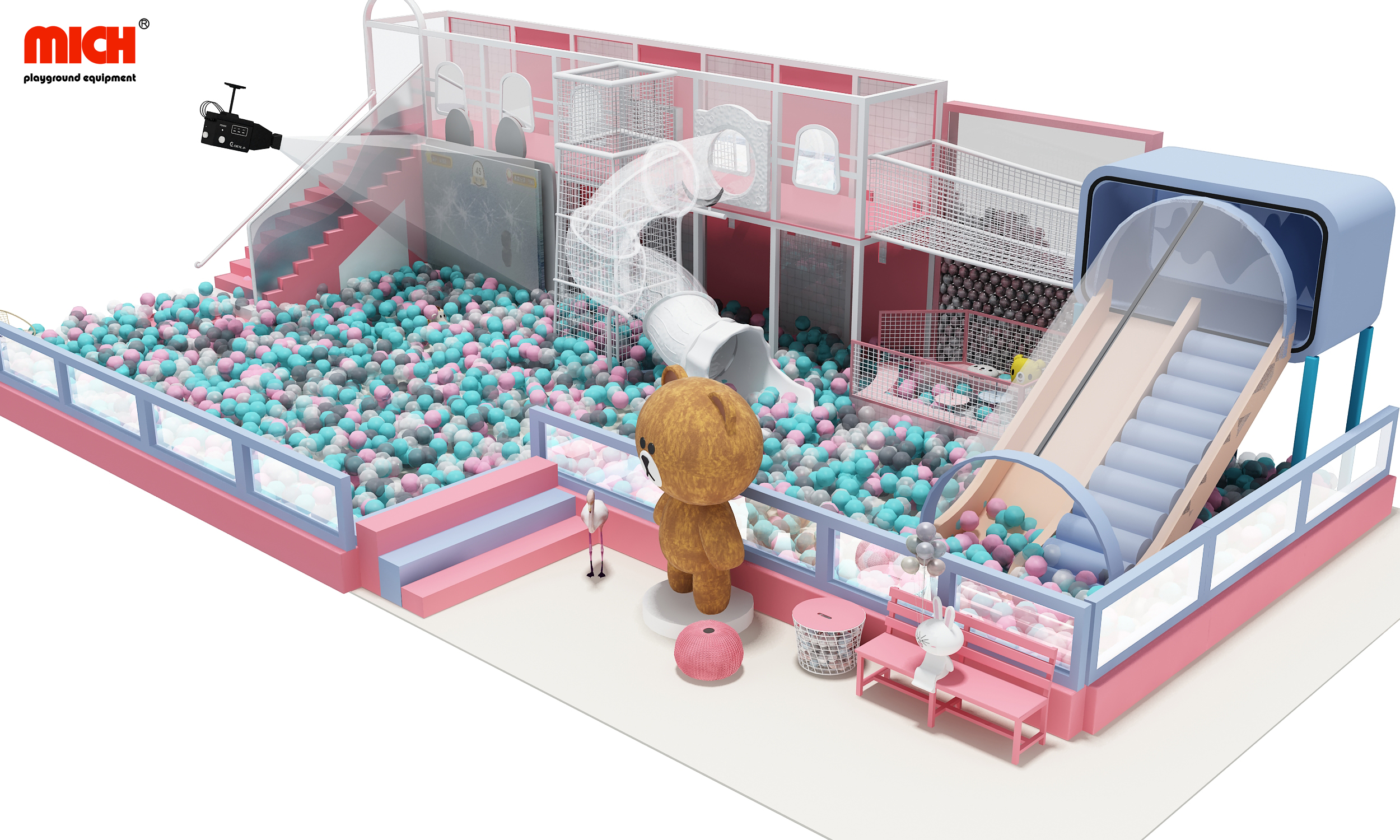
Under this model, the manufacturer sends lead engineers to your location to direct a locally hired labor crew. The engineers manage the technical assembly while your local workers handle the heavy lifting. This is often the most reliable way to ensure the structure goes up exactly as designed.
When utilizing this model, preparation is critical. You must have all specialized tools rented and ready on-site before the engineers arrive. You also need to arrange a translator if the engineers do not speak your local language fluently. Relying on translation apps on a noisy construction site is inefficient and dangerous. Hire a local bilingual student or professional translator to stay on-site during working hours to facilitate clear communication between the lead engineers and your local labor crew.
This approach involves contracting a local, third-party playground installation company experienced in commercial builds. They take the imported equipment and assemble it using the manufacturer's documentation. You act as the liaison between the local crew and the overseas factory.
To make this model work, you must thoroughly vet the local installation company. Ask for references from previous indoor playground builds, not just outdoor park equipment. Outdoor playgrounds use completely different anchoring and structural systems. Ensure the local crew is comfortable working with the specific materials used in your imported playground, such as fiberglass slides, modular steel piping, and tensioned netting systems.
Here, the buyer acts as the general contractor, utilizing hired general laborers and manufacturer-provided documentation to assemble the playground. You take on the role of the lead engineer, project manager, and safety inspector.
If you choose this route, you must be highly organized. Start by sorting and inventorying every single component as it comes off the shipping container. Create a massive staging area where parts are grouped by installation phase. Do not let the crew open boxes randomly. Follow the manufacturer's installation sequence strictly. Usually, this means building the entire steel frame first, leveling it, anchoring it to the floor, and then moving on to the platforms, slides, and finally the safety netting and padding.
Always demand proof of a physical trial build of the main frame structure at the factory before the equipment is containerized. This crucial step mitigates the risk of misaligned frames, faulty weld points, or missing structural components arriving at your site. A reputable manufacturer will assemble the core framework, inspect the tolerances, and document the process. They should provide you with high-resolution photos and videos of your specific playground standing in their facility.
During this trial assembly, the factory should label every single pipe and joint. These labels must correspond directly to the 3D installation maps provided in your documentation package. If the factory refuses to perform a trial assembly, consider it a massive red flag. Skipping this step often means you will discover manufacturing defects or missing parts only after you have a crew of paid laborers standing around on your site waiting for a fix.
Acceptable documentation goes far beyond generic paper manuals. You need numbered structural diagrams, 3D CAD models, and step-by-step video guidance. The physical packaging must be clearly labeled to match the manual exactly. Avoid manufacturers that provide non-customized assembly papers. Insist on a customized video walkthrough showing your specific playground being assembled in their facility.
The documentation should break the build down into logical phases. Phase one should cover the floor grid and vertical supports. Phase two should cover the horizontal beams and platform installation. Phase three should detail the attachment of major play events like slides and ball pits. Phase four should cover the safety netting, foam padding, and final aesthetic touches. If the manual is just an exploded view of the entire playground with hundreds of arrows, your installation crew will struggle to determine the correct order of operations.
Verify the manufacturer’s experience by requesting case studies, photos, and references of previously completed projects in your specific country. This ensures they understand how to design and label parts in compliance with your local structural expectations and safety regulations. A manufacturer that successfully exports to highly regulated markets demonstrates a higher level of quality control and documentation standards.
Reach out to the references provided by the manufacturer. Ask them specifically about their installation experience. Did the parts arrive clearly labeled? Was the documentation accurate? How did the factory handle missing or damaged components? Speaking directly with previous buyers gives you a realistic preview of the logistical challenges you will face during your own build.
Assess the manufacturer's ability to provide live support during your local business hours, accounting for time zone differences. Evaluate the availability of bilingual project managers via video calls during the critical installation phase. Immediate access to technical support prevents costly delays when on-site crews encounter unexpected assembly challenges.
Establish a dedicated communication channel, such as a WeChat or WhatsApp group, that includes your site manager, the local lead installer, and the factory's engineering team. Require the factory to commit to a specific response time for technical questions during your working hours. If a structural pipe does not align properly, you need to be able to send a video to the factory and get an immediate solution, rather than waiting 24 hours for an email reply due to the time zone difference.
When utilizing overseas engineers, you must budget for their daily wages, round-trip airfare, visa application fees, hotel accommodations, and daily meals. These expenses accumulate quickly and must be factored into your initial capital allocation before finalizing the purchase agreement. You are also responsible for their local transportation, meaning you need to rent a vehicle or arrange daily rides from their hotel to the job site.
Do not underestimate the administrative burden of securing work visas for overseas technicians. The process requires formal invitation letters, detailed itineraries, and significant lead time. If the visas are delayed, your entire installation schedule will be pushed back, which can impact your grand opening date and delay your revenue generation. Always build a buffer into your timeline to account for potential travel disruptions.
Establish a framework for calculating whether the savings on the equipment purchase outweigh the cost of hiring local commercial installers. Compare the substantial budget surplus gained from importing against the hourly rates of specialized local labor to determine the most financially viable installation route. Keep in mind that commercial installers charge premium rates, and their estimates are often based on the assumption that the factory documentation is flawless.
If the documentation is poor or parts are missing, the local crew will charge you for the downtime. To protect your budget, negotiate a fixed-bid contract with the local installers rather than an hourly rate. This shifts the risk of assembly delays onto the installation company. However, most reputable installers will only agree to a fixed bid if they have reviewed the manufacturer's documentation beforehand and are confident in its accuracy.
Chinese engineers cannot always travel with heavy-duty tools due to airline weight and customs restrictions. You are generally responsible for providing specialized tools on-site. This includes heavy-duty drills, tensioners, scaffolding, and safety harnesses. Clarify these requirements early to avoid work stoppages. Request a comprehensive tool list from the manufacturer at least a month before the container arrives.
Budget for the costs associated with hiring an independent safety inspector to sign off on the installation before opening to the public. Securing commercial insurance requires documented proof that the assembled structure meets all regional safety standards. Do not wait until the build is finished to contact an inspector. Bring them in during the planning phase to review the manufacturer's CAD drawings and identify any potential compliance issues before the equipment is even manufactured.
Some jurisdictions require a mid-point inspection before the safety netting and padding are installed. This allows the inspector to verify the integrity of the steel frame and the floor anchors. If you cover the frame before the inspection, you may be forced to tear down sections of the playground to prove the structural connections are secure, resulting in massive labor costs and schedule delays.
| Implementation Risk | Mitigation Strategy |
|---|---|
| Visa Rejection or Travel Delays for Chinese Engineers | Apply for engineer visas at least 6-8 weeks before the container's scheduled arrival. Establish a contingency contract with a local installer. |
| Missing Parts and Replacement Lead Times | Require a comprehensive bill of materials checklist upon container unloading. Negotiate terms requiring the manufacturer to air-freight missing critical components. |
| Failing Local Safety Inspections | Cross-reference the manufacturer's design with local safety standards before manufacturing begins. Ensure installers strictly follow the approved design. |
| Warranty Voidance Due to Improper Assembly | Document the entire installation process with photos and videos. Maintain a written log of all communications regarding on-the-fly modifications. |
| Damage During Container Unloading | Rent a forklift and pallet jacks. Assign a dedicated spotter to guide the machinery and prevent crushing delicate fiberglass or plastic components. |
| Site Unreadiness Delaying the Crew | Complete all flooring, painting, and HVAC work before the container arrives. Ensure the staging area is completely clear of other construction debris. |
Managing the unloading process is a critical risk mitigation step. When the shipping container arrives, you typically have a very limited window to unload it before incurring demurrage charges from the trucking company. Organize a large crew of general laborers specifically for unloading day. Create a systematic process where parts are removed from the container, checked against the bill of materials, and immediately moved to their designated staging zones inside the facility.
Never store playground components outside, even temporarily. Rain and humidity will rapidly degrade the foam padding, rust the exposed steel pipes, and warp the wooden platform boards. If your facility is not ready to receive the equipment, you must rent a secure, climate-controlled warehouse to store the components until the site is prepped. Factoring these logistical details into your master schedule prevents costly damage and keeps the installation crew working efficiently once they arrive on site.
A: Most top-tier manufacturers offer to send lead engineers to supervise local labor. However, they do not provide the full labor crew required to complete the physical assembly. You must hire local workers to perform the heavy lifting under the guidance of the overseas technicians.
A: You are responsible for a daily wage per engineer, plus international flights, visa fees, and local room and board, rather than a flat project fee. You must also cover their daily transportation to and from the job site.
A: DIY installation for commercial facilities carries severe liability and compliance risks. Professional oversight is strongly recommended to ensure structural integrity, properly tension safety netting, and pass local safety inspections required for commercial insurance.
A: The buyer must typically rent or buy on-site tools like scaffolding, impact wrenches, and tensioners. Overseas engineers cannot easily travel with heavy equipment due to airline weight limits and customs restrictions.
A: Reputable manufacturers will air-freight missing parts at their expense. Buyers must verify inventory immediately upon container arrival using a comprehensive bill of materials to identify shortages before the assembly crew needs the parts.
A: Realistic timelines depend on square footage and complexity, typically ranging from one to four weeks when utilizing an experienced assembly crew working full-time shifts in a fully prepared facility.
A: Passing inspection depends on the manufacturer designing to local standards, such as ASTM or EN, and the installation crew executing the build flawlessly without unauthorized modifications or skipped structural anchors.