- All
- Product Name
- Product Keyword
- Product Model
- Product Summary
- Product Description
- Multi Field Search

Views: 0 Author: Site Editor Publish Time: 2026-07-28 Origin: Site
High initial capital expenditure (CAPEX) is the most significant barrier to entry and profitability for new family entertainment centers (FECs) and commercial play spaces. Operators must balance strict safety, durability, and multi-age appeal requirements with realistic ROI timelines. Domestic suppliers often require massive budgets, forcing operators to evaluate overseas alternatives without compromising on liability or quality. Sourcing directly from an indoor playground china supplier provides a direct path to bypass heavy domestic markups. This guide breaks down the strategic, financial, and operational realities of sourcing commercial playground equipment directly from China, providing a framework to separate legitimate manufacturing partners from high-risk trading companies.
The primary motivation for looking overseas is the massive reduction in upfront capital requirements. Operators routinely see equipment cost reductions of 30 to 50 percent when bypassing domestic distributors. This cost advantage is not magic. It comes from massive economies of scale and direct proximity to raw material processing centers. Chinese manufacturing hubs have immediate access to galvanized steel foundries, PVC extrusion plants, and high-density foam manufacturers. By cutting out the middleman, operators capture the margin that domestic distributors normally keep.
Lower initial equipment costs directly accelerate your break-even point. When you spend significantly less on the physical play structure, you preserve cash flow during the critical first year of operation. This retained capital allows operators to invest heavily in local marketing, hire better staff, or build out superior food and beverage facilities. A faster ROI timeline also makes the project much more attractive to investors and commercial lenders who want to see a clear path to profitability.
However, you must understand the mechanics of this market. The factories producing the best equipment operate on volume. They optimize their production lines to churn out thousands of square meters of play structures monthly. You tap into this efficiency when you order a complete commercial setup. The savings are real, but they require you to manage the procurement process actively rather than passively handing a check to a local rep.
The factory invoice is only the first part of the financial equation. Smart operators calculate the Total Landed Cost before signing any contracts. This metric includes every single expense required to get the equipment from the factory floor in China to your building. You must account for freight forwarding, container shipping, and port handling fees. Shipping a 40ft High Cube (HQ) container costs significantly more than a standard 20ft container, and large play structures often require multiple 40ft HQs.
Import duties and customs clearance realities heavily impact the final budget. Depending on your country, you may face specific tariffs on steel products or textiles. You need a specialized customs broker to classify the playground equipment correctly under the right Harmonized System (HS) codes to avoid overpaying on duties. Anti-dumping tariffs can also apply in certain regions, so you must verify these details with a local freight forwarder early in the planning phase.
The ultimate goal is to evaluate the Cost-Performance ratio. A cheap factory price means nothing if the shipping costs wipe out the savings or if the equipment requires constant repairs. You want a high value-to-cost ratio, where the landed cost remains well below domestic alternatives while the structural integrity matches or exceeds local standards.
| Cost Category | Description | Impact on Budget |
|---|---|---|
| Ocean Freight | Cost to ship 20ft or 40ft HQ containers from the Chinese port to your destination port. | High. Fluctuates based on global shipping rates and container volume. |
| Port Handling Fees | Terminal handling charges, unloading fees, and port security fees at the destination. | Medium. Fixed by the local port authority. |
| Customs Duties | Taxes levied by your government based on the HS code of the imported goods. | High. Varies wildly by country and trade agreements. |
| Inland Transportation | Trucking the container from the destination port to your facility. | Medium. Depends on the distance from the port to your site. |
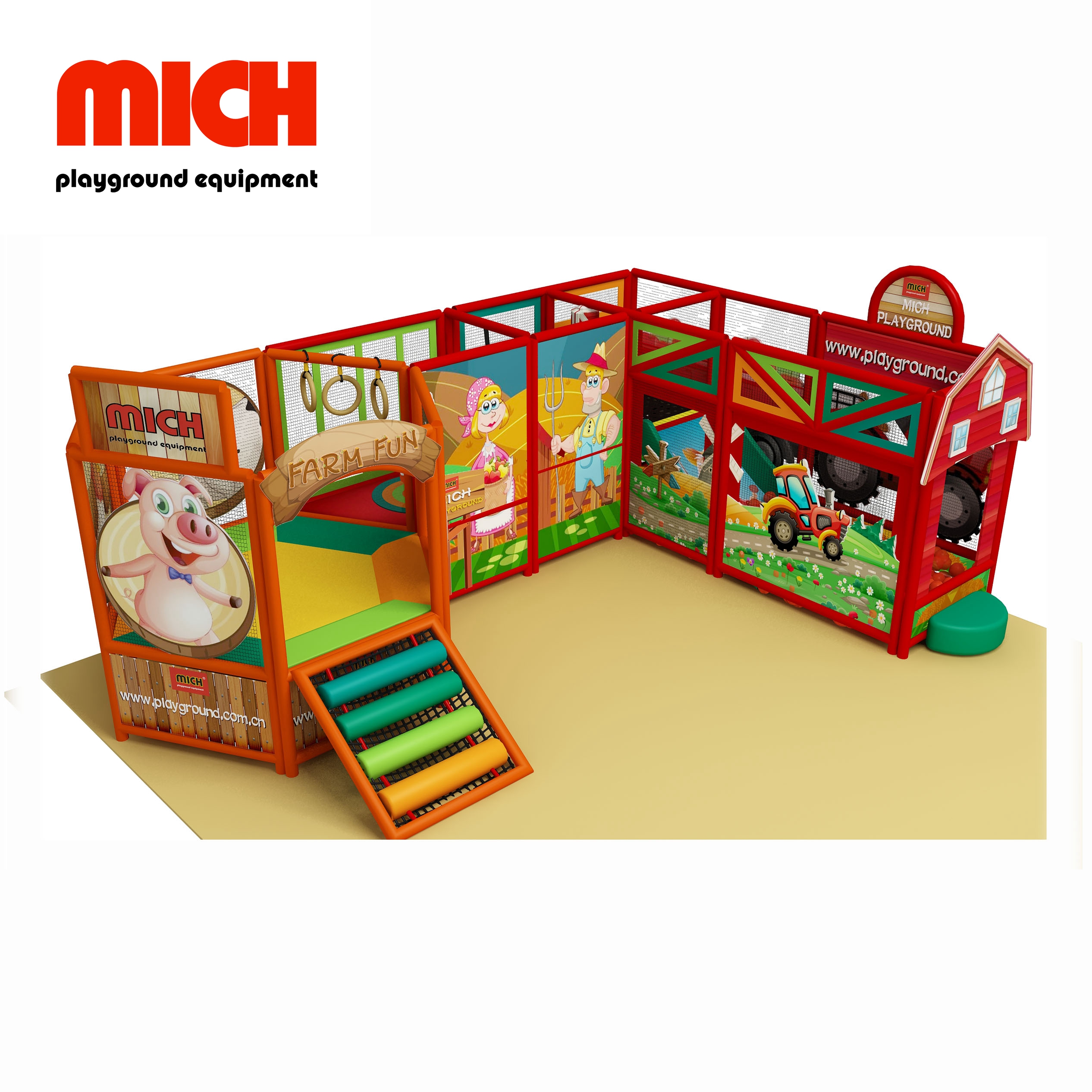
The biggest risk in overseas procurement is accidentally hiring a trading company instead of a direct factory. Trading companies act as middlemen. They source products from various factories, add a hidden markup, and present themselves as the manufacturer. This introduces severe risks. You lose direct quality control, custom specifications get lost in translation, and you have zero after-sales accountability when parts break.
You must implement a strict verification framework to ensure you are dealing with a direct China Indoor Playground Manufacturer. Start by requesting their official business license and checking their registered capital and business scope. Verify their ISO 9001 certifications to ensure they have standardized quality management systems in place. Do not rely on photos from a website.
Demand a live video tour of the factory floor. Ask them to walk out to the production line and show you the steel cutting machines, the welding stations, and the trial assembly area. If they hesitate or make excuses, walk away. For large commercial projects, hire a third-party auditor like SGS or TÜV Rheinland to visit the factory in person. Working with a direct manufacturer guarantees end-to-end quality control, transparent pricing, and streamlined communication for complex custom builds.
Direct factories offer a massive advantage through their in-house design and engineering teams. You get direct access to professionals who can handle 3D rendering, floor plan optimization, and thematic customization. They understand how to maximize the play value per square foot while maintaining safe traffic flow and clear sightlines for parents and staff.
Modern facilities require diverse attractions to succeed. A capable factory can integrate multi-age attractions under a single manufacturing roof. They can design and build ninja courses, toddler soft play zones, interactive trampolines, and climbing walls that all share a cohesive aesthetic and structural standard. This eliminates the nightmare of trying to piece together equipment from five different suppliers.
The industry is rapidly shifting toward multi-generational family hubs. Operators want to serve varied demographics to maximize dwell time and foot traffic. A direct manufacturer can engineer a layout that keeps toddlers safe in an enclosed soft play area while offering high-thrill drop slides and complex obstacle courses for teenagers. This comprehensive customization is what drives repeat visits and higher average ticket values.
There is a persistent industry myth that overseas manufacturing inherently lacks quality. The reality is that factories build exactly to the specifications you demand. If you ask for the cheapest possible structure, you will get flimsy 4-foot high levels with thin steel. Premium commercial builds require sturdy, 8-foot ground-level grids that can support the weight of adults, allowing parents to play alongside their children and staff to perform maintenance safely.
You must define and demand baseline material specifications in your contract. Do not leave this up to the factory. Specify that all structural steel pipes must be galvanized inside and out to prevent rust, with a minimum wall thickness of 2.0mm. The connectors and fasteners must be cast iron or heavy-duty steel, secured with high-tensile bolts.
Padding and netting are equally critical. Demand high-density EPE (Expanded Polyethylene) foam for all pipe padding, covered by thick, fire-retardant PVC vinyl. The safety netting must be high-tension, knotless nylon or polyester, tightly secured to the frame to prevent entrapment hazards. When you dictate these specifications clearly, a top-tier Chinese factory will deliver a structure that rivals or exceeds anything built domestically.
Safety compliance is non-negotiable. You cannot open your doors or secure liability insurance if your equipment fails local safety inspections. You must know the specific standards required in your region. In the United States, the equipment must comply with ASTM F1918. In Europe, it falls under EN 1176 and EN 1177. Australia requires adherence to AS 3533.
Do not accept a generic "CE mark" printed on a marketing brochure as proof of compliance. You must instruct buyers to verify compliance by demanding actual, verifiable lab test reports for specific materials. Ask for the flame retardancy test reports for the PVC covers and foam padding. Request the non-toxicity reports for the plastics used in the slides and panels.
A legitimate manufacturer will have these reports readily available from recognized testing laboratories. They will also understand the specific design requirements of these standards, such as the exact spacing required between steps to prevent head entrapment, or the correct run-out zones for slides. Make compliance a written condition of your purchase agreement.
You must map the timeline realistically to coordinate your building lease and grand opening. From the moment you approve the final design and pay the deposit, production typically takes 20 to 30 days. Once production is complete, ocean freight and customs clearance add another 30 to 45 days, depending on your location and port congestion. Plan for a total lead time of 60 to 90 days from order to delivery.
Export-grade packaging standards are critical to protect your investment during transit. The equipment will endure rough seas, temperature fluctuations, and heavy handling. Ensure the supplier uses thick bubble wrap, cotton cloth, and sturdy wooden crates for fragile items. Poor packaging leads to moisture damage, friction wear on PVC covers, and bent structural components before you even open the container.
Successful deployment requires a definitive plan for assembling your Commercial Playground Equipment. You generally have two viable options. Option A is Factory Dispatch. You fly out one or two installation engineers from the Chinese factory to lead the build. You cover their visas, flights, accommodations, and a daily stipend. This guarantees structural integrity because the people who built it are assembling it. You provide local general labor to assist them.
Option B involves hiring local contractors. You hire a local playground installation crew who uses the manufacturer's detailed 3D installation manuals, CAD drawings, and video guides. This saves on international travel costs but requires a highly competent local crew. The factory must provide meticulously labeled parts and comprehensive, easy-to-read English manuals for this option to succeed.
Evaluate the realistic enforcement of overseas warranties. While a factory may offer a three-year warranty on steel frames, the cost and logistics of shipping a single replacement part via air freight can be exorbitant. You need a practical mitigation strategy to handle inevitable wear and tear.
The best approach is negotiating a comprehensive "wear-and-tear spare parts kit" to be shipped inside the initial container. This kit should include extra safety netting, hundreds of heavy-duty zip ties, spare PVC foam covers, clamps, fasteners, and replacement springs for trampolines. Having these parts on hand allows your maintenance team to fix minor issues immediately, keeping the attraction safe and operational without waiting weeks for international shipping.
Finalize your facility floor plan and exact architectural measurements before reaching out to suppliers.
Request detailed 3D designs and itemized quotes from at least three verified manufacturers to compare material specifications and layout creativity.
Calculate the total landed cost with a local freight forwarder to understand your true financial commitment before paying any deposits.
Demand verifiable lab test reports for all materials to ensure compliance with your local safety standards.
A: Operators typically save 30 to 50 percent on initial equipment costs compared to domestic suppliers. However, you must factor in ocean freight, import duties, and local installation to determine the true landed cost savings for your specific project.
A: Top-tier manufacturers build to strict ASTM and EN standards. You must verify this compliance by requesting actual lab test reports for materials, such as flame retardancy and non-toxicity, rather than relying on generic marketing claims.
A: Request their official business licenses, verify ISO 9001 certifications, conduct live factory video tours of the production line, and consider hiring third-party auditors like SGS to confirm their manufacturing capabilities on-site.
A: You can either sponsor factory engineers to travel to your site and lead the installation, or you can hire local professional contractors who follow the manufacturer's detailed 3D installation manuals and CAD drawings.
A: Expect 20 to 30 days for production after final design approval, plus an additional 30 to 45 days for ocean freight and customs clearance. The total process usually takes two to three months.
A: Shipping replacement parts overseas is costly and slow. The most effective strategy is to negotiate a comprehensive wear-and-tear spare parts kit to be included in your initial container shipment for immediate on-site repairs.