- All
- Product Name
- Product Keyword
- Product Model
- Product Summary
- Product Description
- Multi Field Search

Views: 1 Author: Site Editor Publish Time: 2026-02-15 Origin: Site
When you create a toddler area in a trampoline park, you provide kids with a safe place to play and grow. A well-designed outdoor trampoline park allows children to develop their balance, coordination, and strength. It also aids in enhancing their social skills, as kids learn to share and take turns while being aware of others around them. Parents feel confident in your park when safety is prioritized. A great user experience makes your trampoline park stand out, ensuring that every visit is enjoyable for families.
Make a special area just for toddlers. This helps keep them safe and stops accidents with older kids. Use strong padding and soft materials to keep children from getting hurt. Put up clear signs and rules so kids and parents know how to play safely. Check and fix the equipment often to make sure the playground stays safe and fun. Use bright colors and fun things to play with so toddlers stay interested and have a better time.
Pick a special spot just for toddlers in your playground. Keep this area away from older kids to stop accidents. Use mini trampolines and safety nets for toddler zones. Set a limit on how many kids can play at once. Only let toddlers join these sessions to keep them safe. Small bounce pads and mini trampolines are best for little kids. Add foam pits that are not too deep for soft landings. Soft play areas and small obstacle courses help toddlers explore safely. These activities also help them build motor skills. Staff who know what to do should always watch the playground. Clean spaces and good parent reviews show your park cares about safety and fun.
Follow safety rules from around the world for your playground. Trampoline parks should be between 1,021.9 and 3,251.6 square meters. Even a small jumping area needs at least 92.9 square meters. The ceiling should be at least 5.2 meters high. Some trampolines need even higher ceilings. The table below shows the lowest ceiling heights for each rule:
Standard | Minimum Ceiling Height |
|---|---|
ASTM F2970 | 204 in (518.16 cm) |
PAS 5000 (British Standard) | 5.2 m |
High Performance Trampoline (13mm web mat) | 6.2 m |
High Performance Trampoline (6mm web mat) | 7.7 m |

Put the toddler playground where everyone can see it. This helps staff and parents watch the kids all the time. Padding and netting help stop injuries. Staff should always watch and make sure kids follow the rules. Grip socks help kids not slip on trampolines. Make sure all kids, even those with trouble moving, can play here. Design doors and exits so kids can get in and out easily. This also helps in emergencies. A good layout keeps every child safe and happy.
All frames, springs, and edges must have padding in the toddler area. This keeps kids safe from hard or sharp parts. Padding should be at least 1 to 1.5 inches thick. High-density foam is best because it lasts longer and absorbs shocks. Low-density foam does not last as long and protects less. Padding helps stop injuries from falls and makes play more comfortable. You also need to check if your padding follows all safety rules. Using thick pads lowers accident risks and shows parents you care about their kids.
Recommended padding thickness for toddlers: 1–1.5 inches
High-density foam offers better protection and durability
Padding covers frames, springs, and edges to prevent injuries
You should put energy-absorbing materials on all play surfaces. Expanded polyethylene foam pads are used a lot in trampoline parks. These pads cover edges and springs to make the area safer. The design of these pads follows strict safety rules. Always check that your materials meet local laws before opening. Safety equipment that absorbs energy helps stop serious injuries. These materials keep your park safe and make parents feel good.
Tip: Add extra padding in busy spots and near entrances for more safety.
You need to check the toddler area every day. Regular checks help you find worn padding, loose springs, or broken frames. You must follow all safety rules and local laws for inspections. Fix any problems as soon as you find them. This helps your safety equipment work well. Many accidents happen when equipment is not checked often. The table below shows common accident causes and how to stop them:
Cause of Accidents | Mitigation Strategies |
|---|---|
Double bouncing | Discourage multiple users on the trampoline |
Collisions between users | Install safety nets and mandatory supervision |
Falls off the trampoline | Use grip socks and place soft mats around |
Train your staff to spot dangers and follow all rules. When you do inspections often, you keep high standards and protect every child at your park.
You must build a strong barrier around the toddler area. These safety enclosures keep little kids away from older children. They also stop toddlers from going into unsafe places. Put barriers on every side of the play space. Use soft padding so kids do not get hurt if they bump into it. The barriers should be tall enough so kids cannot climb over them. Netting can also be used to help keep kids safe. Make sure there are no holes or loose spots in the barriers. Check the barriers every day to make sure they stay safe.
You need to make rules that everyone can follow. Put up signs and rule boards all over the trampoline park. These signs help kids and parents know what is safe. Use bright colors and simple pictures on the signs. Place rule boards at every entrance and near the barriers. Pictures help kids remember where they can play. Parents can see the rules and help their kids follow them. List the most important rules, like:
Only toddlers allowed in this area
No running or pushing
Always jump one at a time
Stay inside the safety perimeter
When you show the rules clearly, everyone knows how to stay safe.
You need trained staff to watch the toddler area all the time. Staff should stand near the barriers and watch the kids. Parents should also stay close and watch their children. Remind everyone to follow the rules and stay inside the safe area. Staff can answer questions and help kids remember the rules. Good supervision and strong barriers keep the area safe. When you have clear rules and watch the kids, everyone can have fun and stay safe.
When you build a playground for toddlers, you need special trampolines. Toddler trampolines are not like regular ones. These trampolines are made for kids who are 1 to 4 years old. They help young kids learn how to move and use their senses safely. The trampolines are close to the ground and not very wide, usually 36 to 48 inches. The springs or bungee cords are covered so fingers do not get pinched. Non-slip feet and safety nets keep kids from getting hurt. These trampolines are good for gentle play and simple activities. Picking the right equipment makes families happy.
Lower height and smaller diameter for easy access
Enclosed springs or bungee cords to prevent injuries
Non-slip feet and safety enclosures for added protection
Designed for light use and sensory stimulation
Adding soft play pieces makes the playground more fun. Foam pits give a soft place to land with foam cubes. Toddlers can jump safely and are less likely to get hurt. Small trampoline areas let kids bounce gently and lower the chance of falling. Thick pads around the edges protect kids if they fall off. Parent and toddler classes have teachers who show how to jump safely. These classes help kids learn the right way to play. Games like naming colors and counting jumps keep kids busy and learning.
Foam pits for soft landings
Gentle bouncing areas for safe jumping
Thick padding around edges for injury prevention
Parent and toddler classes for guided activities
Interactive games for learning and engagement
You can also add things like sensory panels, crawl tunnels, ramps, and small slides. These features help kids move and explore with their senses. The playground should have low places to climb and strong platforms for toddlers.
You need to set up the playground so kids do not bump into each other. Make different areas for different ages. This helps match what each group likes and can do. Walkways should be wide and clear. Main walkways are 1.5 to 2 meters wide for easy walking and fast exits. Smaller walkways are 1 to 1.5 meters wide to stop crashes. Leave space around each piece of equipment to keep kids safe.
Tip: Leave at least six feet of empty space around every piece of playground equipment. This space helps kids land safely and lowers the chance of getting hurt if they fall.
Make sure play areas have clear lines and open spots. This helps kids play safely and lets adults watch them easily. When you focus on safety and fun, you make kids and parents happy. Good equipment setup makes the trampoline park better for everyone.
Arrangement Feature | Benefit |
|---|---|
Division by age | Matches abilities and preferences |
Wide passageways | Allows free movement |
Buffer spaces | Reduces collision and injury |
Clear boundaries | Supports supervision |
Choosing the right equipment, adding soft play, and setting things up safely makes your playground great. Kids get a safe and fun place to play and grow.
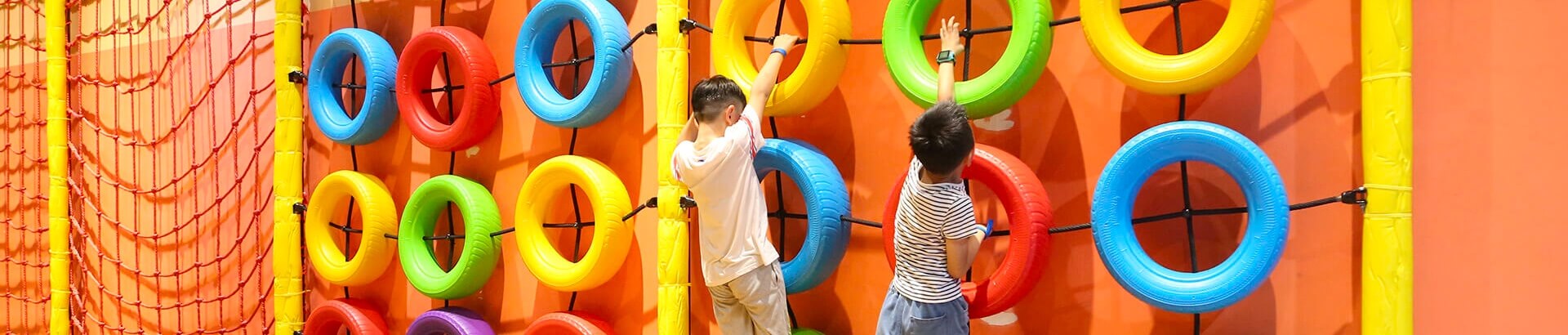
You can make your trampoline playground look special with bright colors and cool themes. Toddlers like bold colors because they are easy to see and fun. You could pick a theme like jungle, space, or pirates. These themes help kids pretend and play together. Good lighting makes the colors stand out and keeps the area safe. Plan your design so the lights show off the best parts and make the playground feel cozy.
Bright colors grab toddlers’ attention.
Fun themes help kids tell stories and work together.
Good lighting makes the playground safer and more inviting.
Add interactive and sensory features to your trampoline playground. These features help toddlers learn new things while playing. Use sensory toys, walls with different textures, and digital parts that react to touch. Nature-themed pieces and building areas give kids more ways to play. Spaces for pretending let kids act out real-life stories. Lights can change colors or patterns to match the theme and keep the playground exciting.
Feature Type | Description |
|---|---|
Sensory Toys | Stimulate the seven senses, like sight, sound, and touch, helping kids learn about their senses. |
Textured Walls | Give kids different surfaces to touch, helping them learn through play. |
Interactive Digital Elements | Mix technology with play, letting kids use features that respond to them. |
Nature-Inspired Elements | Make the playground feel familiar and calm, while still being fun. |
Construction Areas | Help kids build skills by letting them move and stack things. |
Role-Playing Spaces | Let kids pretend and use their imagination in themed areas. |
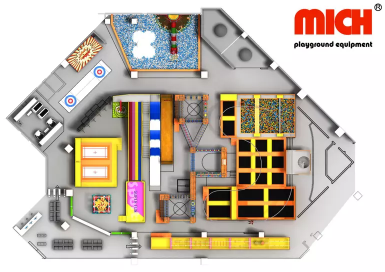
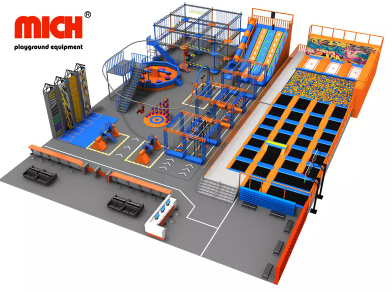
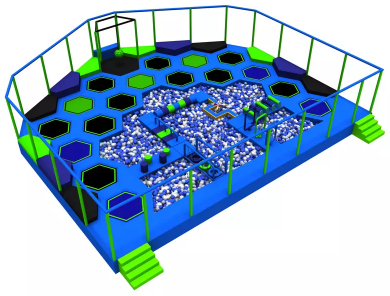
Create zones in your trampoline playground for different ways to play. Make a special area for toddlers from 18 months to 4 years old. Use lower trampolines and soft mats to keep everyone safe. Keep these zones away from the main jumping area so older kids do not bump into toddlers. Limit how many toddlers can play in each zone so it does not get too crowded. Add foam blocks, small slides, and mini trampolines for gentle bouncing. This design helps kids grow strong and gives each child a safe place to play. Use lights to show where each zone starts and ends so parents and staff can watch the kids easily.
You have to clean the toddler area every day. Keeping it clean helps stop germs and makes the park nice. Start each morning by checking all the equipment. Wipe down mats, floors, and surfaces with safe cleaners for kids. Use warm water and gentle soap to clean everything. Clean all spots you can reach, even if they look clean. Do not use strong chemicals. Soapy water is good for most things in the playground. Clean ball pits or foam areas very well every week or two. This keeps germs away and helps your equipment last longer.
Check equipment every day to make sure it is clean and works.
Use safe cleaners for kids on mats, floors, and surfaces.
Wipe down all parts of the playground you can reach.
Deep-clean ball pits or foam pits every week or two.
You need to check the equipment every day. Look for loose bolts, worn padding, or broken parts. Checking often helps you find problems before someone gets hurt. All trampoline parks and indoor playgrounds need these checks to stay safe. Make sure your safety certificates are always up to date. Clean and fix things right away to keep the play area safe. If you see a problem, fix it as soon as you can. Teach your staff to check everything and tell you about any issues. This keeps the playground safe and fun for everyone.
Tip: Checking equipment often helps you find problems early and keeps your park running well.
You should update your playground equipment often. This keeps kids safe and makes them want to play. Use clear rules to know when to upgrade. Look for non-slip surfaces, areas for different ages, and regular cleaning plans. Make sure all padding under climbing things is soft and not worn out. Check that emergency exits are always open. Add new things that help kids use their senses and learn. The table below shows what to look for when you update equipment:
Criteria Type | Description |
|---|---|
Safety Features | Non-slip surfaces, equipment for the right age, and regular cleaning plans. |
Key Safety Indicators | Soft padding under climbing things, equipment in good shape, clear emergency exits, and more. |
Engagement Elements | Special equipment that helps kids use their senses and learn new things. |
Keep your toddler area fun and safe by updating equipment often. This helps every child stay safe and enjoy their time at the park.
You can make a trampoline park toddler area that is safe and fun. Start by making a special spot just for toddlers. Use strong safety rules to protect kids. The table below shows important steps for design:
Key Steps for Designing a Toddler Area | Description |
|---|---|
Separate Section for Toddlers | Make a space for kids ages 1-5. |
Safety Measures | Follow strict safety rules. |
Features for Physical Development | Add foam pits, rope ladders, and climbing walls. |
Features for Social Development | Put in mini dodgeball areas, mazes, and slides. |
You need to mix safety with fun features for each age. Kids must have the right equipment and good supervision. Staff who know what to do and parents who watch help kids enjoy the park. Keep changing your design to follow the best rules. Make your park a place where kids can grow, learn, and play safely.
You should bring children ages 1 to 5 to the toddler area. This age group gets the most benefit from the equipment and activities designed for their size and abilities.
You need to inspect all equipment every day before opening. Quick checks during the day help you spot problems early and keep kids safe.
You should not allow older children in the toddler area. This rule keeps toddlers safe and prevents accidents. Always supervise to make sure only the right age group enters.
You give toddlers a safe place to play when you create a separate area. This design reduces the risk of injury and helps parents relax while watching their children.