- All
- Product Name
- Product Keyword
- Product Model
- Product Summary
- Product Description
- Multi Field Search


Views: 4 Author: Site Editor Publish Time: 2026-04-10 Origin: Site
Have you ever wondered if you are too heavy to join the fun at a trampoline park? It is a common concern for many visitors. Most parks do enforce weight limits to ensure equipment safety and prevent injuries. In this guide, you will learn about industry standards and how to stay safe.
● Standard Weight Limits: Most trampoline park facilities enforce a maximum weight limit between 250 lbs and 300 lbs to ensure structural safety.
● Safety Engineering: These limits exist to prevent "bottoming out," a dangerous situation where a jumper's weight overstretches the mat, causing them to hit the floor or frame below.
● Activity-Specific Rules: Weight requirements vary by zone; specialized attractions like rock climbing walls or zip lines often have stricter limits than open jump areas.
● Minimum Requirements: Many parks set a minimum weight (often around 40 lbs) to ensure the trampoline springs engage correctly and to prevent "double-bouncing" risks.
● Inclusive Design: Modern parks often use reinforced, high-tension equipment to accommodate heavier adults, making the experience more accessible than ever.
● Dynamic vs. Static Weight: It is vital to remember that jumping generates force several times your standing weight, which is why adhering to manufacturer guidelines is non-negotiable.
While every facility varies slightly based on the brand of equipment they use, the trampoline park industry generally adheres to a specific set of weight windows. Most major chains set their maximum weight capacity between 250 lbs and 300 lbs (approx. 113–136 kg).
A trampoline park is no longer just a room full of interconnected mats. It is a multi-disciplinary sports arena, and different zones have different structural tolerances:
● Freestyle Jump Zones: These are the standard "open jump" mats. They typically support the industry average of 250–300 lbs.
● Performance Trampolines: Often used by gymnasts or "wall-runners," these mats have more "travel" (they go deeper). Because they generate higher forces, their weight limits are sometimes stricter to prevent the jumper from hitting the floor.
● Ninja Warrior Courses & Battle Beams: These involve suspended elements. Weight limits here are crucial because the cables and anchors are rated for specific loads.
● Specialized Attractions: Climbing walls and zip lines rely on auto-belay systems. These devices often have a specific working load, frequently capped at 250 lbs.
Safety isn't just about the maximum; the minimum matters too. Many parks require jumpers to weigh at least 40 lbs. If a jumper is too light, the trampoline mat might not engage properly, or they could be at higher risk for "double bouncing"—where a heavier jumper nearby sends the lighter person flying uncontrollably.
Most parks do not keep a scale at the front desk to avoid embarrassing guests. Instead, they rely on "discretionary enforcement." Staff members are trained to recognize when a guest might exceed the manufacturer's safety rating. If a guest appears to be near the limit, staff may gently suggest lower-impact activities or refer to the park's written safety policy.
Attraction Type | Typical Weight Limit (Max) | Typical Weight Requirement (Min) |
Freestyle Jumping | 250 - 300 lbs | 40 lbs |
Auto-Belay Climbing | 250 lbs | 40 lbs |
Performance Mats | 250 lbs | N/A (Skill dependent) |
Ninja Course | 275 lbs | N/A |
It might be tempting to think a few extra pounds won't hurt, but the physics of a trampoline park are unforgiving. When you jump, you aren't just placing your static weight on the mat; you are generating dynamic force.
The springs and mats are designed to absorb and return energy. If a jumper exceeds the weight limit, the springs may stretch beyond their "elastic limit." This leads to a dangerous phenomenon called bottoming out. This happens when the mat stretches so far that the jumper’s feet or backside hit the hard floor or the steel frame beneath the padding. This is the leading cause of severe lower-back and ankle injuries.
A trampoline park mat provides reactive power. The heavier the object, the more the mat must stretch to stop its downward momentum. If you are over the limit, the mat may not be able to provide a stable "snap back," causing you to lose balance or land in an awkward, uncontrolled position. Adhering to these limits protects your joints—specifically your knees and spine—from the high-impact shock that occurs when the equipment reaches its maximum capacity.
Before you put on your jump socks, it is best to verify the rules of your specific location. Policies can change based on equipment upgrades or local safety regulations.
● Checking Official Websites: Almost every trampoline park has a "Safety," "Rules," or "FAQ" section. Major brands usually list their weight capacities clearly alongside their waiver links.
● Calling Ahead: If you are organizing a corporate team-building event or a large party, call the manager. They can provide specific details on which attractions are best suited for different body types in your group.
● On-Site Signage: Look for placards at the entrance of individual zones. Even if the park has a general limit of 300 lbs, the rock wall or the "Leap of Faith" might have a lower limit posted at the station.
● Waiver Disclosures: When you sign the digital waiver, you are often legally acknowledging that you meet the physical and weight requirements. It is important to read this carefully rather than just clicking "accept."
Weight is not the only factor in how a trampoline handles a jumper. How that weight moves is equally important.
The "one person per mat" rule is the most important safety protocol in any trampoline park. Two 150 lb people jumping on the same mat create 300 lbs of force in a concentrated area. This significantly increases the risk of the mat failing or the two jumpers colliding, which can lead to "double-jumping" injuries where the force of one person’s jump is transferred to the other.
Your "static weight" is what you see on the scale. Your "dynamic weight" is the force you exert when landing. A 200 lb man jumping from a height can exert a force equivalent to several times his body weight upon landing. This is why trampoline park equipment is engineered with a high safety factor, but it is also why exceeding the static limit is so risky.
Tension in springs naturally degrades over time. While a high-quality trampoline park performs daily inspections, older mats may feel "softer." If you notice a mat feels less responsive, it is a sign that its effective weight capacity may be lower than it was when new.
If you are a heavier adult looking to get active, don't be discouraged. The industry is moving toward greater inclusivity.
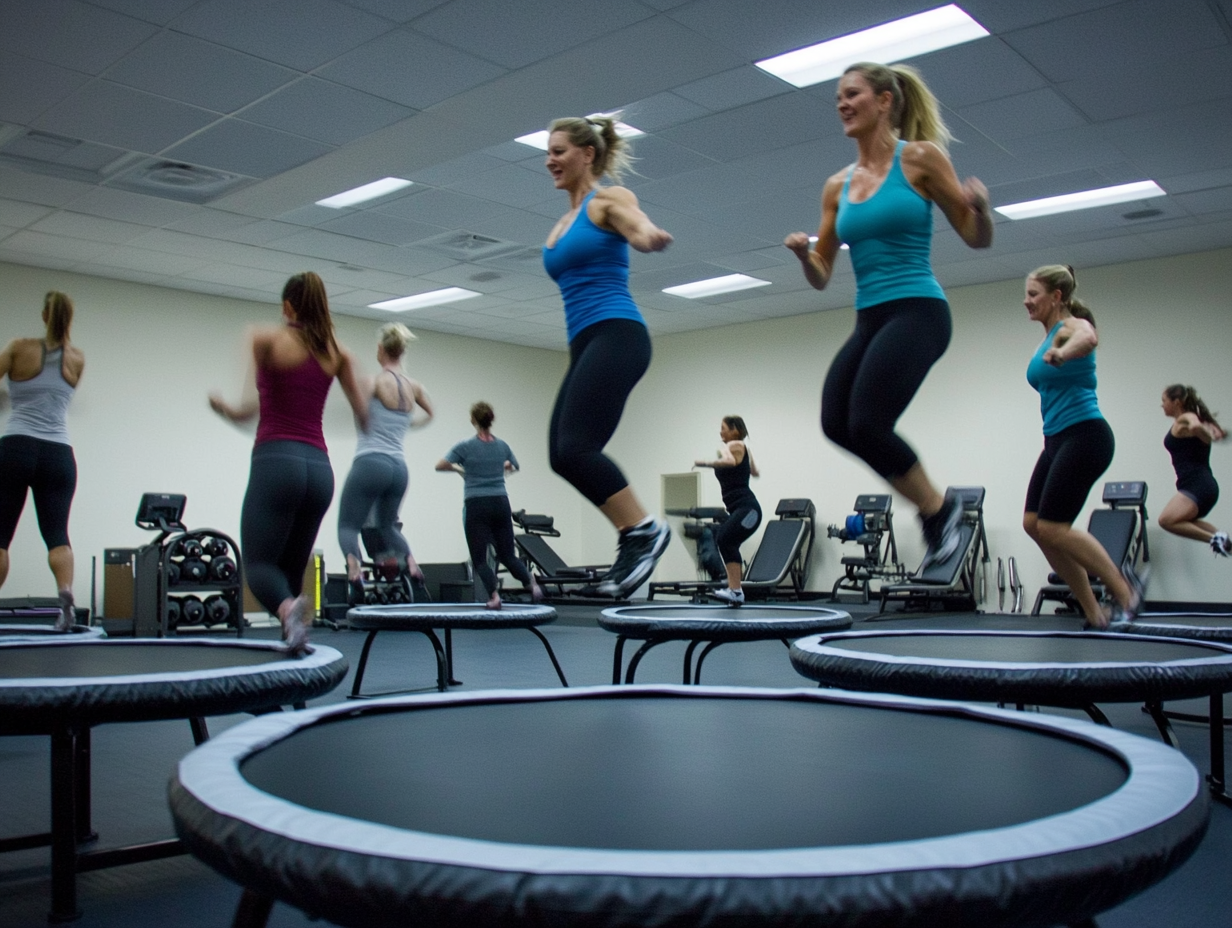
Many modern facilities now invest in heavy-duty equipment. They use shorter, high-tension springs and reinforced, multi-layered mats that can safely accommodate jumpers up to 325 lbs. Additionally, trampoline park fitness classes are becoming a huge trend. These classes are designed as low-impact workouts for weight loss. Because they focus on controlled movements rather than high-flying stunts, they are often more accessible to people of different sizes.
If jumping still feels like a risk, many parks offer low-impact alternatives. You might find "Augmented Reality" games that involve standing on the mat rather than jumping, or ropes courses that use a different type of safety harness designed for higher weight tolerances.
Note: Corporate event planners should request a "safety capacity audit" from the venue to ensure all team members can participate in at least 75% of the attractions.
Safety is a shared responsibility between the park and the guest. Regardless of your weight, following these tips will ensure a better experience:
● Know Your Physical Limitations: Just because you are under the weight limit doesn't mean you should attempt a triple backflip on day one. Start slow and gauge how your body responds to the rebound.
● The Importance of Grip Socks: Every trampoline park requires specialized socks with rubber grips on the bottom. These prevent sliding on the vinyl pads and help you maintain traction on the mat, which is vital for staying in control.
● Following Staff Instructions: Court monitors aren't just there to blow whistles. They are trained to watch for equipment stress and unsafe jumping patterns. If they ask you to move to a different mat, it is for your protection.
● Warm-Up Procedures: Jumping works muscles you probably haven't used in years. Spend five minutes stretching your calves, hamstrings, and lower back to prevent strains.
A trampoline park offers the thrill of flight grounded in essential safety. Weight limits protect both equipment integrity and guest well-being for a confident visit. As a leader in the industry, playground provides high-quality, durable equipment designed to maximize safety and inclusive fun. Whether you jump for fitness or play, following these guidelines ensures a secure experience. Trust our expert solutions to bring reliable value to every bounce.
A: Most facilities set a maximum limit between 250 and 300 pounds to ensure equipment safety.
A: Limits prevent "bottoming out," protecting jumpers from hitting the steel frame or floor during high-impact bounces.
A: Check the official website's safety page or review the digital waiver before your visit for precise requirements.
A: Yes, many parks require guests to weigh at least 40 pounds to engage the mat springs properly and avoid injury.
A: Many modern parks use heavy-duty, reinforced mats and springs specifically designed to accommodate higher weight capacities safely.